

AC Maintenance & Tune-Ups
AC MAINTENANCE & TUNE-UPS IN Benson & Tucson, AZ
Laboratory testing of fouled condenser coils puts the performance loss at 15 to 20 percent, and field research found evaporator pressure drop doubling within roughly 7 years of normal service. Abbey Aire and Building Repair builds seasonal AC maintenance around those two findings for homes and small commercial properties in Benson & Benson & Tucson, AZ, Vail, Marana, Oro Valley, and Sahuarita, AZ.
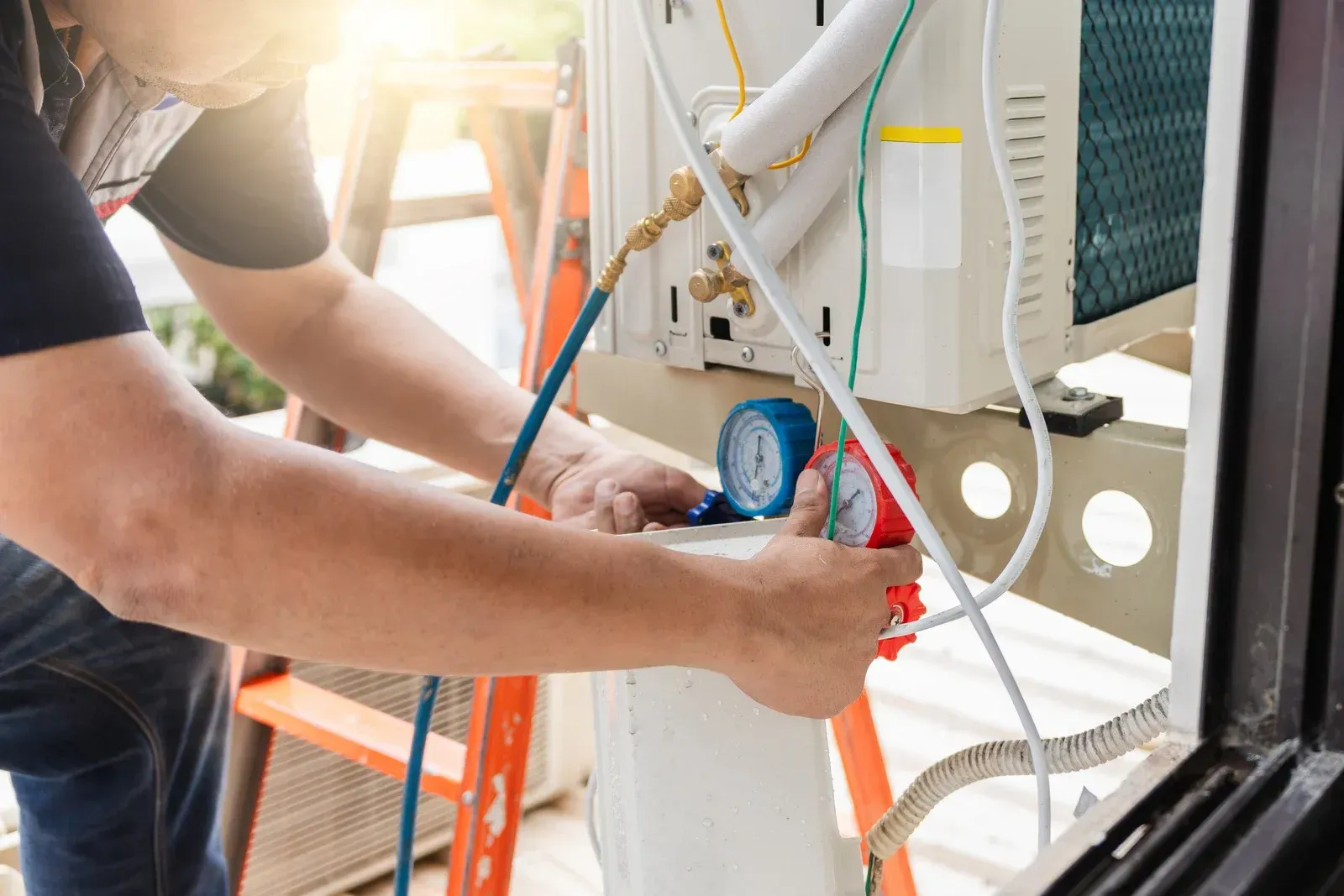
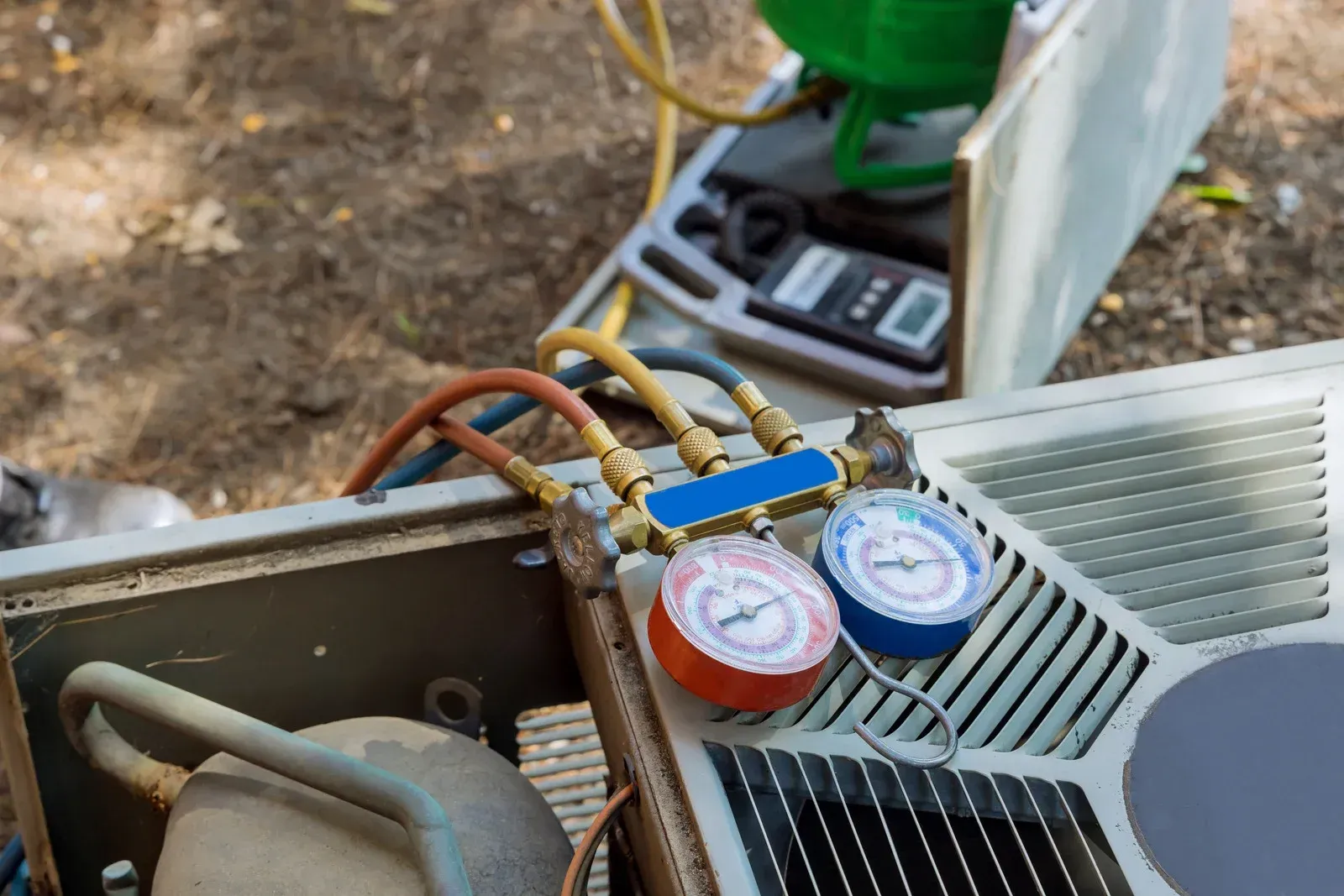
MAINTENANCE IS MEASUREMENT PLUS CLEANING, IN THAT ORDER.
A tune-up that consists of a filter change and a sticker is not a tune-up. Ours starts with the same readings a repair call gets, so we know what the system is doing before anything is touched. Then the coils get cleaned, the drain gets cleared, and the readings get taken again to prove the work changed something.
The report you receive lists what was measured, what was cleaned, and what is trending in the wrong direction. That last column is what turns a surprise breakdown into a scheduled repair.
- Readings taken before and after every visit
- Condenser and evaporator coils both cleaned
- Condensate line cleared and treated
- Written report with trending items flagged
YOUR HOME STAYS SELLABLE
Active leaks and visible water damage kill inspection reports. A documented repair history reassures buyers, appraisers, and insurers that the roof over the property has been looked after.
AC MAINTENANCE & TUNE-UPS
MONSOON SEASON IS A DEADLINE, NOT A SUGGESTION.
Roughly 6 inches of Tucson's 10.6 inch annual rainfall arrives between mid-June and the end of September, and it arrives with dust ahead of it. Every storm front pushes grit through condenser fins and into filters. A system serviced in April is carrying a season of that load by August. Timing maintenance ahead of the monsoon and again after it clears keeps the equipment ahead of the dirt.
CHARGE AND AIRFLOW FAULTS ARE THE NORM, NOT THE EXCEPTION.
Audits of residential systems in the desert Southwest have found the large majority running outside their correct refrigerant charge, with more than four in ten also moving less air than design requires. Measured airflow commonly lands near 320 cubic feet per minute per ton against a 400 target. Neither fault announces itself. Both show up as a higher bill and a house that never quite cools.
A CLEAN COIL IS A HABIT, NOT AN UPSELL.
Nobody ever called us to say their maintenance visit was exciting. What they do call about is the July that passed without an emergency, the bill that stopped climbing, and the compressor that made it to year 14. Two generations of servicing equipment in this valley taught us that the boring visits are the ones that buy the good years at the end. When was your system last measured?
WHY CHOOSE US FOR AC MAINTENANCE & TUNE-UPS.
Capacity You Already Paid For
Restoring charge and airflow to design specification recovers cooling the equipment was built to deliver. That shows up as shorter run times on hot afternoons and a house that recovers after the door opens.
Fewer July Emergencies
Most breakdowns leave evidence weeks in advance. A weak capacitor, a rising amp draw, or a slipping blower belt caught during a spring visit is a scheduled part rather than a Saturday call.
Documented System History
Each visit adds readings to a record you can actually use. Over a few seasons that history shows what is degrading, which makes the eventual repair-or-replace conversation a matter of evidence.
Warranty Protection Kept Intact
Most manufacturers require documented annual service to honor a parts claim. Keeping that paperwork current costs nothing extra and protects coverage that can be worth a compressor down the line.
Cleaner Air Indoors
Filters sized and changed on a desert schedule, a clean evaporator, and a drain pan without standing water all reduce what circulates through the house during the dustiest months of the year.
Lower Running Costs
Equipment fighting a dirty coil or a restricted filter draws more current for less cooling every hour it runs. Cleaning restores the ratio, and in a climate with this much runtime that adds up quickly.
WHAT WE SERVICE
OUR AC MAINTENANCE & TUNE-UPS WORK
A full tune-up covers six areas, and each one has a measurable outcome rather than a checkbox. Anything found outside specification is reported with the reading attached so nothing rests on an opinion.
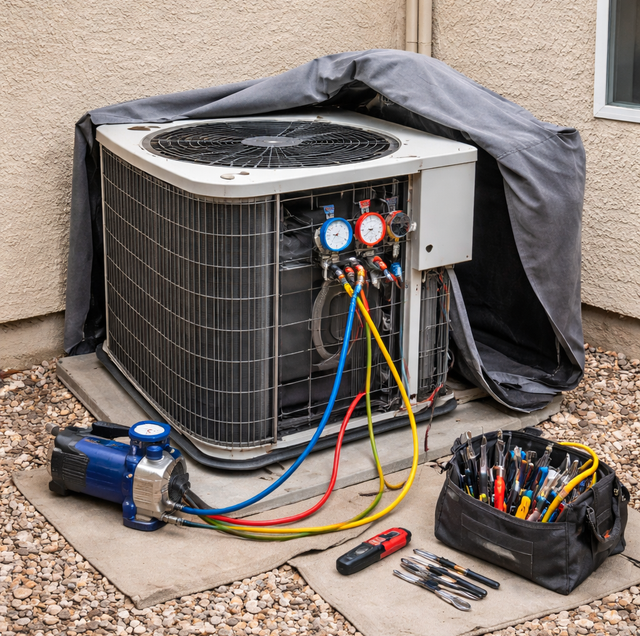
COIL CLEANING
Condenser and Evaporator Coil Cleanin
Fins get washed from the inside out so the dirt leaves rather than packing deeper. Both coils matter, because a clean condenser paired with a fouled evaporator still surrenders capacity nobody can see.
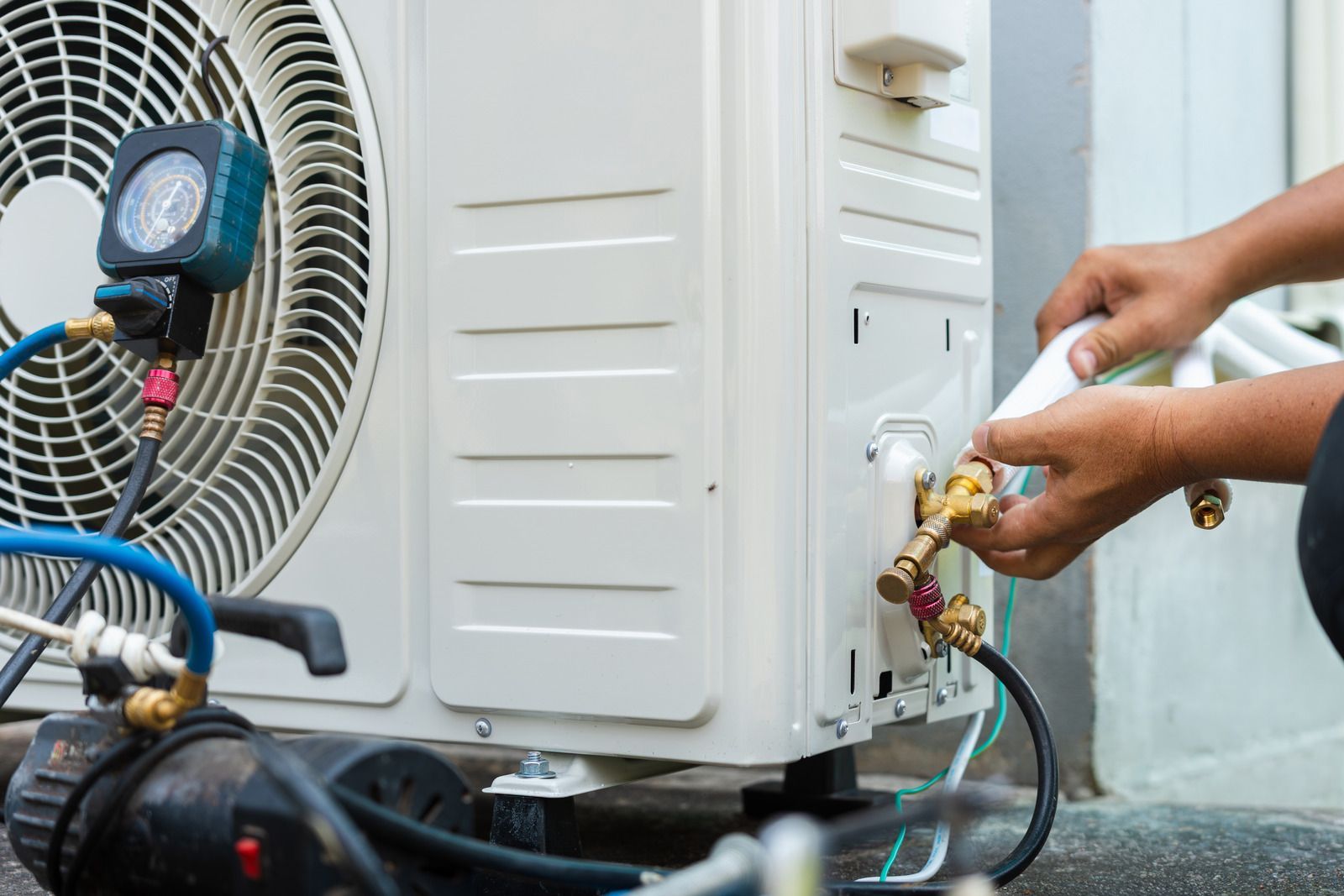
CHARGE CHECK
Refrigerant Charge Verification
Superheat and subcooling readings taken at operating conditions reveal whether the system holds its correct charge. A low result triggers a leak search rather than a quiet top-up that hides the real problem.
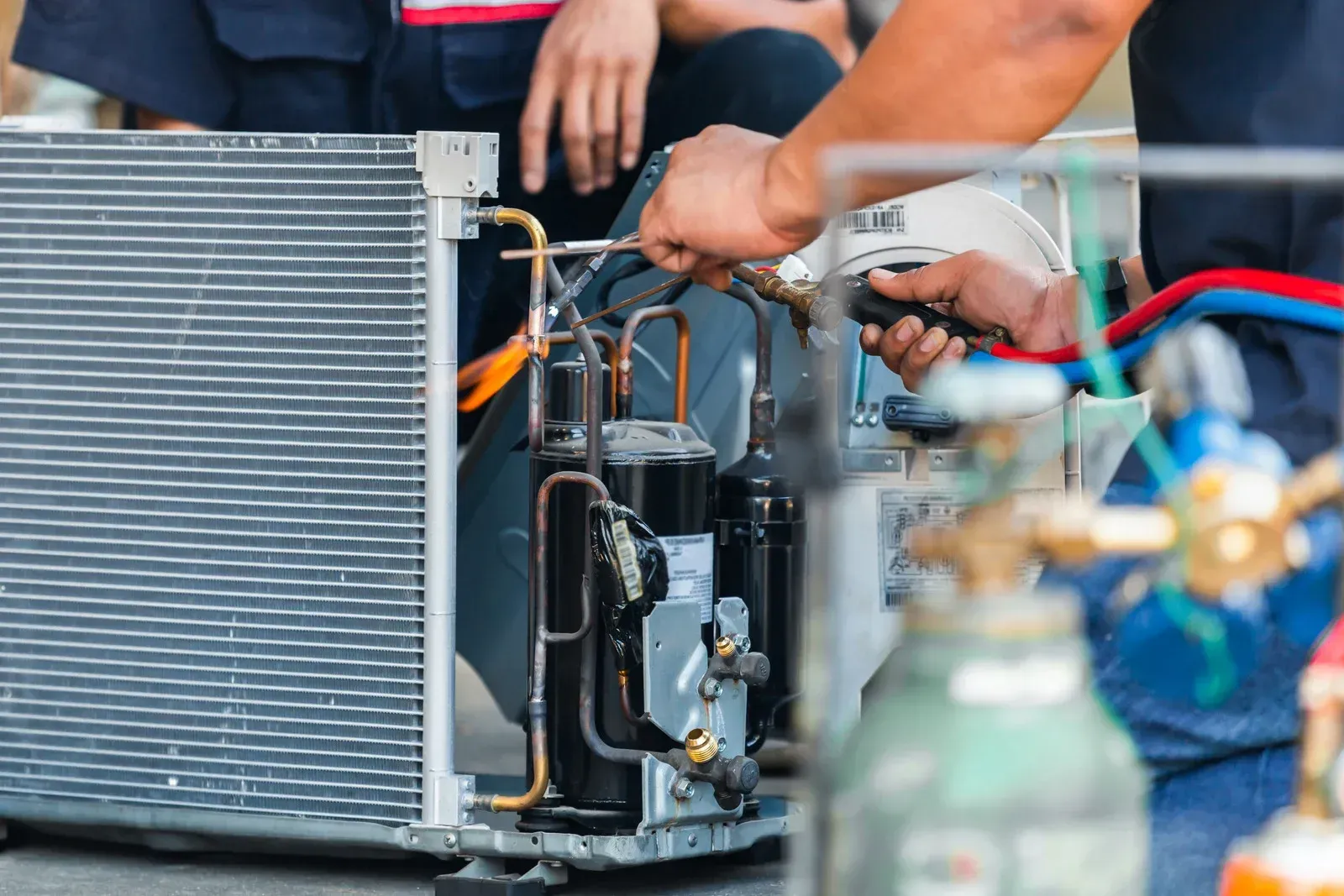
AIR MOVEMENT
Airflow and Static Pressure Testing
Total external static pressure gets measured across the air handler and compared against the manufacturer's rating. High readings point at filters, coils, or duct restriction, all of which cost capacity before anything fails.
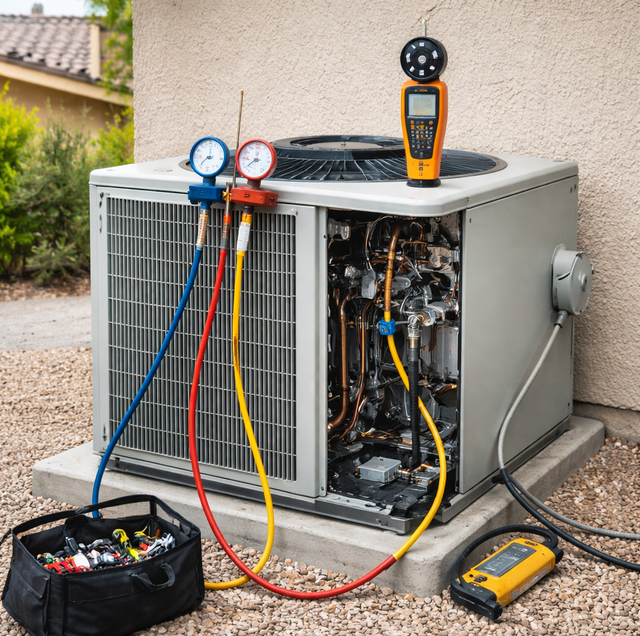
ELECTRICAL CHECK
Component and Electrical Testing
Capacitors are tested against rated microfarads, contactors inspected for pitting, and motor amp draws compared to nameplate values. Weak components get reported with the numbers so replacement timing is your decision.
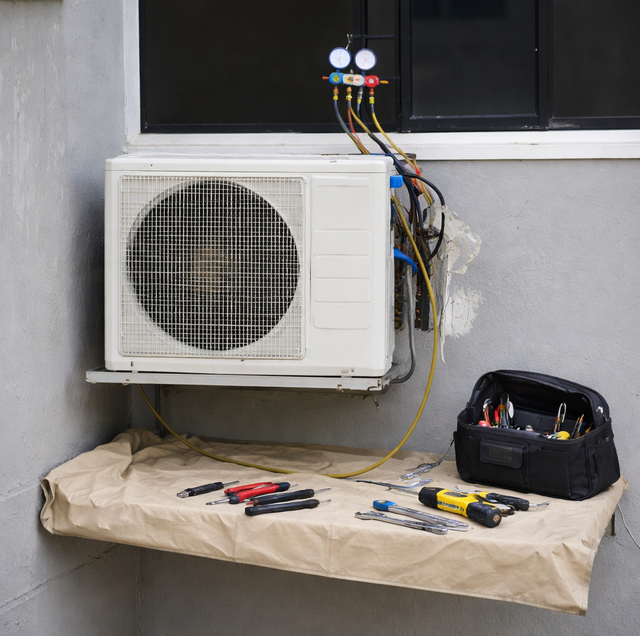
WATER PATH
Condensate Drain Cleaning and Treatment
Lines get flushed, traps checked, pans cleaned, and float switches tested. Treatment tablets slow the biological growth that turns a functioning drain into a ceiling repair partway through the cooling season.
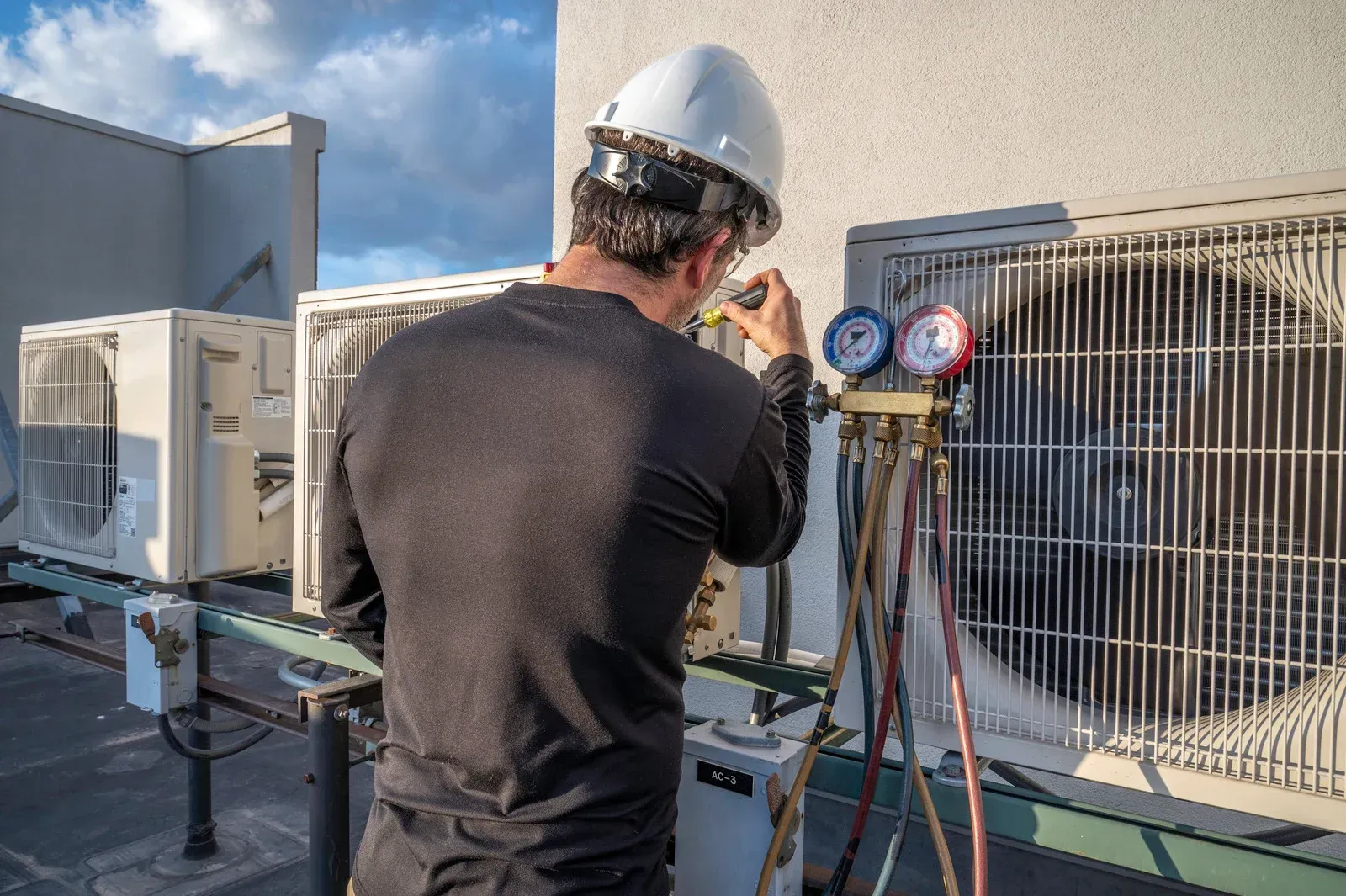
CONTROL TUNING
Thermostat Calibration and Cycle Testing
Set point accuracy, staging behavior, cycle length, and the sequence of operation all get verified. A thermostat reading 3 degrees off runs the system for nothing and reads as an equipment problem.
faq
frequently asked
questions.
The maintenance questions that come up most often, answered without a service plan pitch attached. Your equipment's age and condition change some of these answers, which is worth a conversation.
How often should an AC be serviced?
Twice a year suits this climate: once before cooling season and once after the monsoon clears. Systems that run 9 months a year accumulate wear on a schedule that annual service does not keep up with.
What is included in an AC tune-up?
Performance readings, coil cleaning, charge verification, airflow and static pressure testing, electrical component checks, condensate service, and thermostat calibration. Anything found outside specification is documented with the measurement rather than described vaguely.
How often should I change my AC filter in the summer?
Every 30 days is realistic here during dust and monsoon months, even where the manufacturer suggests longer. Abbey Aire and Building Repair sets filter intervals to the actual conditions at properties around Benson & Tucson, AZ.
Are AC tune-ups worth it?
They are when the visit includes measurement. A sticker and a filter change accomplish little. Restored charge, clean coils, and corrected airflow return capacity worth far more than the visit over a full season.
How often does an AC need refrigerant?
Never, in a sealed system. Refrigerant is not consumed, so a low charge always means a leak somewhere. Repeated top-ups without a leak search are treating the symptom and quietly damaging the compressor.
How do I know if my AC drain line is clogged?
Water around the indoor unit, a damp ceiling stain, a musty smell near the return, or a system that shuts off on its own are all signs. A float switch tripping is the polite version.
What happens if you never service your air conditioner?
Efficiency drifts down, small faults compound, and the compressor takes the eventual bill. Abbey Aire and Building Repair sees the pattern regularly on units in Benson, AZ that ran 10 years without a single measured reading.
How long should an air conditioner run per cycle?
15 to 20 minutes is typical in mild weather, and continuous running on a design day is normal rather than alarming. Cycles under 10 minutes usually mean the system is oversized or short cycling on a fault.
HOW WE WORK
FROM BASELINE TO REPORT, HERE IS HOW.
STEP 01
Baseline Readings
Before anything is cleaned or adjusted, the system gets measured as found. That baseline is what makes the after readings meaningful, and it captures problems a cleaned-up system would hide from view entirely.
STEP 02
Coil and Cabinet Cleaning
Condenser fins get washed, the cabinet is cleared of debris, and the evaporator is accessed and cleaned where the design allows. Drain pans and blower wheels get attention during the same visit rather than a second trip.
STEP 03
Charge and Airflow Verification
Operating pressures, superheat, subcooling, temperature split, and static pressure are measured and compared to the manufacturer's targets. Anything off gets corrected where possible and reported where it needs a separate repair visit later.
STEP 04
Electrical and Safety Checks
Capacitors, contactors, relays, wiring connections, disconnects, and safety controls all get inspected and tested. Components measuring outside tolerance are photographed and reported with the reading, not simply declared bad and added to an invoice.
STEP 05
Filters, Drains, and Controls
Filters are replaced with the correct size and rating, drains flushed and treated, and the thermostat checked for accuracy and staging. Small corrections here prevent most of the mid-season nuisance calls that follow.
STEP 06
Final Readings and Report
The system gets measured again and the two sets are compared. You receive both, plus a list of anything trending toward failure with an honest estimate of how long it likely has left.
GET YOUR ESTIMATE
BOOK THE VISIT THAT KEEPS JULY UNEVENTFUL.
The best time to find a weak capacitor is April, not the first 105 degree afternoon. Send your details through our contact page and Abbey Aire and Building Repair will schedule maintenance in Benson & Tucson, AZ.
WHAT YOUR MAINTENANCE VISIT COVERS:
- Baseline and final performance readings
- Condenser and evaporator coil cleaning
- Charge verified by superheat and subcooling
- Static pressure and airflow measured
- Electrical components tested under load
- A written report with trending items flagged