

Heat Pump Repair & Installation
HEAT PUMP REPAIR & INSTALLATION IN Benson & Tucson, AZ
Split-system heat pumps have carried a national minimum of 14.3 SEER2 and 7.5 HSPF2 since January 2023. Tucson's winter design temperature near 32 degrees sits comfortably above the balance point of most correctly sized units here. Abbey Aire and Building Repair installs and repairs residential and light commercial heat pumps across Benson & Tucson, AZ, Vail, Marana, and Oro Valley, AZ.
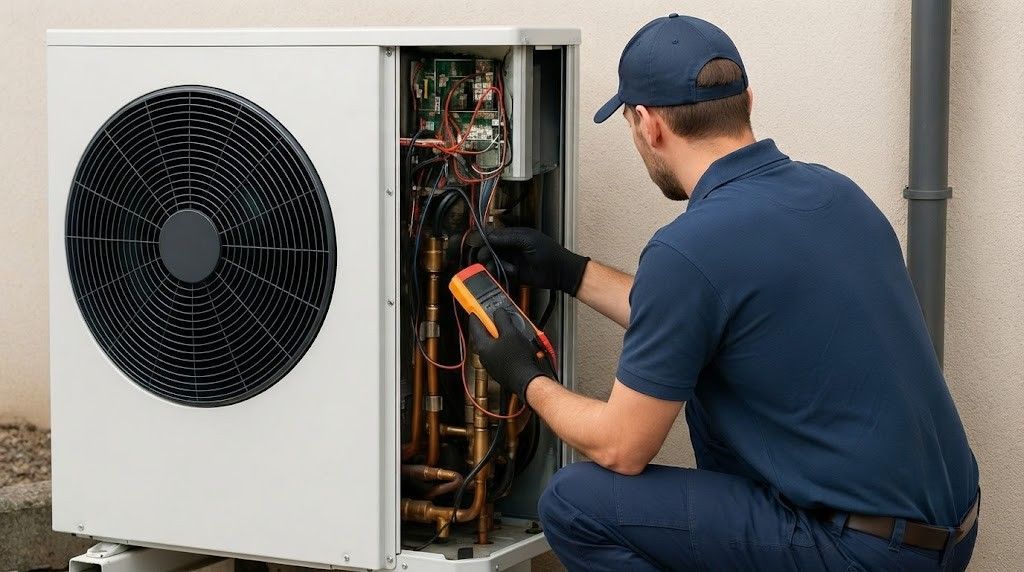
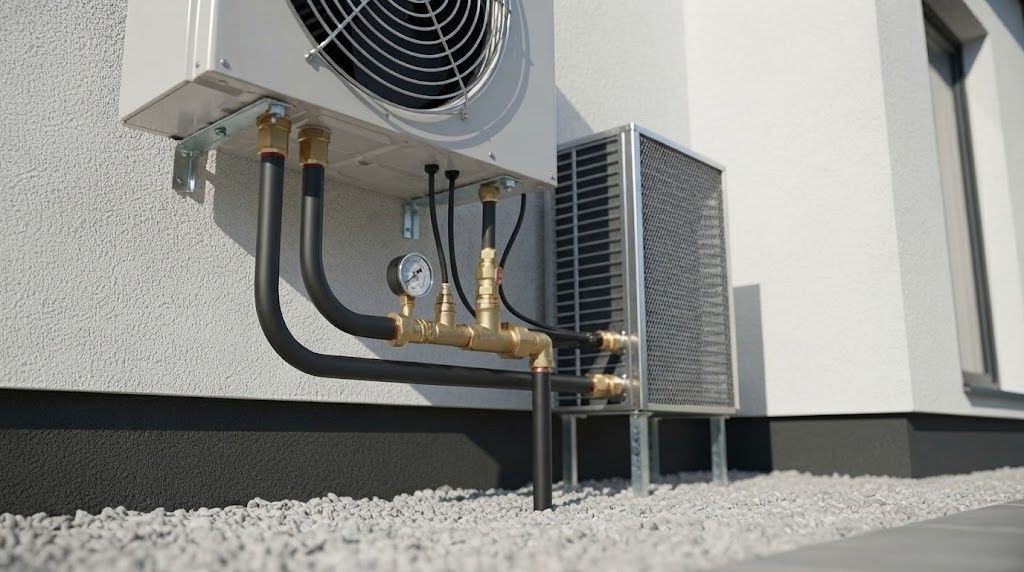
ONE MACHINE, BOTH SEASONS, IF IT IS SIZED HONESTLY.
A heat pump is an air conditioner with a reversing valve, which means the same equipment that carries a Tucson summer also covers a Tucson winter. The catch is that sizing has to satisfy the cooling load first, because that is by far the larger number here. Get that right and auxiliary heat almost never runs.
Repairs follow the same logic. A heat pump that will not heat is usually a reversing valve, a defrost control, or a charge problem, and each of those has a distinct signature.
- Reversing valve and defrost testing on every heating call
- Auxiliary heat staged to the local design temperature
- Charge weighed rather than adjusted by pressure
- 1-year labor warranty on new installations
YOUR HOME STAYS SELLABLE
Active leaks and visible water damage kill inspection reports. A documented repair history reassures buyers, appraisers, and insurers that the roof over the property has been looked after.
HEAT PUMP REPAIR & INSTALLATION
THE COOLING LOAD HERE DWARFS THE HEATING LOAD.
Tucson runs roughly 3,400 cooling degree days against about 1,330 heating degree days, a ratio close to 3 to 1. That makes a heat pump an unusually good fit, because the equipment spends most of its life doing the job it was primarily sized for. Winter operation becomes a bonus rather than a compromise, which is not true in colder parts of the country at all.
DEFROST BEHAVES DIFFERENTLY AT DIFFERENT ELEVATIONS.
Tucson averages roughly 12 freezing nights a year, so an outdoor coil there rarely stays below frost threshold long enough for repeated defrost cycles. Benson sees closer to 85, and equipment there defrosts regularly through January. Same brand, same model, entirely different winter behavior 40 miles apart. Auxiliary heat staging and defrost settings get configured to the address rather than to a regional default.
NOTHING INSIDE A HEAT PUMP IS NEW TO US.
Reversing valves that stick halfway, defrost boards that never terminate, sensors reading 10 degrees off, and auxiliary heat strips energizing on every call because nobody set the staging. These are the faults that make owners believe heat pumps do not work in winter. Two generations of servicing them across Cochise County and Pima County say otherwise, provided somebody configured the system correctly. Was yours ever commissioned properly?
WHY CHOOSE US FOR HEAT PUMP REPAIR & INSTALLATION.
Winter Performance You Can Feel
Correct staging keeps expensive auxiliary heat strips off until the outdoor temperature genuinely calls for them. That single setting is the difference between a comfortable winter bill and a shocking one.
One System, Two Seasons
A single piece of equipment handling both heating and cooling means one maintenance schedule, one warranty, and one set of components to keep track of instead of two separate appliances.
Faults Diagnosed, Not Swapped
Reversing valve, defrost board, sensor, and charge problems produce overlapping symptoms. Testing each in turn avoids the expensive habit of replacing a valve when a 15 dollar sensor was reading wrong.
Sized for the Bigger Load
In this climate the cooling requirement governs, and heating follows. Sizing that way avoids the oversized systems that short cycle all summer in order to cover a winter that never really arrives.
Configured for Your Elevation
Defrost intervals, balance point settings, and lockout temperatures get set to the conditions at your address. A default configuration from the factory suits a national average that matches nowhere in particular.
Documented Commissioning
New installations leave with weighed charge, measured airflow, verified staging, and a printed set of readings. Later service calls start from that baseline rather than from an educated guess.
WHAT WE SERVICE
OUR HEAT PUMP REPAIR & INSTALLATION WORK
Heat pump work splits into six areas across repair and installation. The heating-side components are what separate this equipment from a straight air conditioner, and they are where most of the calls originate.
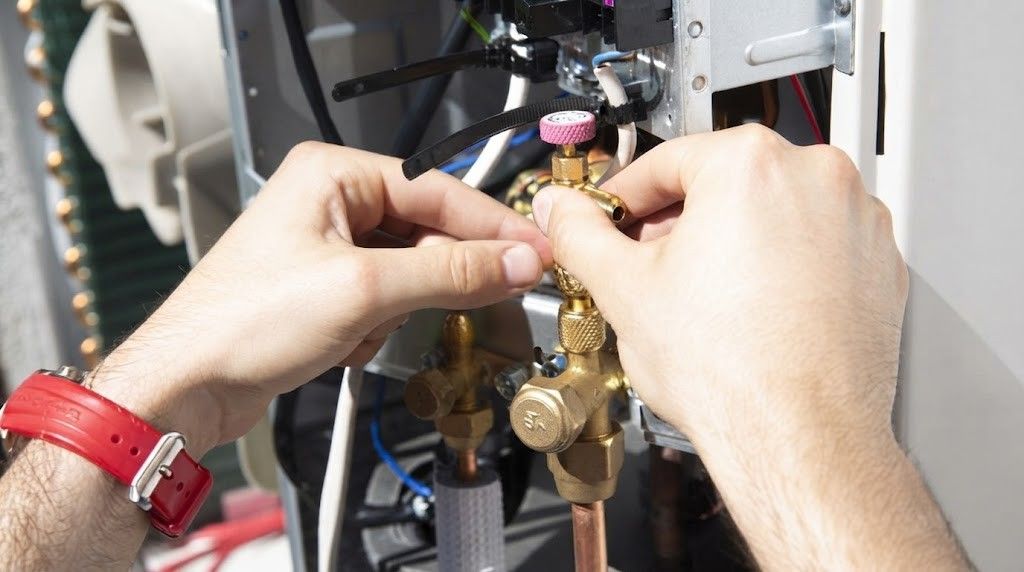
MODE SWITCHING
Reversing Valve Diagnosis and Replacement
A valve that sticks between positions produces lukewarm air in both modes. Temperature readings across the valve body identify the fault before anyone opens the refrigerant circuit unnecessarily on a hunch.
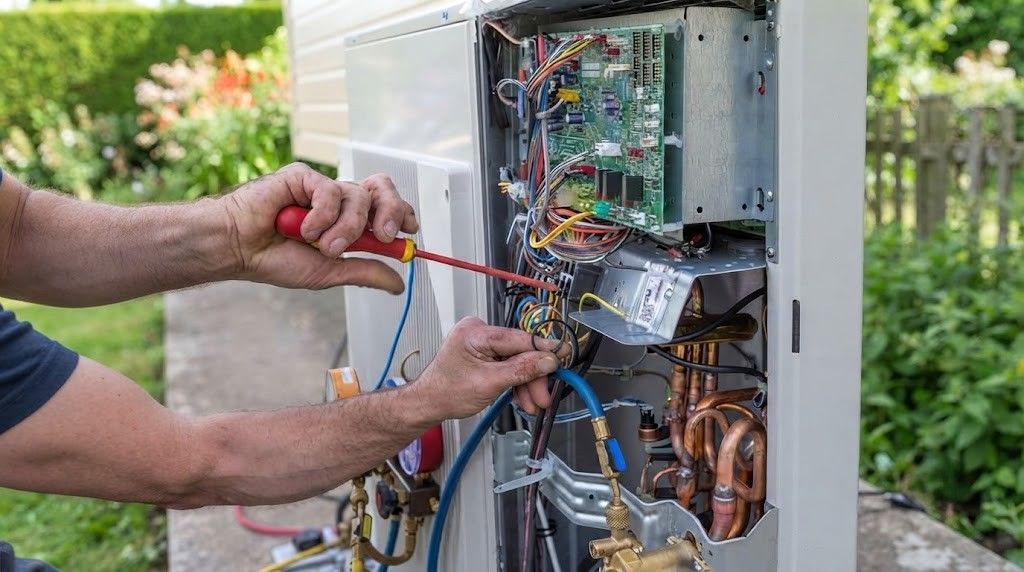
FROST CONTROL
Defrost Board and Sensor Service
Boards that never initiate defrost let ice build until airflow stops. Boards that never terminate run the cycle forever. Sensor accuracy, board timing, and termination temperature all get tested together.
BACKUP HEAT
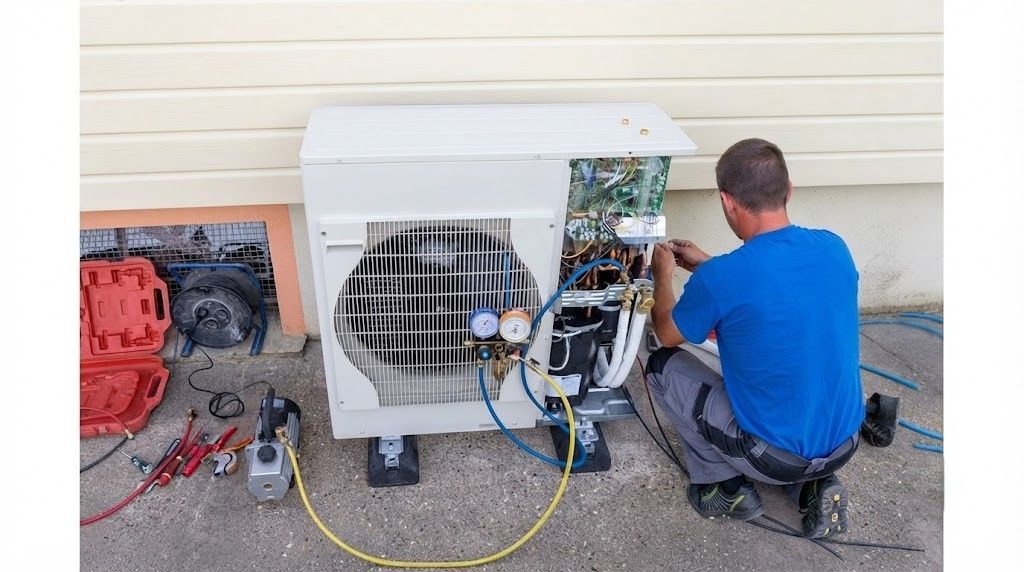
Auxiliary Heat Strip Repair and Staging
Electric strips draw serious current and should engage only when the heat pump cannot keep up. Sequencers, relays, limits, and staging setpoints get tested so backup heat stays genuinely supplementary.
NEW SYSTEMS
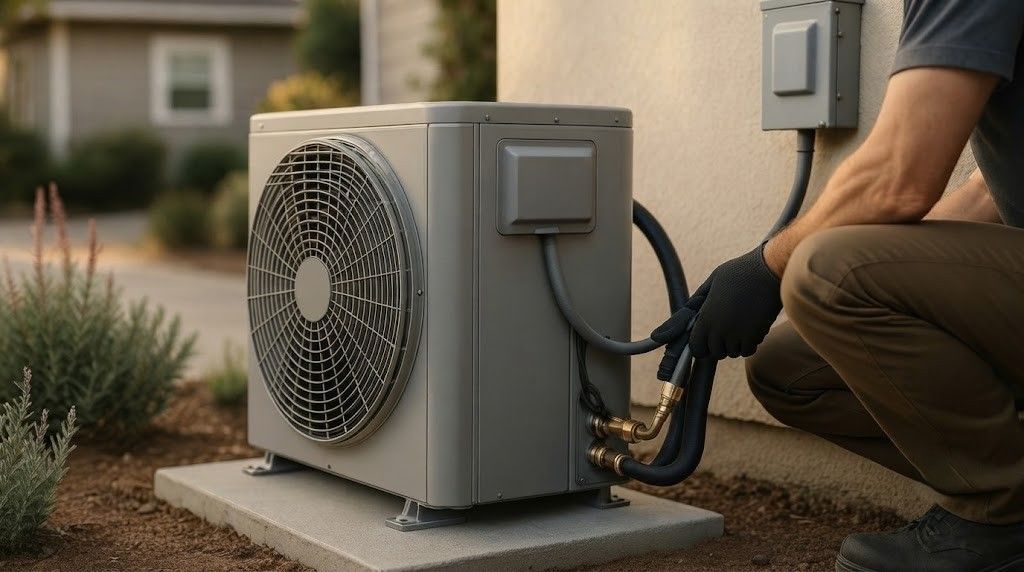
Heat Pump Installation and Startup
Installations begin with a load calculation and end with weighed charge, measured airflow, verified defrost operation, and staging configured for the local design temperature rather than a factory default setting.
CHARGE WORK
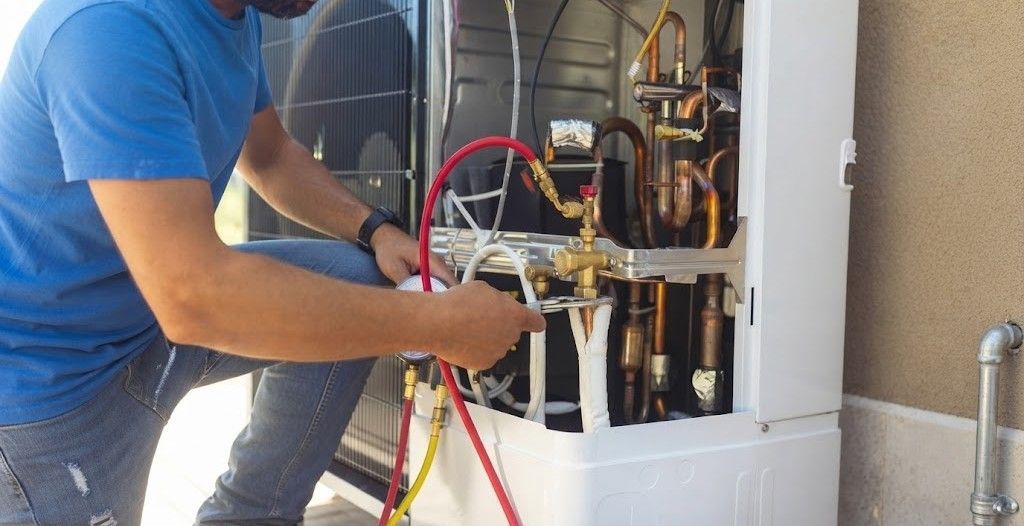
Refrigerant Circuit Repair
Heat pumps hold a larger charge and carry more joints than a cooling-only system, which gives leaks more places to start. Leak location, brazing, evacuation, and weighed recharge restore the circuit properly.
REPLACEMENTS
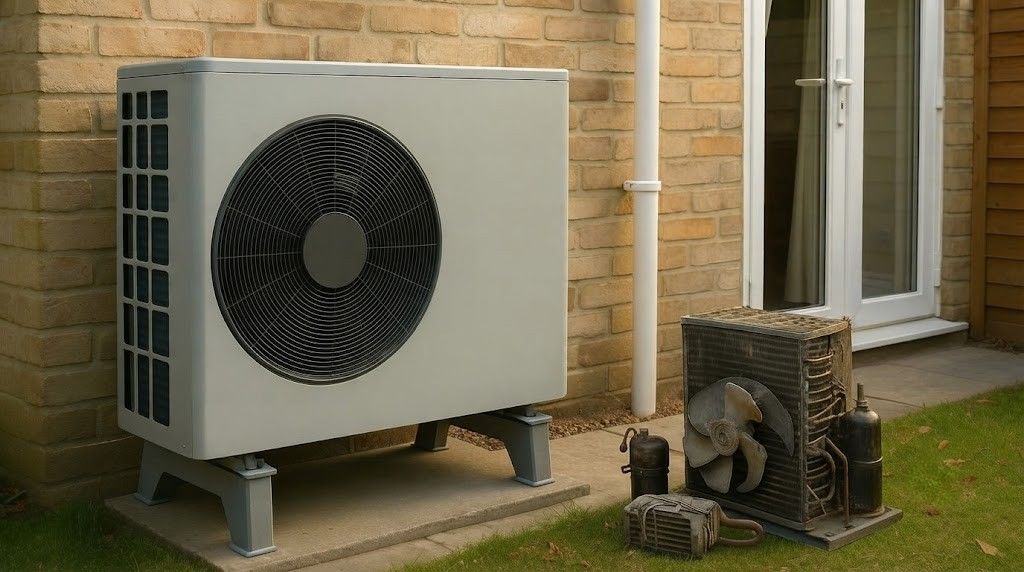
Heat Pump Replacement and Upgrade
Older units running earlier refrigerants and lower efficiency ratings often cost more in a single summer than the difference toward a replacement. The comparison gets built from your actual runtime and readings.
faq
frequently asked
questions.
Heat pump questions come up most in the first cold snap, when the equipment behaves in ways an air conditioner never does. Here are the ones we field most often.
At what temperature do heat pumps stop working?
Modern units keep producing heat well below freezing, with capacity falling as it gets colder. The practical limit is the balance point, where output equals the building's loss and backup heat starts contributing.
Why is my heat pump blowing cold air instead of hot?
Either it is in a defrost cycle, which is normal and brief, or the reversing valve is not shifting. A defrost cycle ends on its own. A stuck valve does not.
What causes a heat pump not to heat?
Reversing valve failure, low refrigerant charge, a defrost board fault, a dirty outdoor coil, or auxiliary heat that never engages. Abbey Aire and Building Repair tests each in order on calls around Benson, AZ.
Is it okay for a heat pump to run all night in winter?
Yes, and long steady run times are how the equipment is designed to work. Constant cycling is the concerning pattern, not continuous operation on a cold night with a large heating demand.
Are heat pumps more efficient than furnaces?
They move heat rather than create it, so they deliver more heating energy than the electricity they consume. A gas furnace can never exceed 100 percent of the fuel it burns.
Which is cheaper to run, a heat pump or a furnace?
In a mild winter climate with this much cooling load, a heat pump usually wins on total annual cost. Local electricity and gas rates decide the margin, which is worth calculating for your address.
How long do heat pumps last compared to furnaces?
ASHRAE puts the median at 15 years for a heat pump against 18 for a gas furnace, largely because a heat pump runs year round. Abbey Aire and Building Repair services both across Benson & Tucson, AZ.
Why are heat pumps less efficient in extremely cold temperatures?
There is simply less heat available in colder outdoor air, so the unit works harder to extract it. That matters far less here than in northern climates, where design temperatures sit well below freezing.
HOW WE WORK
FROM SYMPTOM TO STAGED HEAT, HERE IS HOW.
STEP 01
Capture the Behavior
Whether it happens in heating, cooling, or both, and whether it started suddenly or gradually, narrows the fault immediately. Note the outdoor temperature when it occurs, because defrost faults are temperature dependent by nature.
STEP 02
Test Both Modes
The system gets run in cooling and heating while pressures, temperatures, and valve behavior are recorded. Comparing the two modes isolates reversing valve problems that neither mode reveals reliably when it is checked on its own.
STEP 03
Check Defrost and Controls
Sensor accuracy, board timing, termination temperature, and auxiliary heat staging all get verified against the manufacturer's specification. Configuration errors turn out to be far more common than outright component failures here in the field.
STEP 04
Present Findings and Options
You get the readings, the diagnosis, and the repair cost before anything is ordered. Where the unit is old enough that replacement makes more sense, that comparison arrives alongside the repair quote itself.
STEP 05
Repair or Install
Components are replaced, refrigerant circuits are evacuated and recharged by weight, and new installations are set, connected, and commissioned. Staging and defrost settings are configured on site before anyone considers the job finished.
STEP 06
Verify Across Both Modes
The finished system is run in heating and cooling, defrost is forced and observed, and auxiliary heat staging is confirmed. Those readings are documented and handed over with the warranty terms in writing.
GET YOUR ESTIMATE
A HEAT PUMP THAT EARNS ITS PLACE ALL YEAR.
Configured correctly, one machine covers a Benson & Tucson, AZ summer and a Benson winter without drama. Reach out through our contact page and Abbey Aire and Building Repair will look at what you have now.
WHAT YOUR HEAT PUMP VISIT COVERS:
- Readings taken in both heating and cooling
- Reversing valve operation confirmed
- Defrost timing and sensors verified
- Auxiliary heat staging checked against design temperature
- Charge weighed rather than estimated
- A 90-day workmanship warranty on repairs