Walk-In Cooler Repair
WALK-IN COOLER REPAIR IN Benson & Tucson, AZ
Federal energy conservation standards require walk-in cooler walls, ceilings, and doors to reach at least R-25 insulation, and yet door infiltration still accounts for more than half of a typical walk-in box's cooling load. Abbey Aire and Building Repair services and repairs walk-in coolers and their condensing units across Benson & Tucson, AZ, Vail, Marana, St. David, and Oro Valley, AZ.
THE DOOR IS THE BIGGEST HOLE IN THE BOX.
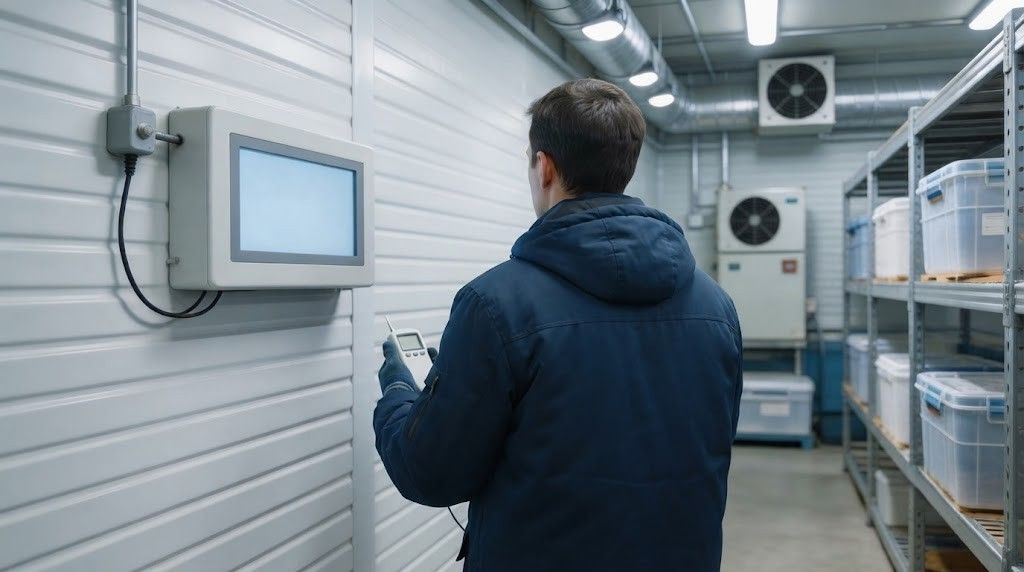
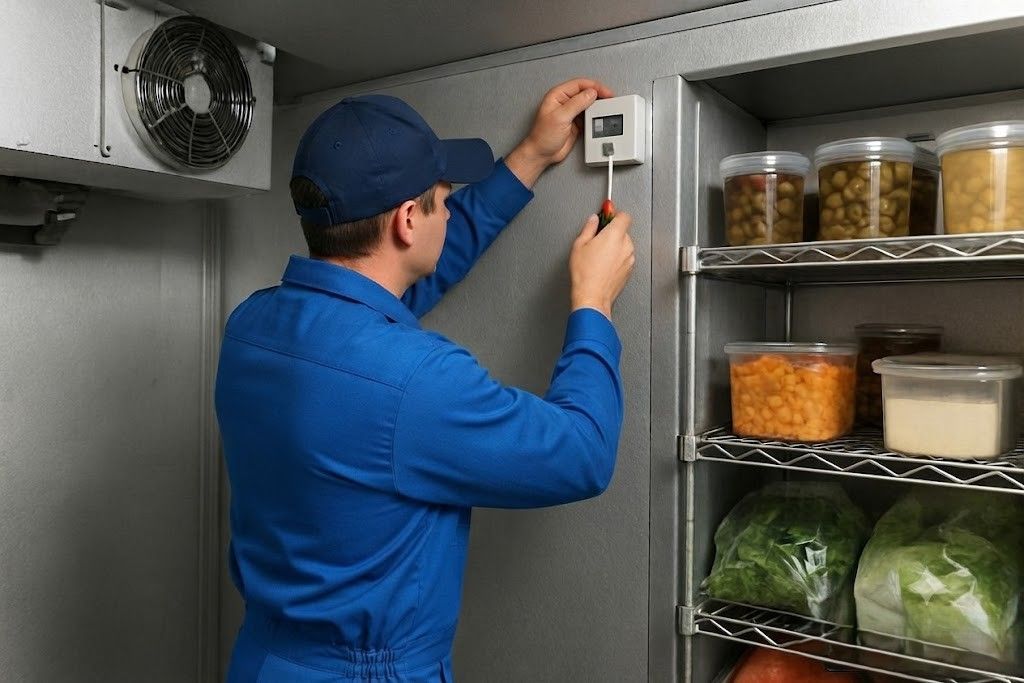
At normal kitchen temperatures a walk-in loses most of its cold air within about 2 minutes of the door standing open, and at desert ambient temperatures it goes faster still. Gaskets, sweeps, closers, and hinges are the cheapest repairs on the equipment and the ones that most reliably fix a temperature complaint in the box.
That is why our first look at a warm walk-in is at the doorway rather than at the condensing unit, even when the compressor is the part everyone assumes has failed.
- Door seals, sweeps, and closers checked first
- Defrost cycles matched to actual door traffic
- Temperature verified at multiple points in the box
- Repairs backed by a 90-day workmanship warranty
YOUR HOME STAYS SELLABLE
Active leaks and visible water damage kill inspection reports. A documented repair history reassures buyers, appraisers, and insurers that the roof over the property has been looked after.
WALK-IN COOLER REPAIR
A WALK-IN IS A BUILDING, A MACHINE, AND A DOOR.
Three separate systems have to work together. The panels and insulation hold the cold in, the refrigeration circuit removes heat, and the door controls how much warm air gets invited back. A fault in any of them looks identical from inside: product creeping warm. Diagnosis has to test all three of them rather than assuming the refrigeration side is where the trouble sits every single time.
DEFROST TIMING SHOULD MATCH YOUR DOOR TRAFFIC.
Common practice starts at 4 defrost cycles a day, with busy boxes going to 6 and low-traffic storage dropping to 2 or 3. Evaporators typically terminate defrost around 55 degrees and hold the fans off until the coil drops below 35. Getting those numbers wrong for your operation produces either persistent frost on the coil or a box that never quite recovers between cycles.
SOME OF THESE BOXES ARE OLDER THAN OUR TECHNICIANS.
Walk-ins get inherited with the building, patched by whoever was available, and run for 20 years past the point anyone remembers the original installer. Panels get bowed, drains get rerouted, controls get bypassed. Working on them means reading what previous hands did before changing anything. Two generations of that work across Cochise County and Pima County built the patience it requires. What condition is yours actually in today?
WHY CHOOSE US FOR WALK-IN COOLER REPAIR.
The Cheap Fixes Checked First
Gaskets, sweeps, closers, and hinges cost a fraction of a compressor and solve a large share of temperature complaints. Those get inspected before anything expensive is proposed.
Defrost Tuned to Your Operation
A prep kitchen with constant door traffic needs different defrost timing than a beverage store room. Settings get matched to how the box is actually used rather than left at factory defaults.
Product Protected During the Work
Where a repair will take the box out of service, we plan for the inventory first. Temporary storage or staged work keeps product safe while the equipment is down.
Energy Losses Reported
A failed door closer or a torn gasket runs the compressor extra hours every day. Those findings come with an explanation of what they are costing rather than being noted and forgotten.
Panels and Structure Assessed
Bowed panels, waterlogged insulation, corroded floor edges, and failed sealant all affect performance and are worth knowing about before they turn into a full box replacement.
Documentation That Satisfies Inspection
Temperatures before and after, the fault found, and the work performed all get written up. That record is exactly what a health inspector or an insurer asks for later.
WHAT WE REPAIR
OUR WALK-IN COOLER REPAIR WORK
Walk-in faults sit in six areas across the box, the refrigeration system, and the controls. Each gets checked against how the cooler is used rather than against a generic specification sheet.
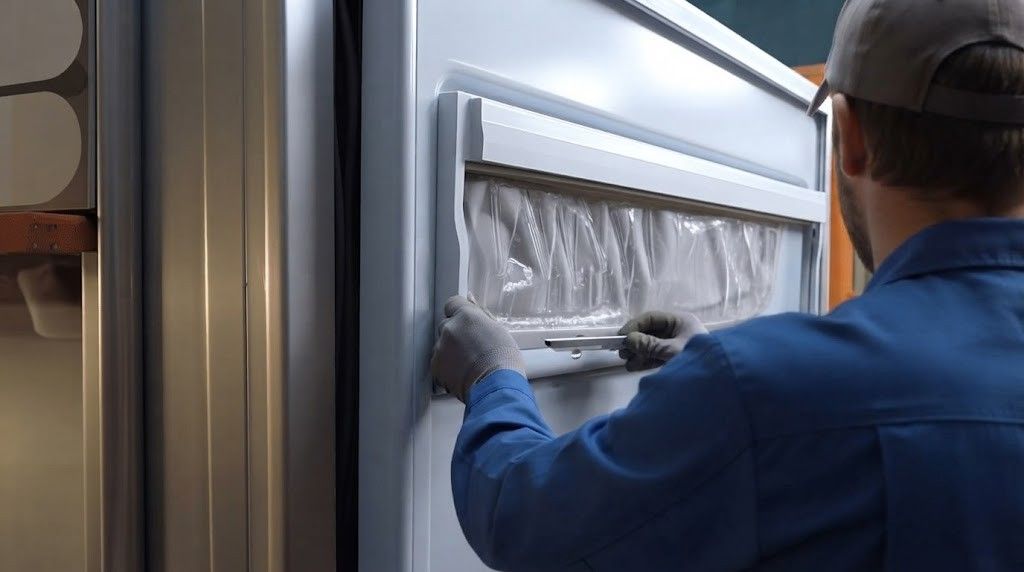
DOOR SYSTEM
Door, Gasket, and Closer Repair
Gaskets get replaced, sweeps refitted, hinges adjusted, and closers repaired so the door seals square every time it swings shut. Strip curtains and vapor-proof lighting get checked alongside them at the same time.
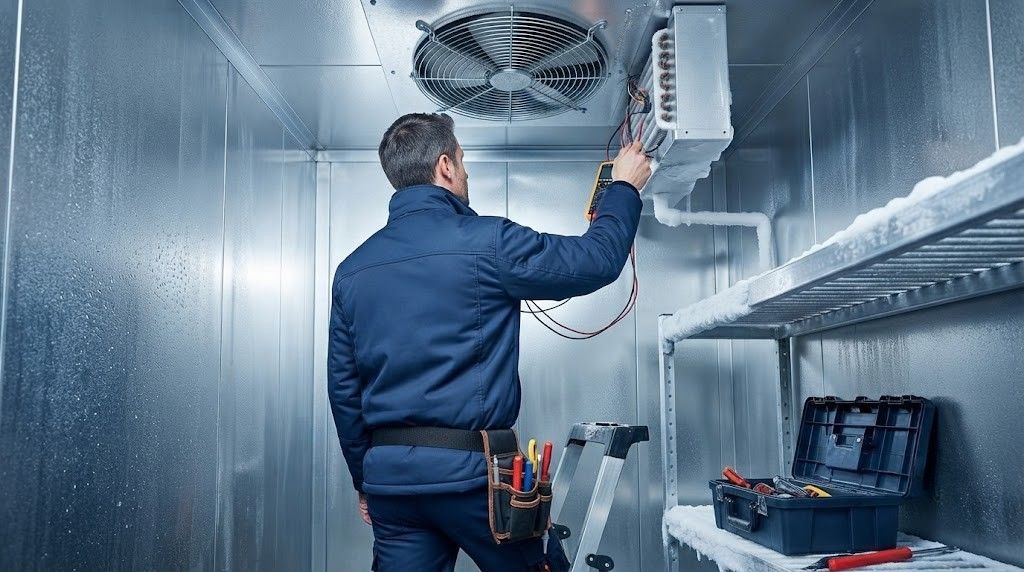
COLD SIDE
Evaporator Coil and Fan Repair
Evaporator fan motors, blades, drain pans, and coil surfaces all affect how evenly the box holds. A single failed fan produces a warm zone that inventory rotation eventually finds anyway.
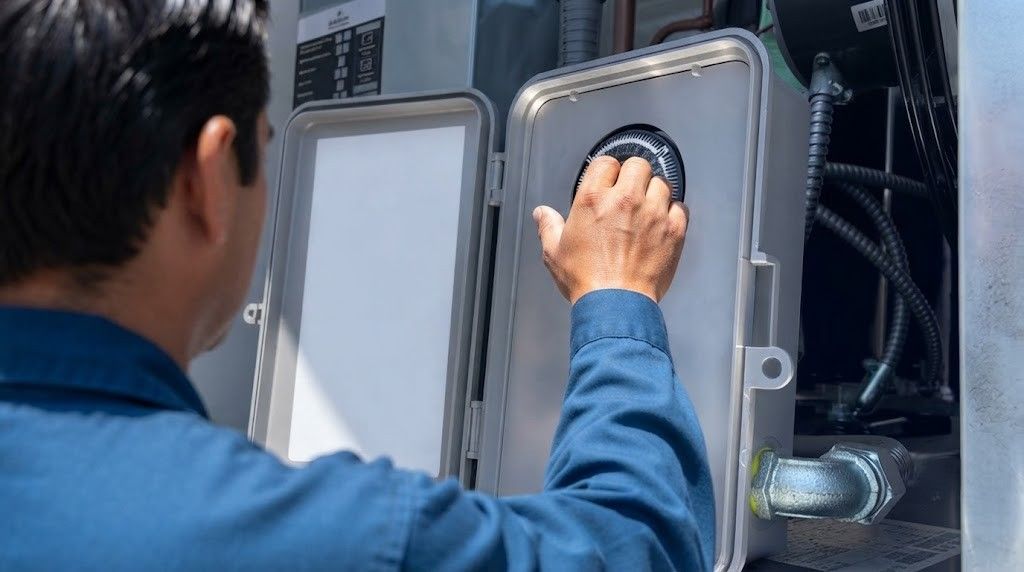
DEFROST CONTROL
Defrost Timer and Heater Repair
Timers, termination thermostats, defrost heaters, and drain line heaters all get tested through a live cycle. Frost that survives the cycle means one of them is not doing its job.
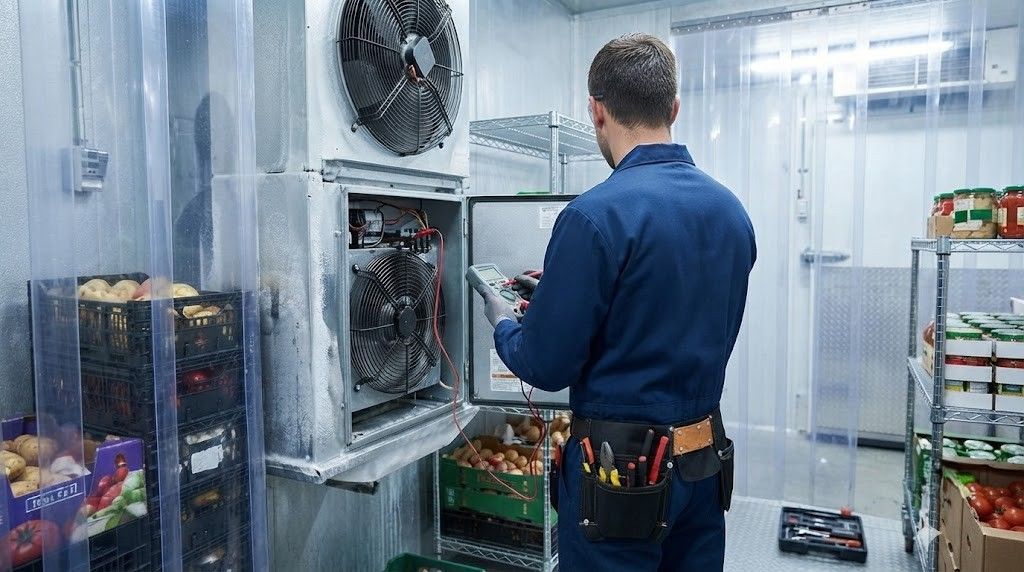
HEAT REMOVAL
Condensing Unit Repair and Service
Remote or self-contained condensing units get coil cleaning, fan and motor service, electrical testing, and charge verification. Ventilation around the unit gets assessed, since restricted airflow is common in back rooms.
BOX STRUCTURE
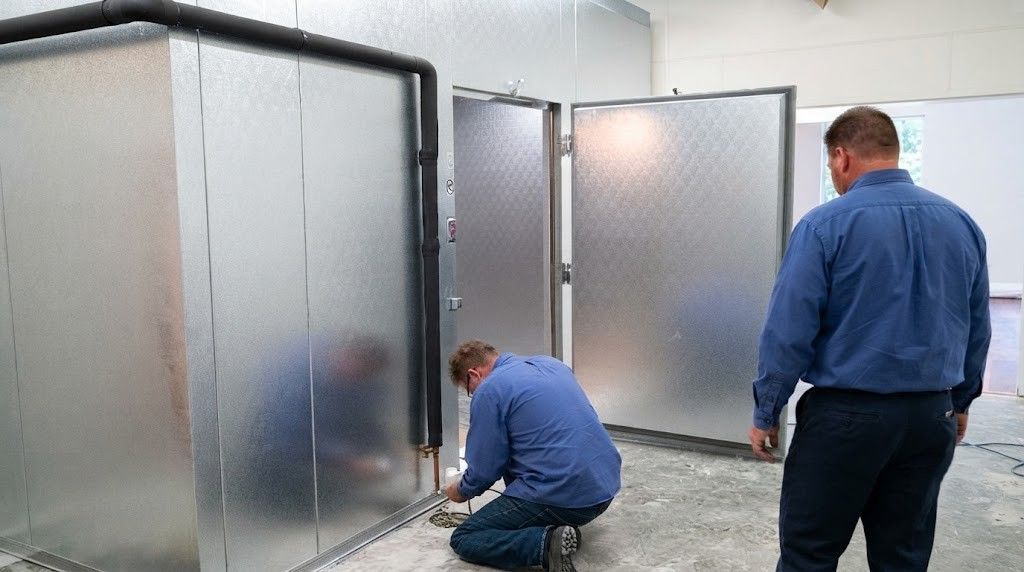
Panel, Floor, and Seal Repair
Bowed or separated panels, failed caulking at seams, damaged floor edges, and corroded threshold plates all let heat and moisture in. Repairs here protect the insulation value the box was built with.
TEMPERATURE CONTROL
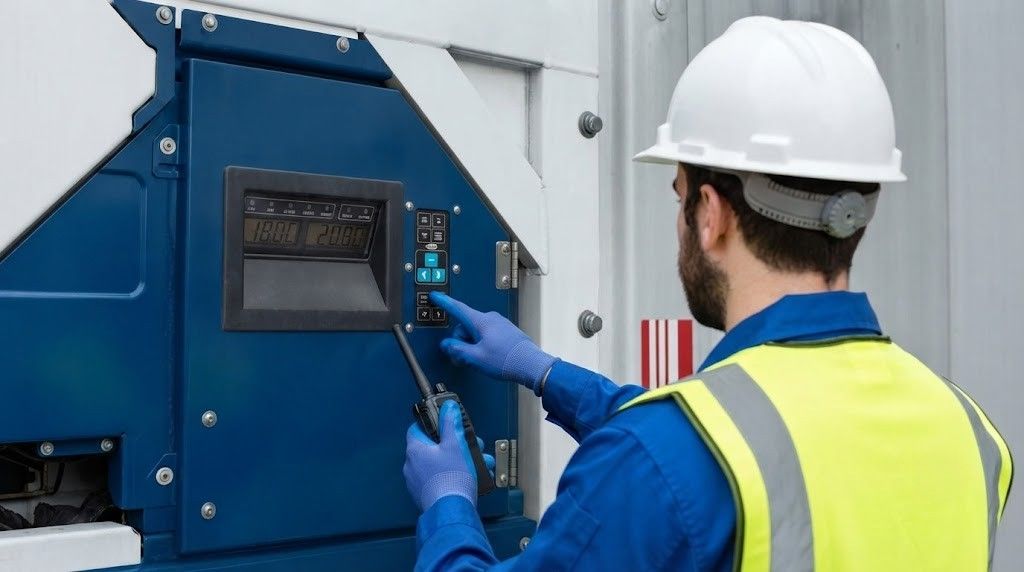
Thermostat and Alarm System Repair
Controllers, sensors, and high-temperature alarms get calibrated and tested. A working alarm is what turns an overnight failure into a phone call rather than a morning full of discarded product.
faq
frequently asked
questions.
The questions operators ask when a walk-in stops holding. Several of these can be checked before calling, and knowing the answers speeds up the visit considerably.
What should I do if a walk-in cooler is not cooling?
Check that the door closes fully, the evaporator is not iced over, the condenser is clean, and nothing is blocking airflow inside. Then move product and call before temperatures pass 41 degrees.
What is an acceptable temperature for a walk-in cooler?
Cabinets are usually set between 35 and 38 degrees so product stays comfortably below the 41 degree cold holding limit even during door openings and defrost cycles through the day.
How long is a defrost cycle on a walk-in cooler?
Typically 20 to 30 minutes, terminating when the coil reaches around 55 degrees. Abbey Aire and Building Repair sets cycle length and frequency to your door traffic at properties in Tucson, AZ.
Do walk-in coolers need a defrost timer?
Most do. Coolers running above freezing sometimes manage on off-cycle defrost, but any box with heavy door traffic or a coil that ices needs a timed cycle to stay reliable.
How do you tell if a walk-in cooler thermostat is bad?
Compare the controller reading against a calibrated thermometer in the same location. A significant gap, or a compressor that never cycles off, points at the control rather than the refrigeration.
What is the average lifespan of a walk-in cooler?
The box itself often lasts 25 years or more if the panels stay dry, while the refrigeration equipment typically needs replacing well before that. Insulation that has taken on water is the usual retirement trigger.
How do you measure a walk-in cooler door gasket?
Measure the door panel itself rather than the old gasket, which has usually shrunk, and note the mounting style. Abbey Aire and Building Repair matches gaskets by door dimension in Benson, AZ.
Why is my walk-in cooler compressor not running?
It may be satisfied, in a defrost cycle, tripped on a safety, or genuinely failed. Checking whether the control is calling for cooling separates a real failure from normal operation immediately.
HOW WE WORK
FROM WARM BOX TO STEADY TEMPERATURE, HERE IS HOW.
STEP 01
Assess the Inventory Risk
Current product temperature and how long the box has been drifting decide the urgency and whether anything needs relocating immediately. That conversation happens before a technician is even dispatched to the site in the first place.
STEP 02
Start at the Doorway
Gasket condition, closer function, hinge alignment, sweep contact, and strip curtain coverage all get checked first. Door problems are by far the most common cause and the least expensive to correct on the day.
STEP 03
Watch a Full Defrost Cycle
The box gets run through a complete defrost while termination temperature, heater operation, drain flow, and fan restart timing are observed. Half of the frost complaints we see resolve at this step alone.
STEP 04
Measure the Refrigeration Side
Pressures, superheat, subcooling, compressor amperage, and condenser condition get recorded and compared to the equipment's design values. A low charge always triggers a leak search before anything at all is added back into the circuit.
STEP 05
Repair and Reset the Cycle
Components get replaced, seals fitted, leaks brazed and tested, and defrost timing reset to suit the door traffic the box actually sees during a normal trading week rather than a factory assumption made years ago.
STEP 06
Prove It Holds
The box runs long enough to cycle and defrost at least once with temperatures logged throughout. You receive those readings, the fault explanation, and the warranty terms together in one written document afterward.
GET YOUR ESTIMATE
A COLD BOX AGAIN, AND THE REASON IT DRIFTED.
A walk-in that will not hold puts every hour of inventory at risk. Send the temperatures and the equipment details through our contact page and Abbey Aire and Building Repair will respond in Tucson, AZ.
WHAT YOUR WALK-IN REPAIR COVERS:
- Product and air temperatures logged in the box
- Door seals, closers, and hinges inspected first
- A full defrost cycle observed and retimed
- Refrigeration circuit measured against design values
- Panel and insulation condition assessed
- A 90-day workmanship warranty on the repair