

Commercial Cooking Equipment Repair
COMMERCIAL COOKING EQUIPMENT REPAIR IN Benson & Tucson, AZ
The Food Code sets hot holding at 135 degrees or above and requires reheating for hot holding to reach 165 degrees within 2 hours, so a thermostat drifting out of calibration becomes a food safety failure. Abbey Aire and Building Repair repairs and services commercial cooking equipment across Benson & Tucson, AZ, Vail, Marana, Oro Valley, St. David, and Sahuarita, AZ.
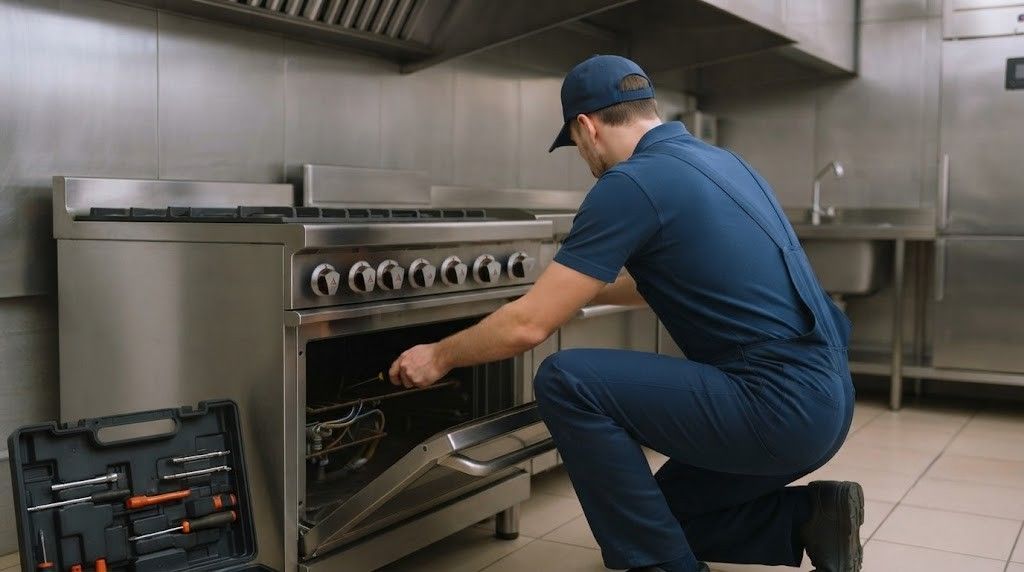
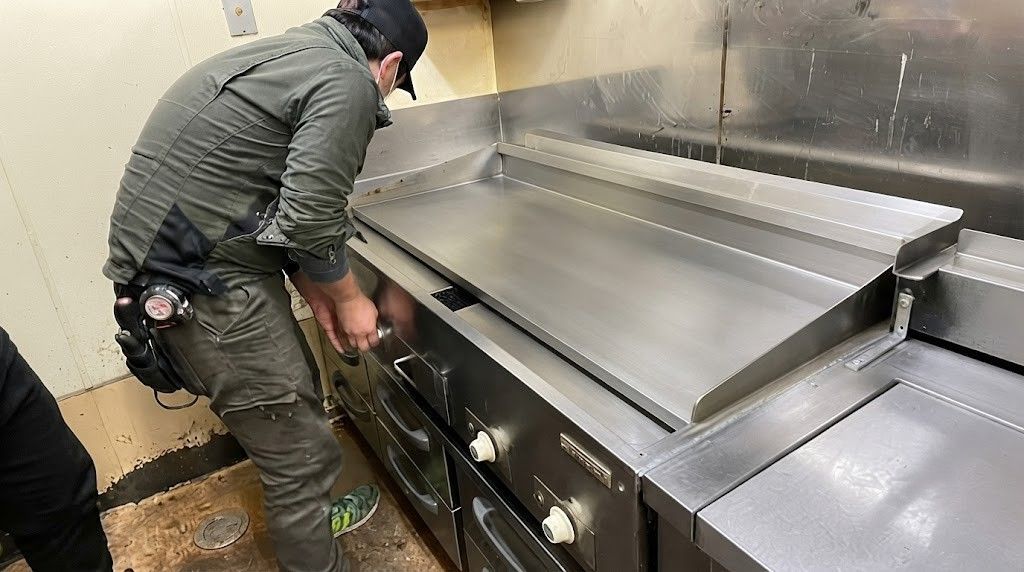
LOSE ONE FRYER AND YOU LOSE HALF THE MENU.
Commercial cooking equipment fails in the middle of service, never during a quiet Tuesday morning. Most of what goes wrong is repairable the same day: thermostats out of calibration, failed igniters, worn gas valves, blocked burner ports, or a high-limit that keeps tripping. Getting the line running again usually takes parts we already carry.
Gas connections get checked at the same time, because equipment on casters requires a listed connector and a restraining device, and both are routinely written up during an inspection.
- Thermostats calibrated against actual temperature
- Gas connectors and restraining devices checked
- Common igniters, valves, and controls carried on the truck
- Repairs backed by a 90-day workmanship warranty
YOUR HOME STAYS SELLABLE
Active leaks and visible water damage kill inspection reports. A documented repair history reassures buyers, appraisers, and insurers that the roof over the property has been looked after.
COMMERCIAL COOKING EQUIPMENT REPAIR
A THERMOSTAT OUT BY 25 DEGREES COSTS YOU TWICE.
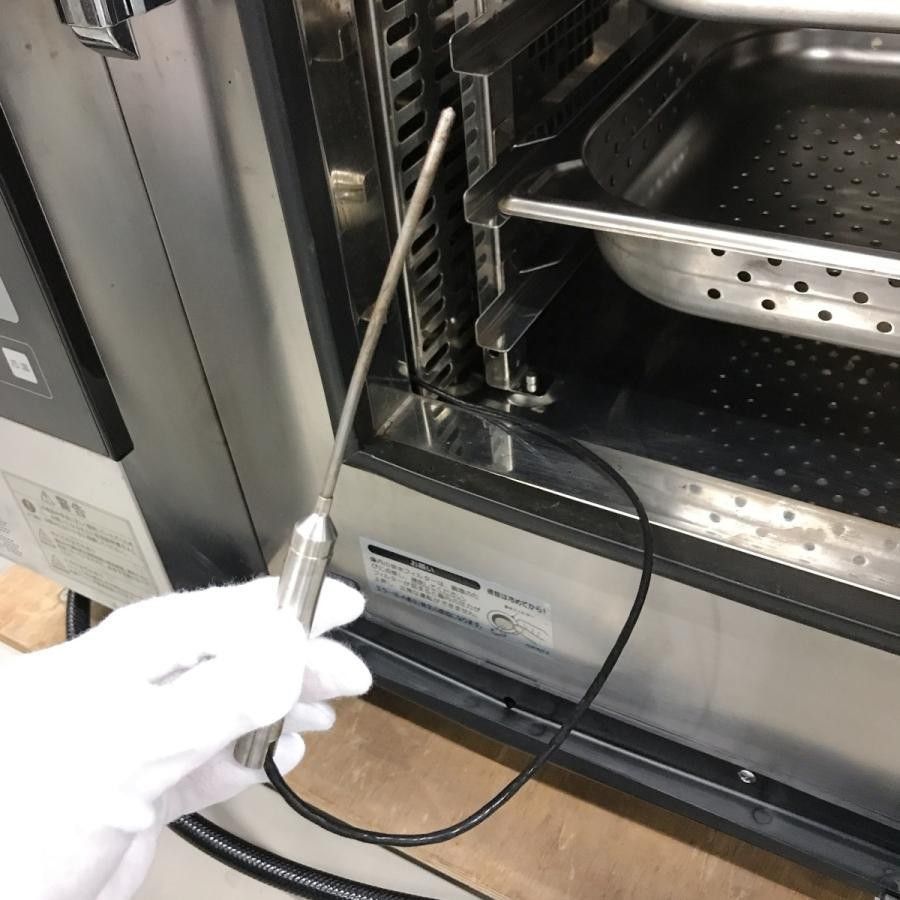
Food that does not reach temperature is a food safety problem, and food that overshoots is wasted product and inconsistent plates. Both come from the same source: a control that no longer matches reality. Verifying the actual temperature against the dial with a calibrated probe takes minutes and settles arguments that have been running in a busy kitchen for months, sometimes years, without any resolution at all.
HOOD CLEANING FREQUENCY DEPENDS ON WHAT YOU COOK.
Fire code sets inspection and cleaning frequency by volume and cooking type: monthly for solid fuel, quarterly for high-volume or charbroiling operations, semiannually for moderate volume, and annually for low volume. Equipment repair and exhaust upkeep are related, because a hood that is not moving air properly puts extra heat load on everything underneath it and on the kitchen crew as well.
ENOUGH TIME BEHIND THE LINE TO STAY OUT OF THE WAY.
Working in a commercial kitchen means understanding when service starts, which equipment cannot come offline during it, and how to get in and out without becoming part of the problem. The technical work matters, and so does not blocking the pass at 6 in the evening. Two generations of doing this across Southern Arizona taught us both halves. When does your kitchen actually have a free window?
WHY CHOOSE US FOR COMMERCIAL COOKING EQUIPMENT REPAIR?
Calibration You Can Verify
Actual temperature gets measured with a probe and compared against the control setting. You see both numbers, which ends the guesswork about whether a piece of equipment is running true.
Repairs Timed to Service
Work fits between services, before prep, or after close. Nobody needs a technician pulling a fryer apart while tickets are printing and the line is already three deep.
Gas Safety Included
Connectors, quick disconnects, restraining devices, and shut-off valves all get inspected while we are there. These are common inspection findings and take moments to check properly.
Parts on the Truck
Igniters, thermocouples, thermostats, high limits, valves, and elements for common equipment ride with the crew. Most cooking equipment faults finish the same day rather than waiting on an order.
Honest Repair Assessment
Some equipment is genuinely at the end of its life. You get that assessment plainly, with the repair cost next to a replacement figure, rather than a series of small invoices.
One Call for the Whole Kitchen
Cooking equipment, refrigeration, ice, and the HVAC above it all get handled by the same crew. That is one number to call rather than three, and one visit rather than three.
WHAT WE REPAIR
OUR COMMERCIAL COOKING EQUIPMENT REPAIR WORK
Cooking equipment faults concentrate in six areas across heat sources, controls, and gas delivery. Each gets tested with a calibrated instrument rather than judged by how the food came out last night.
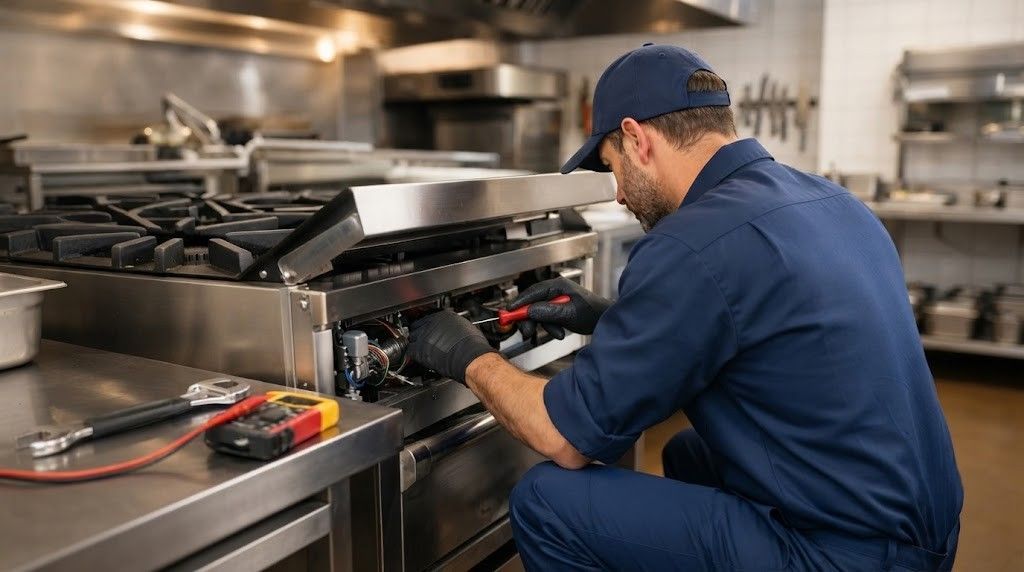
FRYERS
Commercial Fryer Repair
Thermostats, high-limit controls, thermopiles, igniters, and burner assemblies all affect whether oil holds temperature through a rush. Recovery time between baskets is the real measure of a working fryer here.
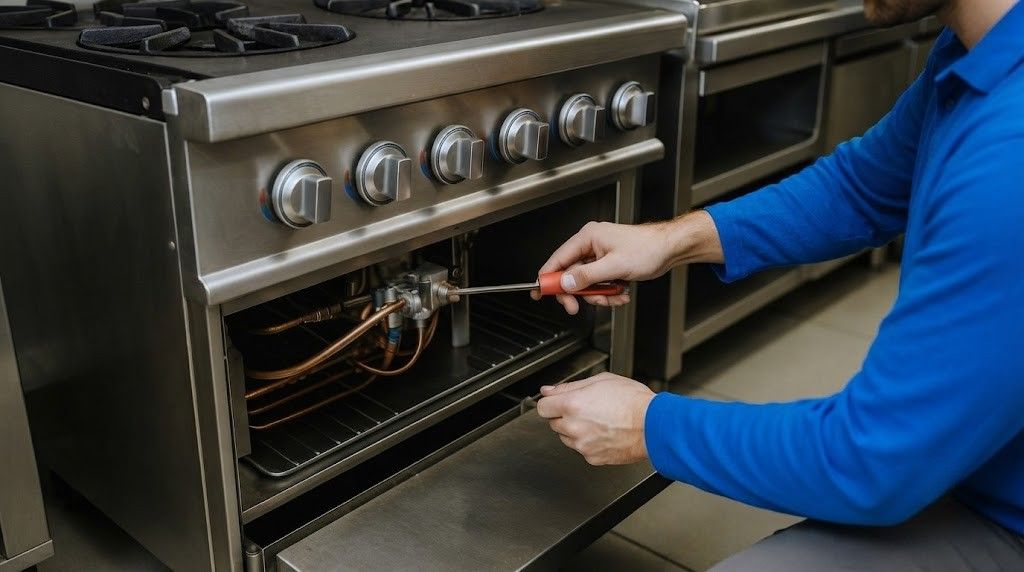
OVENS AND RANGES
Oven, Range, and Griddle Repair
Igniters, thermocouples, safety valves, thermostats, and burner ports get inspected and tested. Uneven cooking usually traces to burner port blockage or a control that has drifted well out of calibration.
STEAM AND HOT HOLDING
Steamer and Holding Cabinet Repair
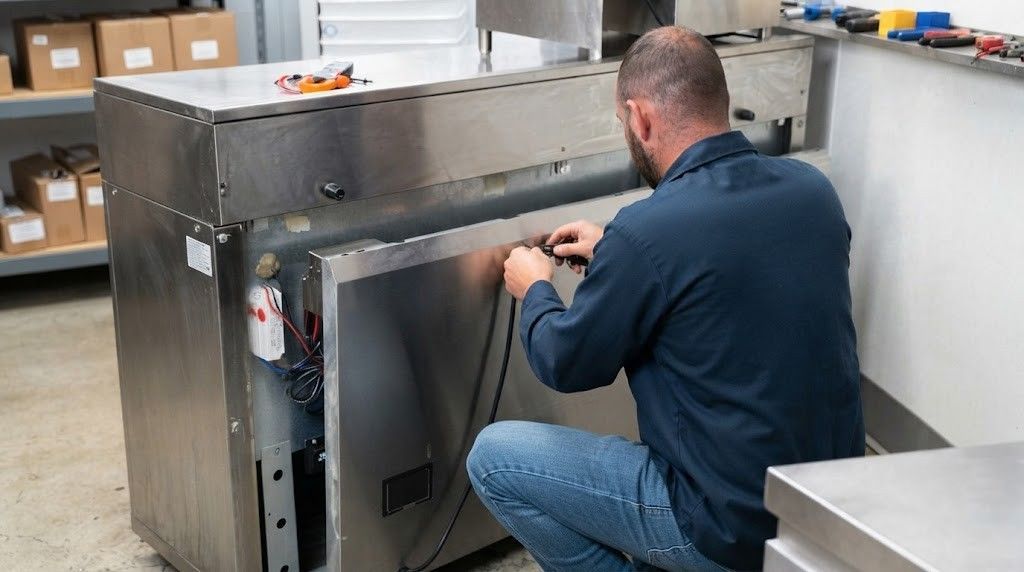
Steam tables, holding cabinets, and steamers have to keep product at 135 degrees or above. Elements, thermostats, water levels, and scale buildup all determine whether they actually manage it during service.
GAS SYSTEMS
Gas Valve and Connection Repair
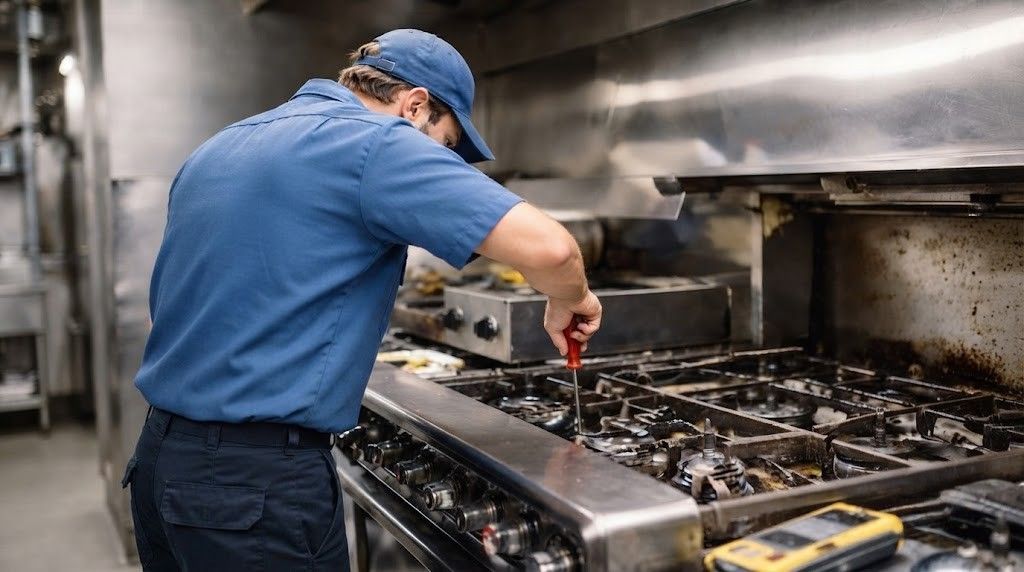
Manifold pressure, valve operation, connector condition, quick disconnects, and restraining devices all get checked. A listed connector and a restraint on castered equipment are code requirements rather than helpful suggestions.
CONTROLS
Thermostat Calibration and Control Repair
Dials, digital controls, probes, and high-limit switches all drift over time. Calibrating them against a reference thermometer restores consistency to plates and keeps hot holding within the required range reliably.
EXHAUST SIDE
Exhaust Fan and Make-Up Air Repair
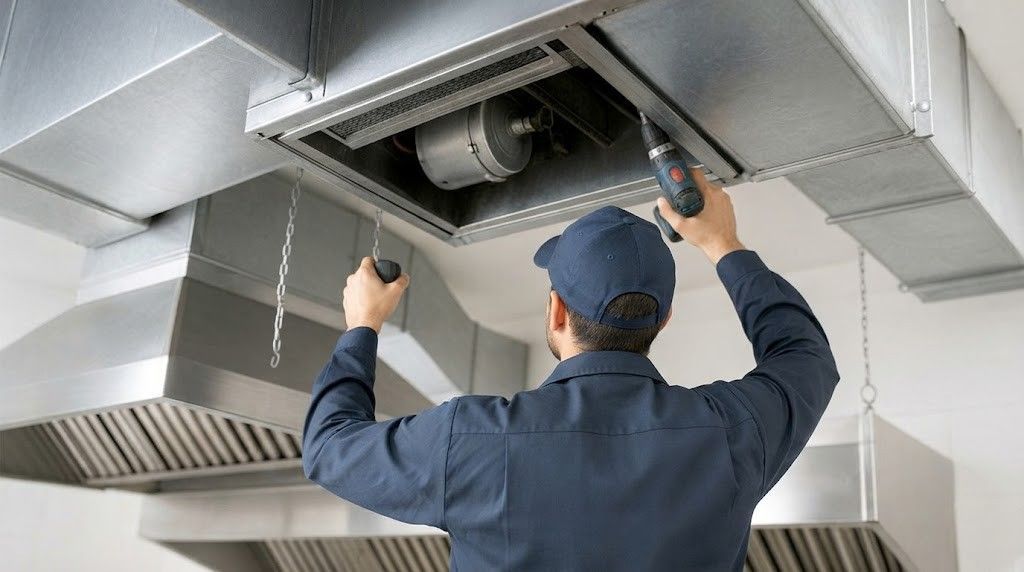
Hood exhaust fans, belts, motors, and make-up air units affect the temperature the crew works in and how well the line performs. A failing exhaust fan makes every appliance underneath work harder.
faq
frequently asked
questions.
The questions kitchen operators ask about cooking equipment, mostly about heat, ignition, and how long a piece of equipment should reasonably last before replacement makes better sense.
Why is my gas range not heating up?
No gas supply, a failed igniter or thermocouple, a safety valve that has not opened, or blocked burner ports. Checking that the pilot or igniter is actually working comes first.
Why is my commercial fryer not heating up?
A tripped high limit, a failed thermostat, an igniter or thermopile fault, or a gas supply issue. Abbey Aire and Building Repair tests each in order on fryer calls throughout Tucson, AZ.
Where is the reset button on a deep fryer?
Usually behind the front panel or on the control housing, marked as a high-limit reset. If it trips again after resetting, the thermostat or the high limit itself is faulty.
What are the common problems with commercial fryers?
Thermostat drift, high-limit trips, slow recovery between baskets, igniter and thermopile failures, and burner port blockage from carbon buildup. Oil quality and filtering habits affect several of those directly too.
What is the life expectancy of a commercial oven?
Roughly 10 to 15 years with regular servicing, and considerably less where controls are never calibrated and burners are never cleaned. Heavy-duty ranges built for volume often outlast that figure comfortably.
How do I know if my oven thermal fuse is blown?
The unit has power but will not heat at all, and continuity across the fuse reads open. A blown thermal fuse is a symptom, so the overheating cause needs finding too.
What maintenance is required for commercial fryers?
Daily filtering, regular boil-outs, burner cleaning, and periodic thermostat calibration. Abbey Aire and Building Repair handles the calibration and burner work on schedules for kitchens across Benson, AZ and nearby.
How often should restaurant equipment be serviced?
Quarterly for heavily used cooking equipment, semiannually for lighter use, and calibration checks at least twice a year. Exhaust cleaning follows its own schedule set by cooking volume and fuel type.
HOW WE WORK
FROM A DEAD BURNER TO A WORKING LINE, HERE IS HOW.
STEP 01
Find the Service Window
Before anything, we agree when the work can happen without stopping the kitchen. Between services, before prep, or after close all work, and the choice on timing is entirely yours to make, not ours.
STEP 02
Confirm the Symptom
No heat, slow heat, uneven heat, or a control that trips all point in different directions. Reproducing the fault before opening anything saves time and avoids replacing a component that was working fine.
STEP 03
Check Gas and Power First
Supply pressure, valve position, connector condition, and electrical supply get verified before anything is dismantled. A surprising number of no-heat calls end at a closed valve or a breaker that tripped quietly overnight.
STEP 04
Test the Heat Path
Igniters, thermocouples, thermopiles, safety valves, elements, and burner assemblies get tested in the order the equipment actually uses them. That sequence lands on the failed part directly rather than by a slow process of elimination.
STEP 05
Repair and Calibrate
The failed component gets replaced, burners cleaned, and the control calibrated against a reference thermometer. The equipment leaves running at the temperature its dial claims, verified with a calibrated probe on site before we go.
STEP 06
Safety Check Before Leaving
Gas connections, restraining devices, shut-off access, and any code-relevant finding get checked and reported. Those items cost nothing to inspect and are routinely written up during health and fire inspections later in the year.
GET YOUR ESTIMATE
GET THE LINE BACK BEFORE THE NEXT SERVICE STARTS.
Kitchen equipment fails at the worst possible moment, and it usually does not have to stay down. Describe the unit and the fault through our contact page and Abbey Aire and Building Repair will respond in Tucson, AZ.
WHAT YOUR KITCHEN REPAIR COVERS:
- The fault reproduced before anything is dismantled
- Gas supply and electrical verified first
- Heat path components tested in sequence
- Controls calibrated against a reference thermometer
- Gas connectors and restraints inspected
- A 90-day workmanship warranty on the repair