Commercial Freezer Repair
COMMERCIAL FREEZER REPAIR IN Benson & Tucson, AZ
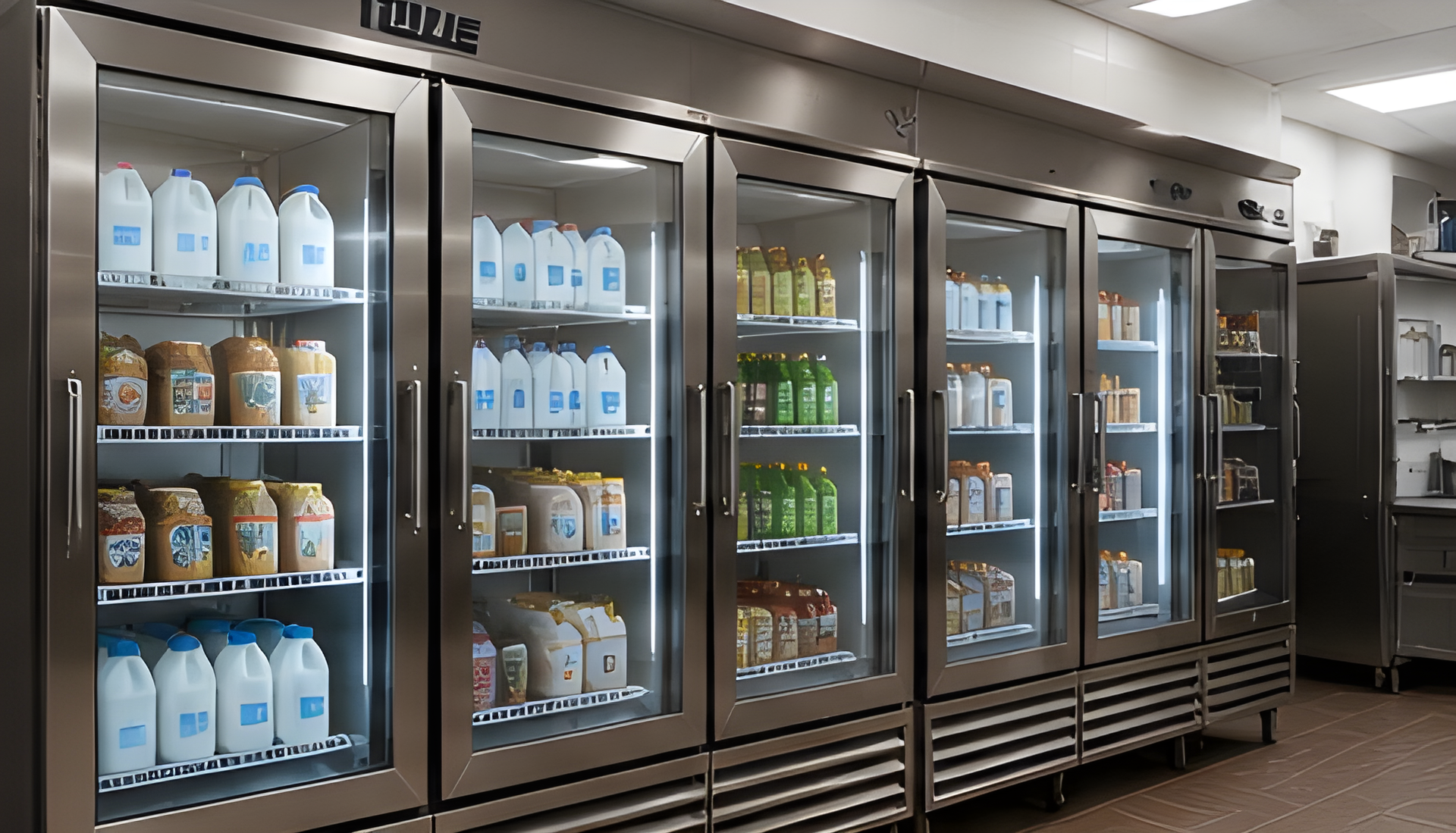
Federal energy conservation standards require walk-in freezer walls, ceilings, and doors to reach at least R-32 insulation and freezer floors at least R-28. A full freezer holds safe temperature roughly 48 hours in total once the power or the equipment stops. Abbey Aire and Building Repair repairs commercial freezers and low-temperature systems across Benson, AZ, Tucson, Vail, Marana, and Sahuarita.
LOW TEMPERATURE IS A DIFFERENT ANIMAL ENTIRELY.
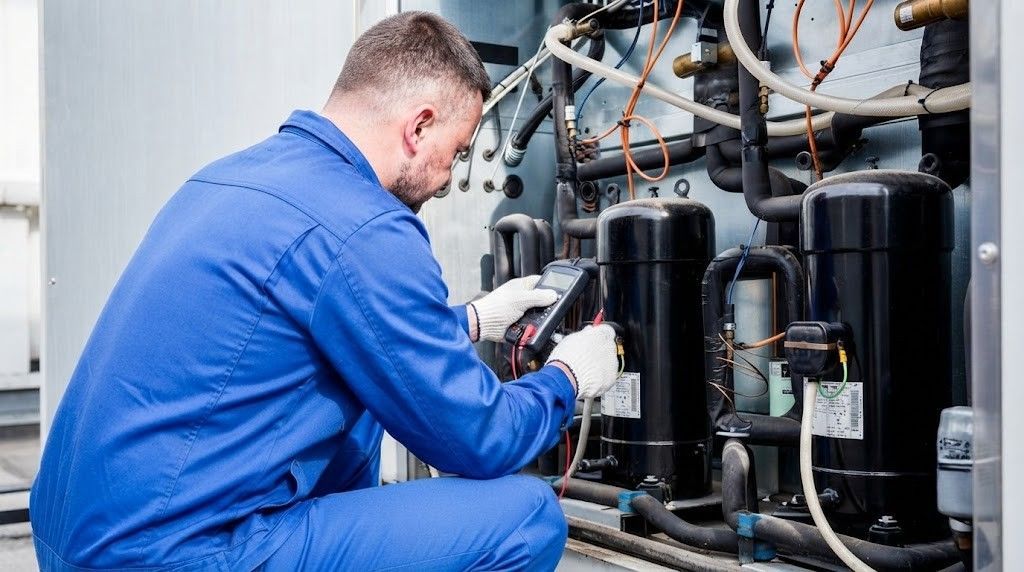
A freezer circuit runs at pressures and temperatures a cooler never sees, uses different oil behavior, relies on active defrost, and punishes small errors harder. Charging by pressure alone does not work down there. Neither does treating a defrost fault as a refrigerant problem, which is the most common misdiagnosis on this equipment entirely.
Every freezer call here starts by watching a complete defrost cycle before any gauge goes on the system, because more than half of them resolve at exactly that step.
- A complete defrost cycle observed before gauges
- Low-temperature charge verified by weight
- Product temperatures logged before and after
- Repairs backed by a 90-day workmanship warranty
YOUR HOME STAYS SELLABLE
Active leaks and visible water damage kill inspection reports. A documented repair history reassures buyers, appraisers, and insurers that the roof over the property has been looked after.
COMMERCIAL FREEZER REPAIR
ICE ON THE COIL IS A MESSAGE, NOT A NUISANCE.
Frost that survives a defrost cycle means the heater failed, the termination sensor is out of range, the timer is stuck, or humid air is getting in through a bad seal. Left alone it grows until airflow stops entirely, and by then the compressor has been running against a blocked coil for days. Reading the ice pattern usually tells you which of those it actually is.
AMBIENT HEAT MAKES LOW TEMPERATURE WORK HARDER.
A freezer condensing unit in a Southern Arizona back room may face ambient temperatures 30 degrees above what its rating assumed. That raises head pressure, cuts capacity, and lengthens run time on equipment already working at the bottom of its range. Ventilating the condenser space and keeping the coil genuinely clean matters more here than it does almost anywhere else in the country.
LOW TEMPERATURE IS WHERE SHORTCUTS SHOW UP FIRST.
A cooler will tolerate a slightly wrong charge or a marginal joint for a season. A freezer will not. Moisture that a cooler shrugs off freezes into a restriction, and an approximate charge that almost works at 38 degrees fails completely at zero. Doing this work properly for 35+ years has mostly meant refusing to take the shortcuts that seem harmless. Is your freezer holding its setpoint?
WHY CHOOSE US FOR COMMERCIAL FREEZER REPAIR.
Defrost Diagnosed Properly
Watching a live defrost cycle beats guessing from the ice pattern alone. Heater current, termination temperature, and drain flow all get observed rather than inferred from what the coil looks like.
Charge Weighed, Never Guessed
Low-temperature systems are unforgiving about charge. Recovery, evacuation, and a weighed recharge replace the habit of adding refrigerant until the pressures look approximately right on a gauge.
Inventory Moved Before the Work
Frozen product has a short tolerance for warming, so relocating it or arranging temporary storage happens before the equipment comes apart rather than as an afterthought halfway through.
Alarms Tested Too
A high-temperature alarm is what saves a freezer full of product on a Saturday night. Testing it costs nothing during a service visit and has saved customers a great deal.
Condenser Environment Assessed
A freezer condenser boxed into a hot corner will never perform. Where ventilation is the real problem, that gets said plainly instead of quoting a compressor that will fail the same way.
Records for Your Files
Temperatures, findings, parts, and refrigerant quantities all get documented in a form that satisfies health inspection and refrigerant recordkeeping requirements without any extra work on your side.
WHAT WE REPAIR
OUR COMMERCIAL FREEZER REPAIR WORK
Freezer faults concentrate in six areas, and defrost is involved in more of them than anything else. Each gets tested through a live cycle rather than assessed from a static inspection.
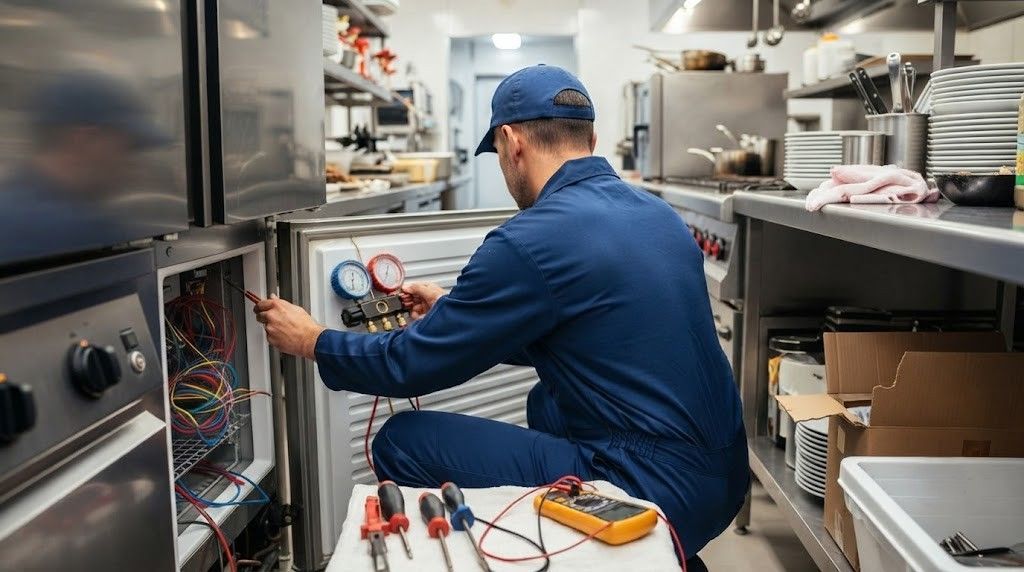
DEFROST HEATERS
Defrost Heater and Element Replacement
Calrod elements fail open, mounting clips corrode, and drain line heaters break inside the insulation. Each gets tested for current draw rather than assumed working because the timer advances on schedule.
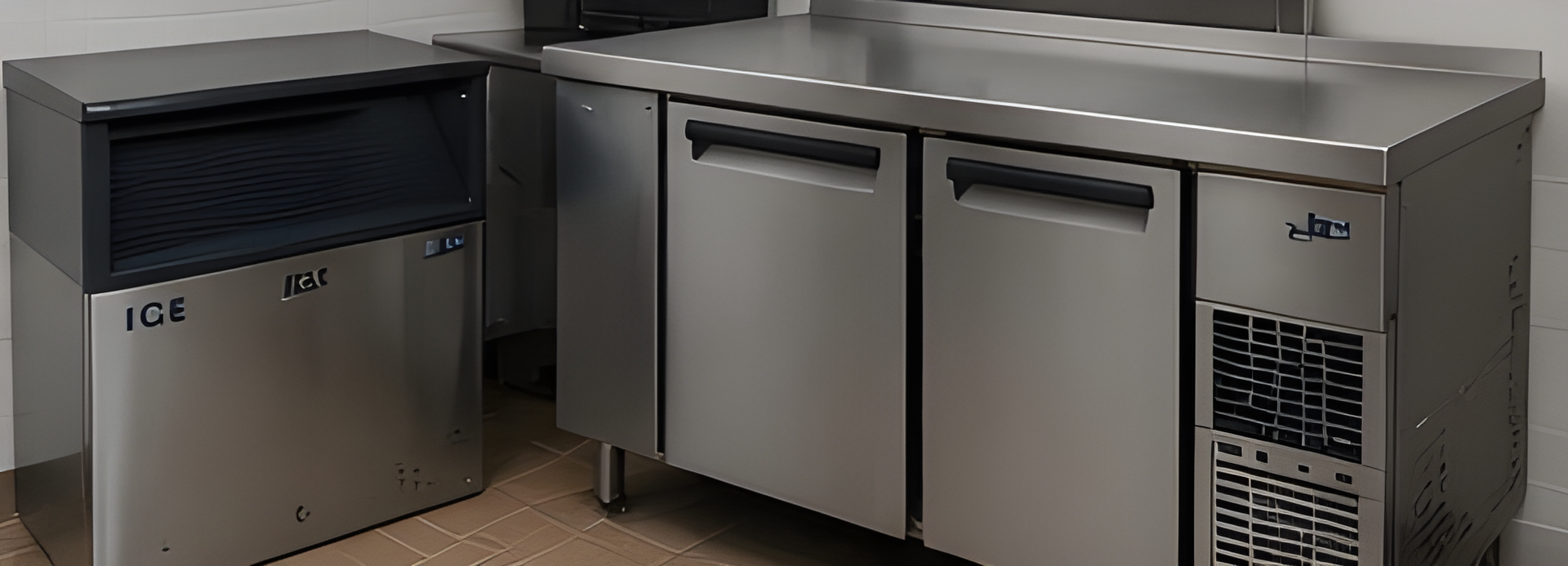
ICE REMOVAL
Coil De-Icing and Airflow Recovery
A fully blocked evaporator needs thawing before anything can be measured accurately. Clearing the ice, drying the coil, and restoring airflow comes first, then the cause of the buildup gets identified.
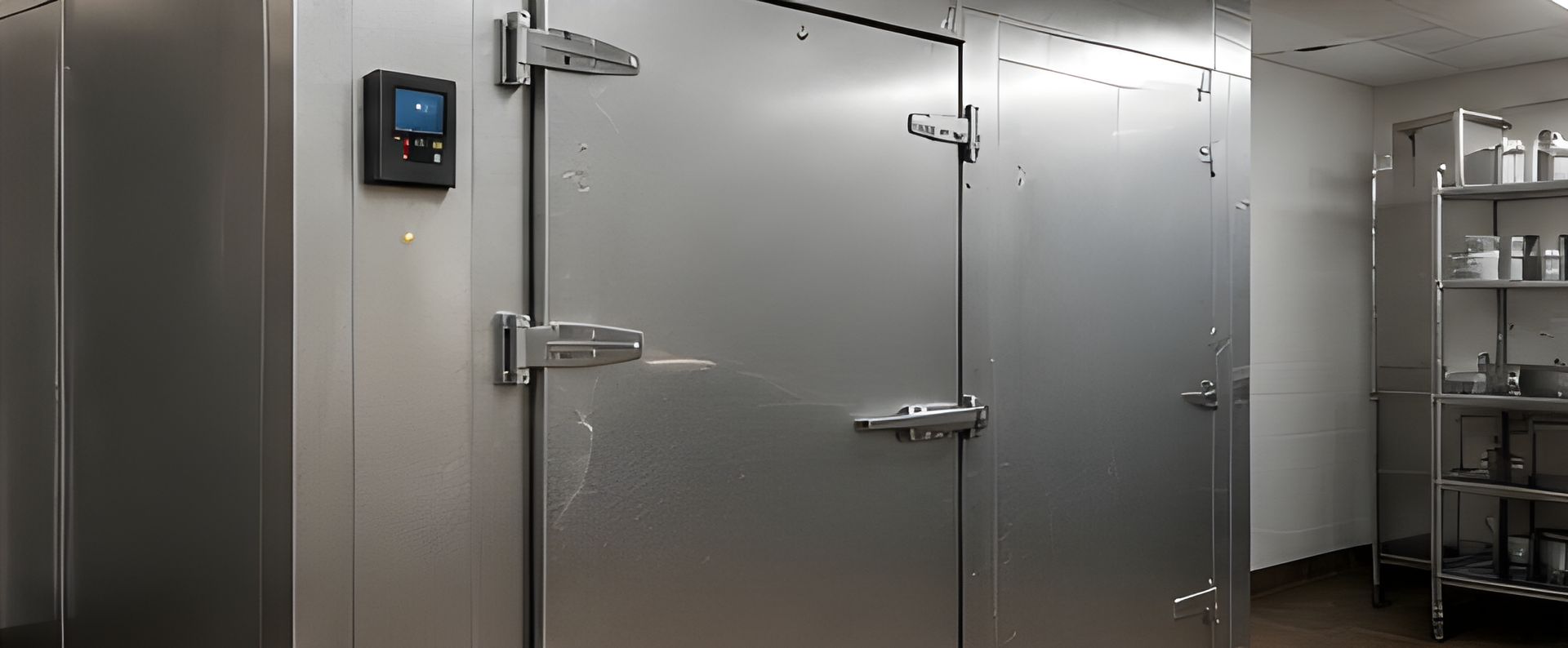
LOW TEMP CIRCUIT
Low-Temperature Refrigerant Circuit Repair
Freezer circuits require their own gauge set, charging discipline, and understanding of oil return. Leaks get located and brazed, the system evacuated deeply, and the charge weighed to the nameplate figure.
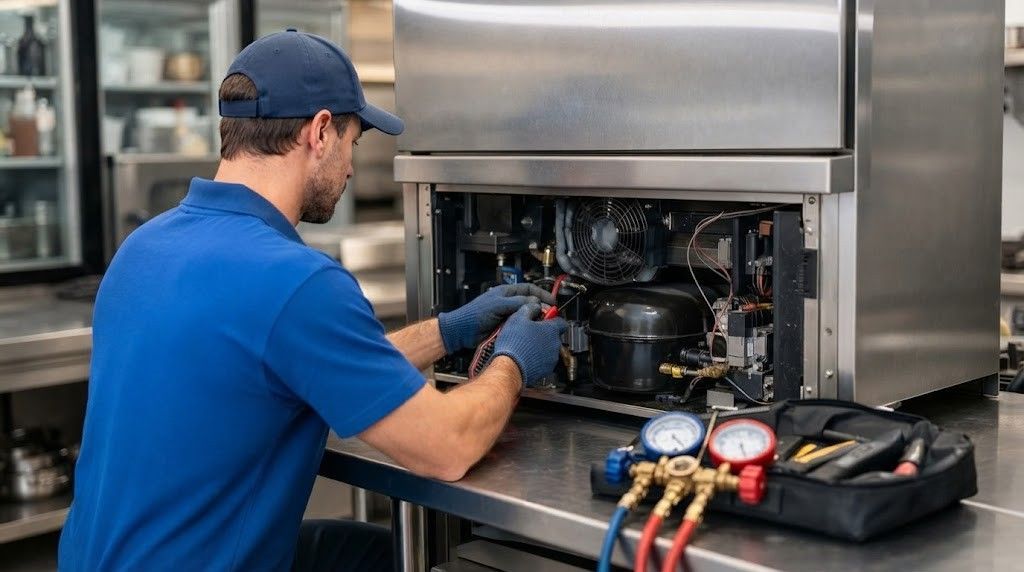
DRAINAGE
Drain Line and Pan Repair
A frozen drain line backs water into the box and onto the floor, where it becomes an ice hazard. Heated drain lines, correct slope, and clear traps prevent that from recurring each winter.
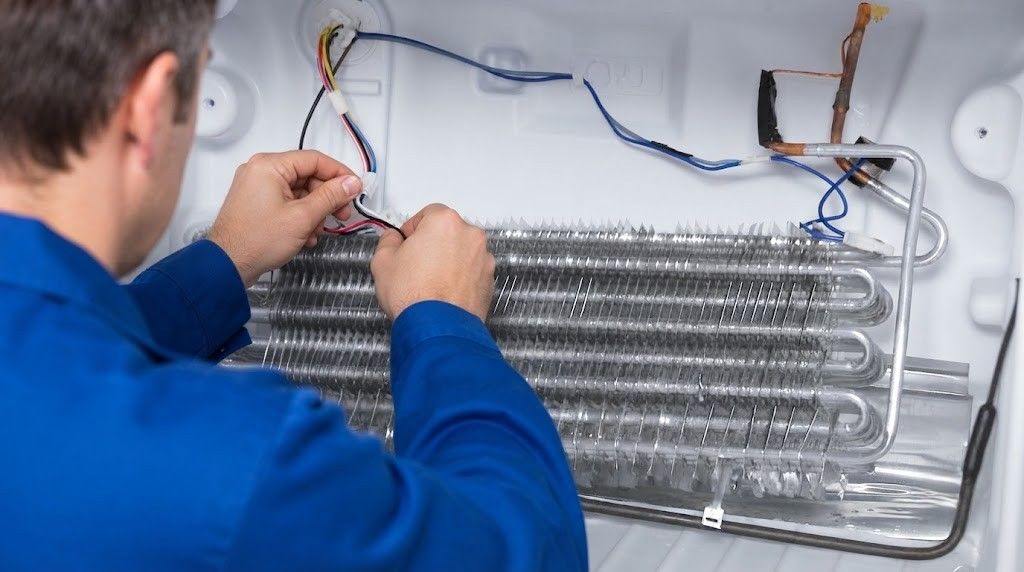
SHORT CYCLING
Pressure Control and Cycling Repair
A freezer starting and stopping every few minutes is usually tripping a low-pressure control on a restricted or undercharged circuit. Resetting it repeatedly damages the compressor without fixing anything at all.
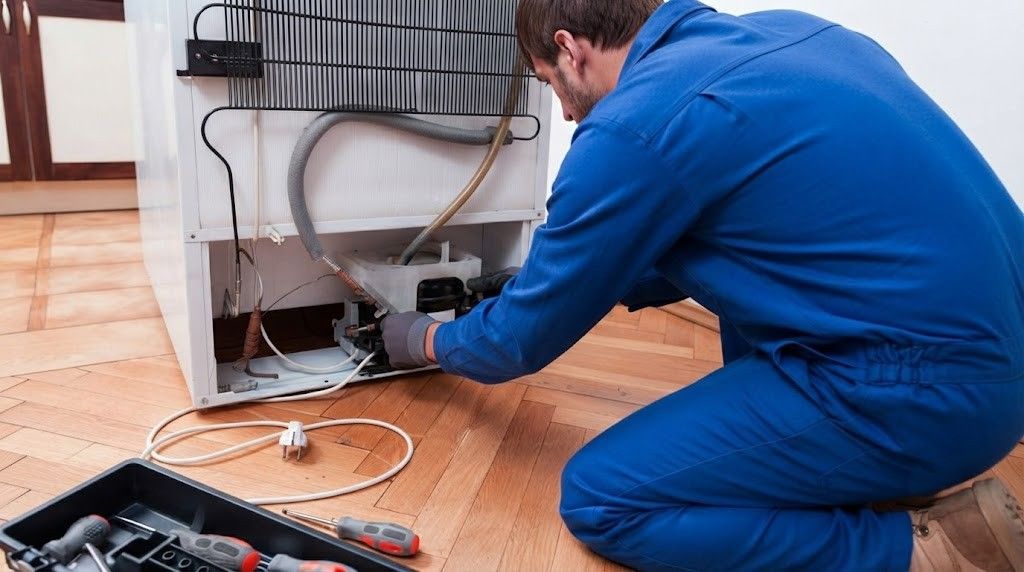
MONITORING
High-Temperature Alarm and Monitoring Repair
Alarms, remote monitoring, and data loggers get tested and calibrated so an overnight failure produces a phone call. Without one, the first sign of trouble is a morning full of loss.
faq
frequently asked
questions.
Questions we hear most about commercial freezers, from walk-in boxes to upright cabinets. Anything involving product already thawing is a call rather than a research project.
What is the proper temperature for a walk-in freezer?
Most operations run between zero and 10 degrees below zero, which keeps product solidly frozen with margin for door openings and defrost cycles. The Food Code requires frozen food to stay frozen.
Why is my freezer not freezing but the compressor is running?
Almost always an iced evaporator blocking airflow, a failed evaporator fan, or a restriction in the circuit. The compressor runs because the control never gets satisfied, which makes things worse.
How do you get rid of ice buildup in a commercial freezer?
Thaw it fully, dry the coil, then find why the defrost cycle is not clearing it. Abbey Aire and Building Repair does both on freezer calls throughout Benson, AZ rather than just chipping ice.
How many defrost cycles should a walk-in freezer have?
Most boxes start at 4 defrost cycles a day, rising to 6 with heavy door traffic and dropping to 2 or 3 on low-use storage. Traffic decides it, not the calendar.
Why do evaporator fans shut off during defrost?
Because running them would blow warm, moist air from the defrost heaters straight into the box. Fans stay off until the coil drops back below roughly 35 degrees after the cycle ends.
What causes a walk-in freezer to short cycle?
A low-pressure control tripping on a restricted or undercharged circuit, a failed pressure switch, or a fouled condenser raising head pressure. Repeated manual resets damage the compressor without addressing any of it.
What is the average lifespan of a commercial freezer?
The refrigeration equipment typically runs 10 to 15 years, with the box lasting far longer if it stays dry. Abbey Aire and Building Repair assesses both when advising customers in Tucson, AZ.
What happens if a walk-in freezer gets too warm?
Frozen product begins thawing, and once it passes 41 degrees for more than a couple of hours it has to be discarded. Partial thawing also ruins texture and quality permanently.
HOW WE WORK
FROM THAWING PRODUCT TO A SOLID FREEZE, HERE IS HOW.
STEP 01
Get the Product Safe
Before anything else, we establish how warm the product is and whether it needs moving. Frozen inventory has a short window, and protecting it takes clear priority over diagnosing the equipment itself at that moment.
STEP 02
Read the Ice
The pattern of frost on the coil, the drain, and the door frame says a great deal before any tool comes out. Even ice, one-sided ice, and door-frame ice each mean something different.
STEP 03
Run a Live Defrost
The defrost cycle gets initiated and watched from start to finish. Heater current draw, termination temperature, drain flow, and fan restart timing all get measured while the cycle is actually running rather than afterward.
STEP 04
Clear and Measure
Any remaining ice gets thawed so the coil can be assessed properly, then the refrigerant circuit is measured. Readings taken on a blocked coil are meaningless, which is why this order matters here.
STEP 05
Repair and Recharge Correctly
Components get replaced, leaks brazed and pressure tested, the system evacuated deeply, and the charge weighed to the nameplate. Approximation is exactly what puts a freezer back on the call list again next month.
STEP 06
Pull Down and Verify
The box runs down to setpoint and through at least one full defrost while temperatures are logged. Alarms get tested at the same time, and the readings go into your records afterward as usual.
GET YOUR ESTIMATE
GET THE FREEZER BACK BEFORE THE PRODUCT GOES.
Frozen inventory does not wait for a convenient appointment. Send the temperatures and equipment details through our contact page and Abbey Aire and Building Repair will respond to your Benson, AZ operation as quickly as possible.
WHAT YOUR FREEZER REPAIR COVERS:
- Product temperatures logged before work starts
- A complete defrost cycle observed live
- Ice cleared before any readings are taken
- Charge weighed to the nameplate figure
- High-temperature alarms tested and calibrated
- A 90-day workmanship warranty on the repair