

Commercial HVAC Maintenance
COMMERCIAL HVAC MAINTENANCE IN Benson & Tucson, AZ
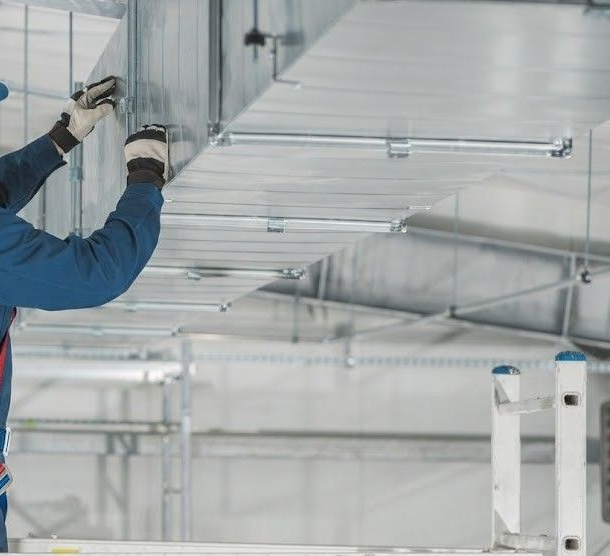
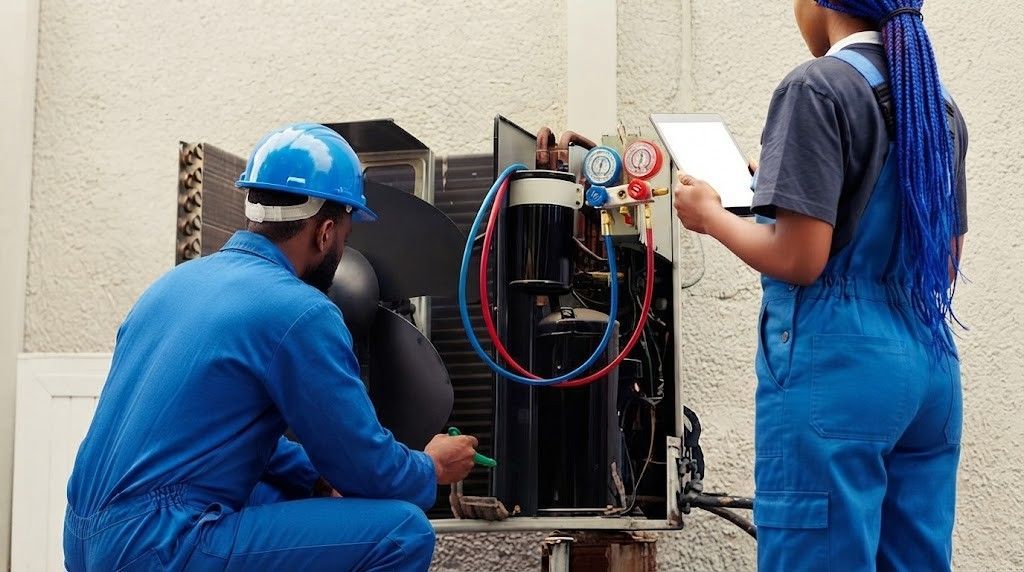
ANSI and ASHRAE Standard 180 sets minimum inspection intervals for rooftop equipment: filters checked quarterly, belt tension and economizer dampers semiannually, and condenser surfaces, evaporator fins, condensate drains, and refrigerant temperatures annually. Abbey Aire and Building Repair builds scheduled commercial maintenance agreements on exactly that schedule across properties in Benson & Tucson, AZ, Vail, Marana, St. David, and Oro Valley, AZ.
A SCHEDULE BEATS A PHONE CALL EVERY TIME.
Reactive maintenance means paying for the failure and the repair together, usually at the least convenient moment. A written agreement puts inspection intervals on a calendar, documents what was found each time, and turns the roof from an unknown into a managed asset. It also gives you a defensible record when a warranty claim or a lease question comes up.
Multi-site operators get the same format across every location, so the reports compare directly. That makes it obvious which building is consuming the budget and which equipment is due for capital replacement.
- Standard 180 inspection intervals as the baseline
- Written report and readings after every visit
- Economizer dampers checked twice a year
- Consistent reporting format across multiple sites
YOUR HOME STAYS SELLABLE
Active leaks and visible water damage kill inspection reports. A documented repair history reassures buyers, appraisers, and insurers that the roof over the property has been looked after.
COMMERCIAL HVAC MAINTENANCE
THE ECONOMIZER IS THE CHEAPEST SAVINGS ON THE ROOF.
Multiple independent field studies have found economizers non-functional in anywhere from 43 to 100 percent of the units surveyed, and one survey of contractors found a third of existing rooftop economizers deliberately disabled with the dampers closed. A working economizer brings free cooling on mild mornings and shoulder-season days. Checking and calibrating it twice a year is one of the highest-return items on any maintenance schedule.
DUST HERE OUTPACES ANY NATIONAL INSPECTION INTERVAL.
Standard 180 sets a quarterly filter check as the minimum, and minimums are written for average conditions. Unpaved approaches, agricultural land, monsoon dust fronts, and condenser coils facing open desert all load equipment faster than average. Where conditions warrant a shorter interval, we say so and explain why, rather than quietly following a national schedule that does not fit the site at all.
SCHEDULED WORK IS WHERE EXPERIENCE PAYS YOU BACK.
The value of a maintenance visit is not the cleaning. It is the technician noticing that a bearing sounds different than it did in March, or that amp draw crept up 8 percent since the last visit. That judgment comes from having stood on a lot of roofs. Two generations of doing it across Cochise County and Pima County built the pattern recognition. Who is watching your equipment now?
WHY CHOOSE US FOR COMMERCIAL HVAC MAINTENANCE.
Predictable Budgeting
A scheduled agreement converts unpredictable emergency spending into a known annual figure. Capital replacements get flagged 1 or 2 years ahead rather than arriving as a surprise in August.
Fewer Emergency Callouts
Equipment on a schedule fails far less often between visits. The faults that would have stranded a building in July get caught in April when the roof is a comfortable place to work.
Documented Compliance
Refrigerant records, inspection dates, and findings all get logged in a format that satisfies both manufacturer warranty requirements and the recordkeeping obligations that come with larger refrigerant charges.
Lower Operating Cost
Clean coils, correct charge, proper belt tension, and a working economizer together recover a meaningful share of the energy a neglected rooftop unit wastes every hour it operates.
Longer Equipment Life
Rooftop units carry a median service life of about 15 years, and reaching it depends almost entirely on maintenance. Deferred service is the single biggest reason units fail early here.
One Point of Contact
The same crew visits every time and knows the equipment history. That removes the explaining, the rediscovery, and the inconsistent recommendations that come with rotating contractors across a portfolio.
WHAT WE COVER
OUR COMMERCIAL HVAC MAINTENANCE WORK
A commercial agreement covers six areas at the intervals the standard sets or shorter where conditions demand. Every item produces a recorded reading rather than a tick on a generic checklist.
QUARTERLY
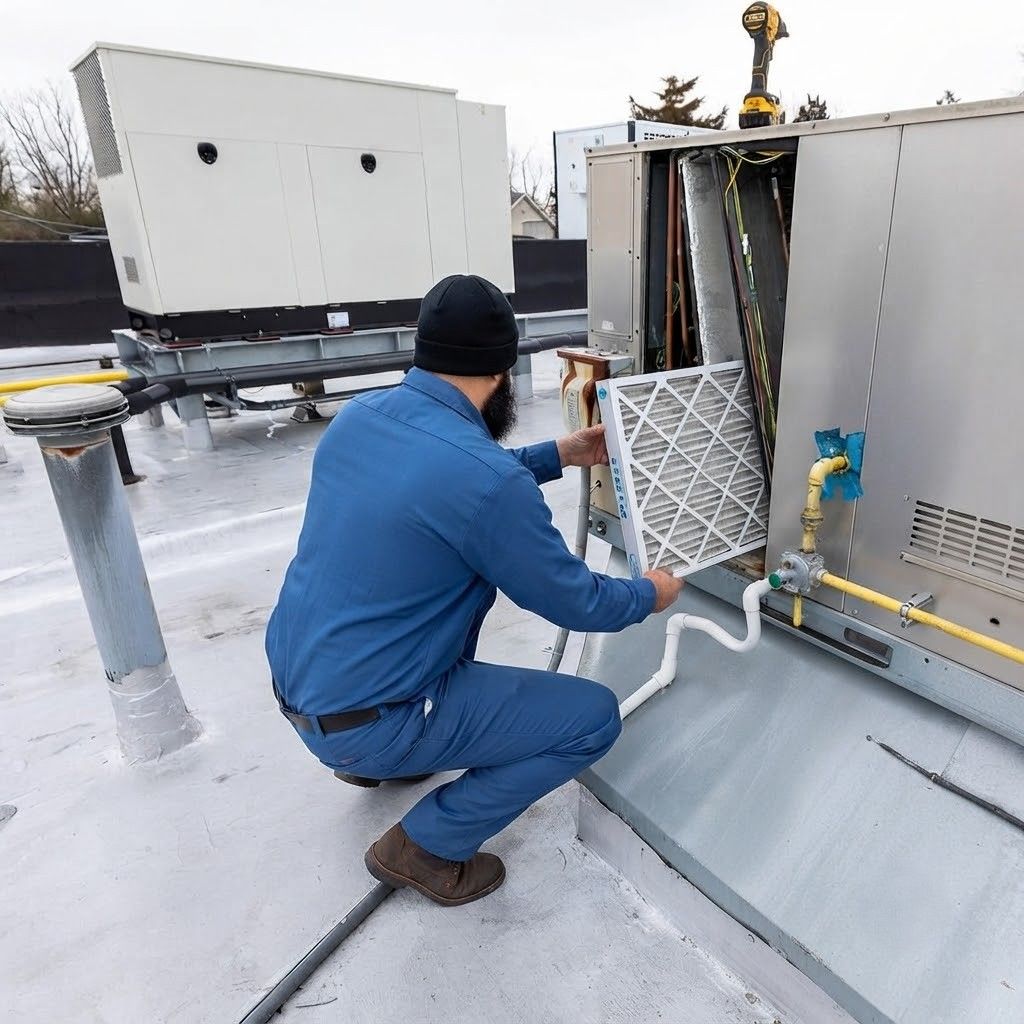
Filter and Airflow Service
Filters get checked quarterly at minimum, replaced with the correct size and rating, and airflow is verified afterward. Restriction from a loaded filter costs capacity across the whole unit immediately.
SEMIANNUAL
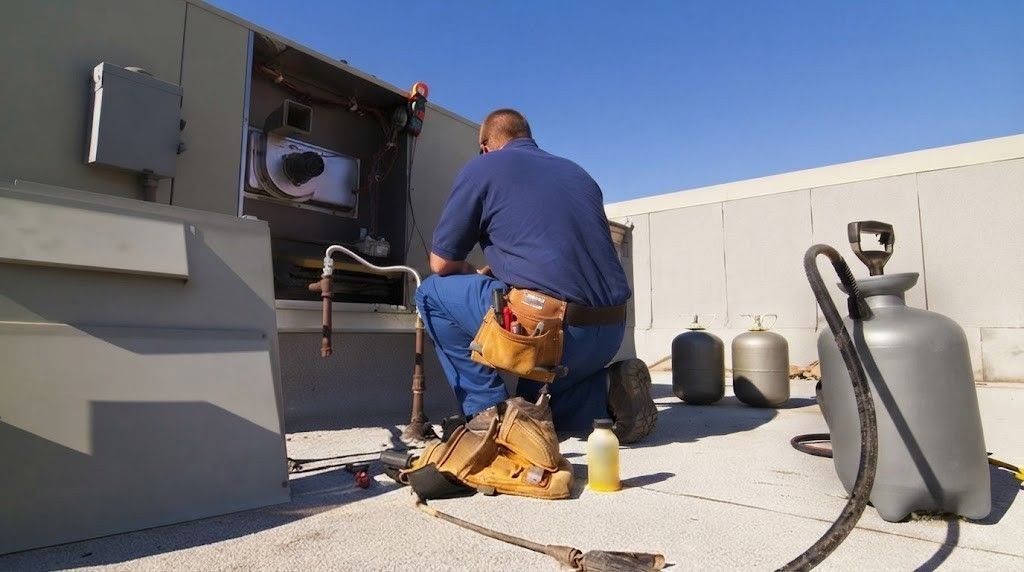
Belt, Sheave, and Bearing Inspection
Belt tension and wear, sheave alignment, and bearing condition get inspected twice a year. A glazed belt slipping under load reduces airflow without producing any obvious symptom inside the building.
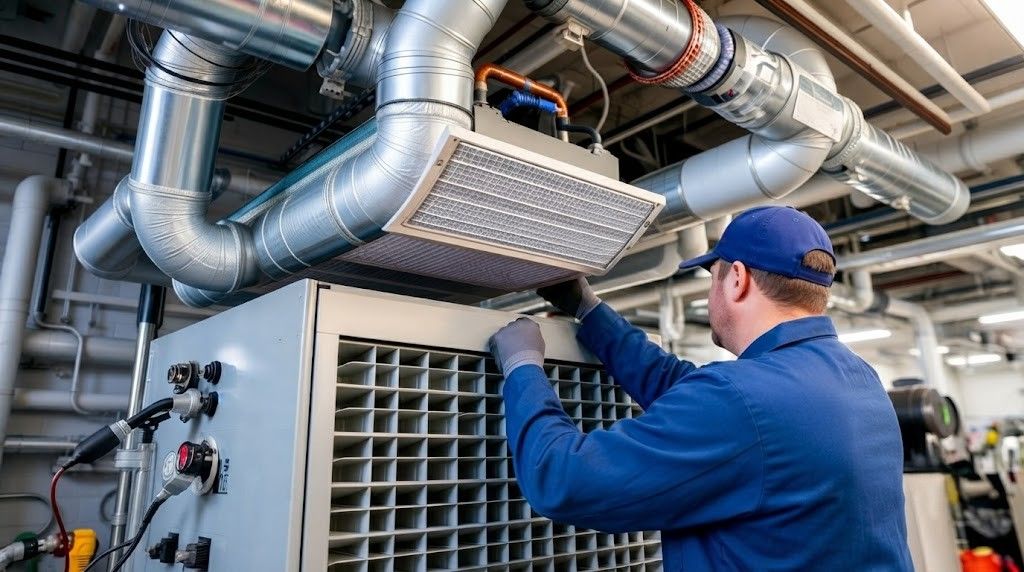
FRESH AIR CHECK
Economizer Inspection and Calibration
Damper motor condition, setting, and actual operation get verified semiannually. Given how often these are found broken, this single item frequently returns more than the cost of the whole visit.
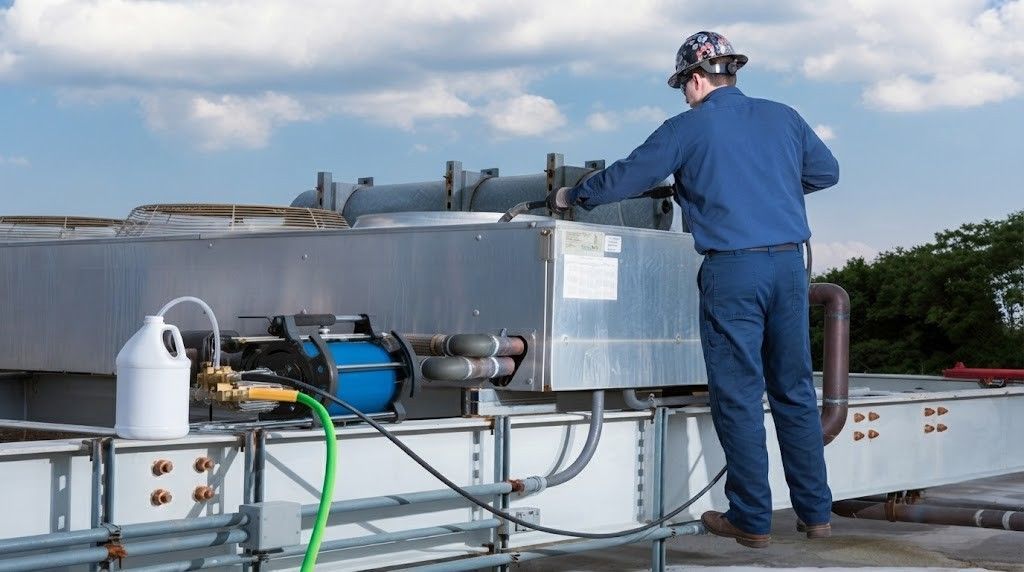
ANNUAL COILS
Condenser and Evaporator Coil Service
Condenser surfaces and evaporator fins get inspected and cleaned at least annually, more often where dust exposure justifies it. Fouled coils are the quietest capacity loss in commercial refrigeration and cooling.
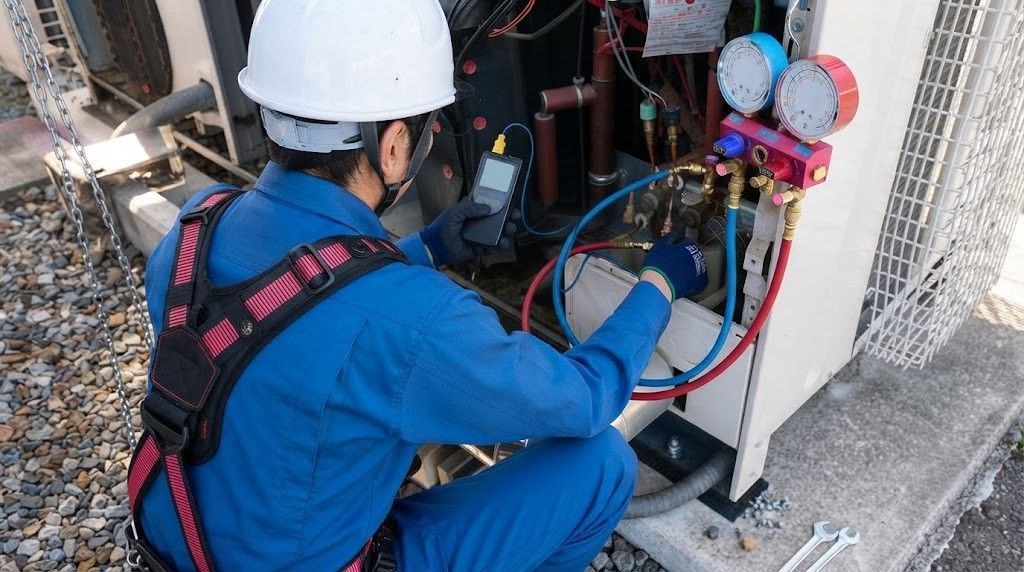
REFRIGERANT LOG
Refrigerant Circuit and Leak Monitoring
Circuit temperatures and pressures get recorded annually, and appliances above the regulated charge threshold receive the leak inspections and documentation the rules require. Records stay on file for the required period.

REPORTING
Inspection Reporting and Capital Planning
Each visit produces a report with readings, findings, and recommendations. Across a year those reports show which units are approaching replacement, which lets capital planning happen on your own timeline.
faq
frequently asked
questions.
Questions from owners and managers weighing a maintenance agreement against calling when something breaks. Intervals depend on equipment type, age, and site conditions more than on building size.
How often should a commercial HVAC system be serviced?
The recognized standard sets filters quarterly, belts and economizers semiannually, and coils and refrigerant circuits annually. Dust-heavy sites in this region often justify tightening the filter and coil intervals further.
How often should commercial HVAC filters be changed?
Quarterly is the published minimum, and many sites here need it monthly. Abbey Aire and Building Repair sets the interval from actual filter condition at properties across Tucson, AZ rather than from a calendar alone.
What should be included in an HVAC maintenance contract?
Defined inspection intervals, a list of tasks per visit, recorded readings, written reporting, response times for breakdowns, and clarity on what is included versus billed separately. Vagueness there causes most disputes.
What is commercial HVAC maintenance?
Scheduled inspection, cleaning, measurement, and documentation of the equipment serving a commercial building. It differs from residential work mainly in the standards applied and the recordkeeping expected of the contractor afterward.
How often should businesses service rooftop HVAC units?
At least twice a year for a full service, with filter checks quarterly in between. Buildings with critical cooling needs or heavy dust exposure often move to a quarterly full service instead.
When should a rooftop HVAC unit be replaced?
Once it passes median service life, repairs are recurring, and the efficiency gap against current equipment is material. Maintenance reports over several years make that decision straightforward rather than speculative.
How long do commercial rooftop HVAC units last?
The published median is about 15 years for packaged rooftop equipment, though desert duty cycles and deferred maintenance shorten it. Abbey Aire and Building Repair tracks that curve for clients in Benson, AZ.
What is the 20 degree rule for HVAC?
It refers to the temperature split between return and supply air, which should land near 20 degrees on a properly performing cooling system. A much smaller split points at charge or airflow.
HOW WE WORK
FROM SITE AUDIT TO A MANAGED ROOF, HERE IS HOW.
STEP 01
Inventory the Equipment
Every unit gets logged with model, serial, age, refrigerant type and charge, filter sizes, and current condition. That inventory becomes the foundation for the intervals, the reporting format, and eventual capital planning decisions.
STEP 02
Set Intervals to the Site
The published standard sets the floor. Actual dust exposure, equipment age, criticality, and roof conditions decide whether any item moves to a shorter interval, and the agreement states exactly which ones did and why.
STEP 03
Scheduled Visits
Visits land on agreed dates and get confirmed in advance. Work is timed around your trading hours, and nobody needs to escort our crew onto the roof or supervise the visit itself while it happens.
STEP 04
Inspect and Record
Every item on the interval list gets inspected with a reading recorded, not a checkbox. Deviations from the previous visit are highlighted so the trend is visible rather than buried in the data.
STEP 05
Correct What Is In Scope
Filters, belts, cleaning, drain clearing, damper adjustment, and minor calibration happen during the visit. Anything outside the agreement gets quoted separately before it proceeds, never assumed and quietly invoiced afterward without any notice at all.
STEP 06
Report and Plan Ahead
A written report follows every visit, and an annual summary flags which units are nearing replacement. That gives you a year or more of warning to budget properly rather than react to it.
GET YOUR ESTIMATE
TURN THE ROOF FROM A RISK INTO A LINE ITEM.
Scheduled inspection, recorded readings, and a report you can plan from. Send your equipment list through our contact page and Abbey Aire and Building Repair will build an agreement for your Tucson, AZ property.
WHAT YOUR MAINTENANCE AGREEMENT COVERS:
- A full equipment inventory with charge and filter data
- Inspection intervals set to the standard or shorter
- Economizer operation verified twice a year
- Refrigerant records kept for the required period
- A written report with readings after every visit
- An annual summary for capital planning