

Commercial Ice Machine Repair
COMMERCIAL ICE MACHINE REPAIR IN Benson & Tucson, AZ
Manufacturers report that roughly 70 percent of ice machine performance problems trace back to the water supply, and the water in this region is classified as hard to very hard by the local utility itself. Abbey Aire and Building Repair repairs, cleans, and services commercial ice machines across Benson & Tucson, AZ, Vail, Marana, St. David, Oro Valley, and Sahuarita, AZ.
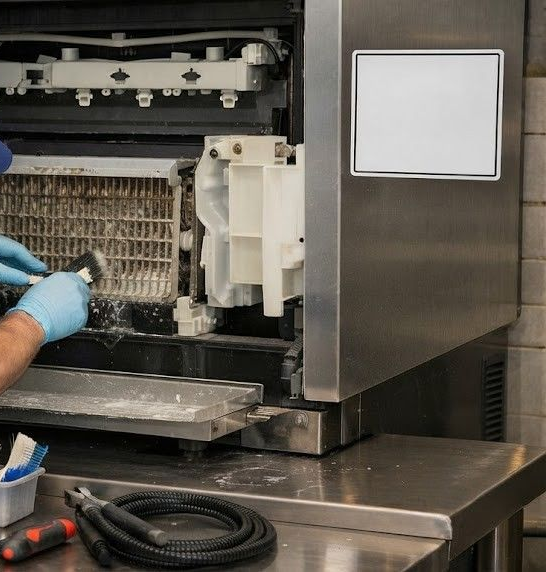
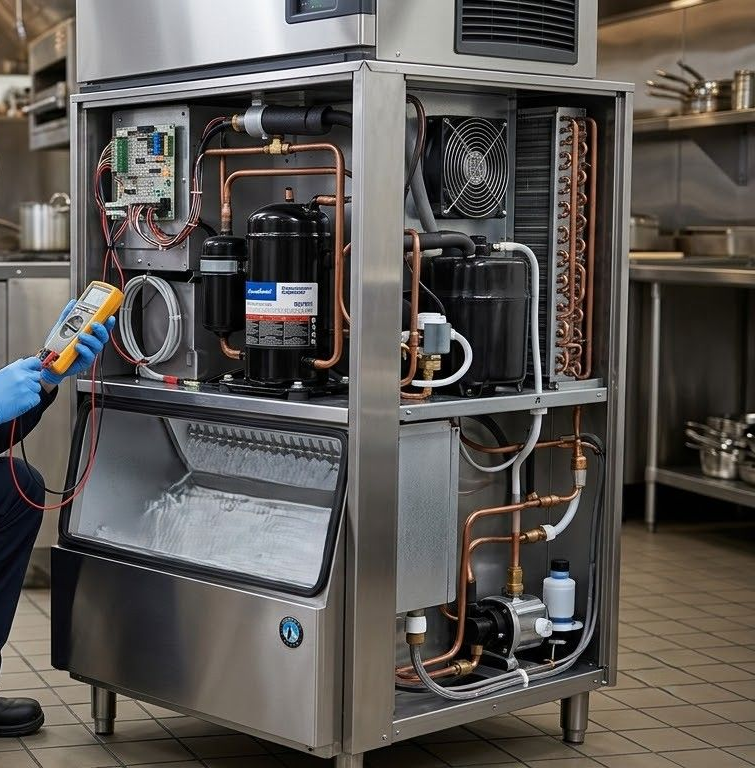
ICE IS A FOOD, AND THE MACHINE IS A FOOD SURFACE.
The Food Code treats ice-contact surfaces the same as any other food-contact surface, requiring cleaning at the manufacturer's specified frequency or as often as needed to prevent soil and mold, and sanitizing after every cleaning. That is why a service visit here is a cleaning and sanitizing job as much as a mechanical one.
Most manufacturers call for cleaning and sanitizing 2 to 4 times a year, and hard water pushes that toward the upper end rather than the lower one in this region.
- Machine cleaned and sanitized on every service
- Water filtration matched to local hardness
- Scale removed from evaporator and water system
- Repairs backed by a 90-day workmanship warranty
YOUR HOME STAYS SELLABLE
Active leaks and visible water damage kill inspection reports. A documented repair history reassures buyers, appraisers, and insurers that the roof over the property has been looked after.
COMMERCIAL ICE MACHINE REPAIR
HARD WATER IS THE ENEMY OF ICE PRODUCTION.
Mineral scale builds on the evaporator plate, insulates it from the refrigerant, and slowly extends the freeze cycle until production falls well below the rated pounds per day. The machine keeps running and the bin keeps emptying. Descaling restores the heat transfer, and correct filtration slows the buildup returning. Both matter more here than in a soft-water region by a wide margin every single year, without exception.
CLOUDY ICE IS USUALLY A WATER STORY.
Ice that comes out white or cloudy rather than clear generally means minerals or air trapped during the freeze, and in a hard-water area that points at the water system before the refrigeration. Filtration, water distribution, float levels, and purge settings all get checked before anybody touches a gauge. Getting that order right saves a lot of unnecessary refrigeration work later on.
WATER CHEMISTRY IS HALF THIS JOB, AND WE KNOW THIS WATER.
An ice machine that works perfectly on soft municipal water will scale up in months here. Knowing what the local supply does to an evaporator plate, which filter cartridges actually keep up, and how often a machine in a busy bar realistically needs sanitizing is knowledge you only get locally. Two generations of servicing these machines across Southern Arizona built it. How is yours producing lately, honestly?
WHY CHOOSE US FOR COMMERCIAL ICE MACHINE REPAIR.
Production Restored, Not Patched
A machine falling short of its rated output usually has scale, filtration, or water distribution problems rather than a refrigeration fault. Fixing the actual cause restores capacity rather than masking it.
Sanitizing Done Properly
Cleaning removes scale, sanitizing removes biological growth, and they are separate steps. Both happen on every service visit, because mold in an ice machine is a health code finding.
Filtration Sized for This Water
Cartridge type and capacity get matched to local hardness and your actual daily volume. An undersized filter exhausts early and quietly stops protecting the machine long before anyone changes it.
Scheduled Cleaning Available
Rather than waiting for production to fall off, machines can go on a cleaning schedule matched to their workload. That keeps output steady and keeps the health inspection uneventful.
Bins and Dispensers Included
Storage bins, dispensers, and delivery tubing collect the same biological growth as the machine itself. All of it gets cleaned rather than just the parts that are easy to reach.
Downtime Kept Short
A bar or restaurant without ice has a real problem. Common ice machine parts and cleaning chemicals ride on the truck so most visits finish the same day they start.
WHAT WE SERVICE
OUR COMMERCIAL ICE MACHINE REPAIR WORK
Ice machine work splits into six areas across the water side, the refrigeration side, and sanitation. The water side gets checked first, because that is where most production problems actually begin.
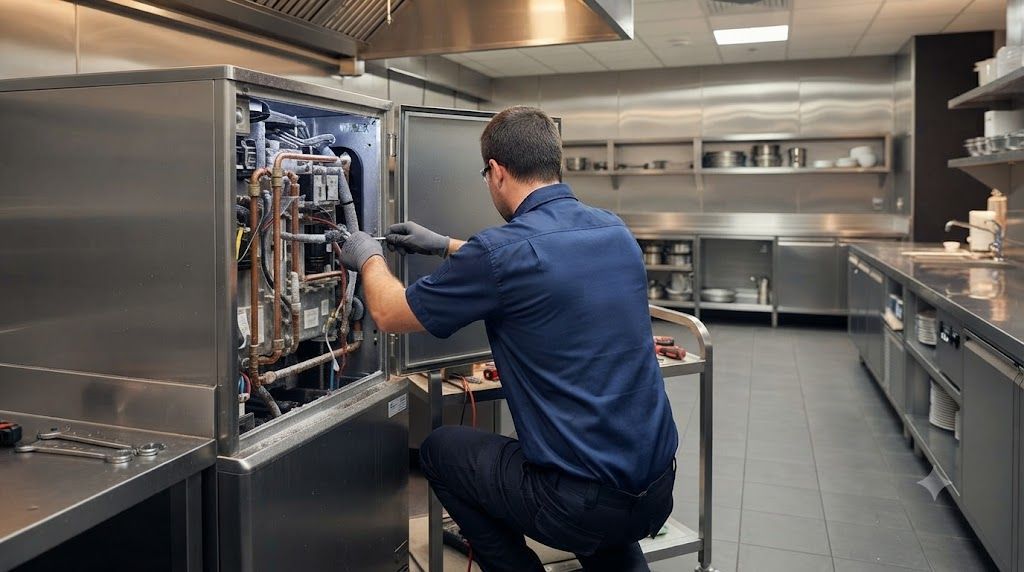
DESCALING
Scale Removal and Deep Cleaning
Evaporator plates, water troughs, distribution tubes, pumps, and float assemblies all get chemically descaled. Removing mineral buildup restores the heat transfer that determines how much ice the machine makes daily.
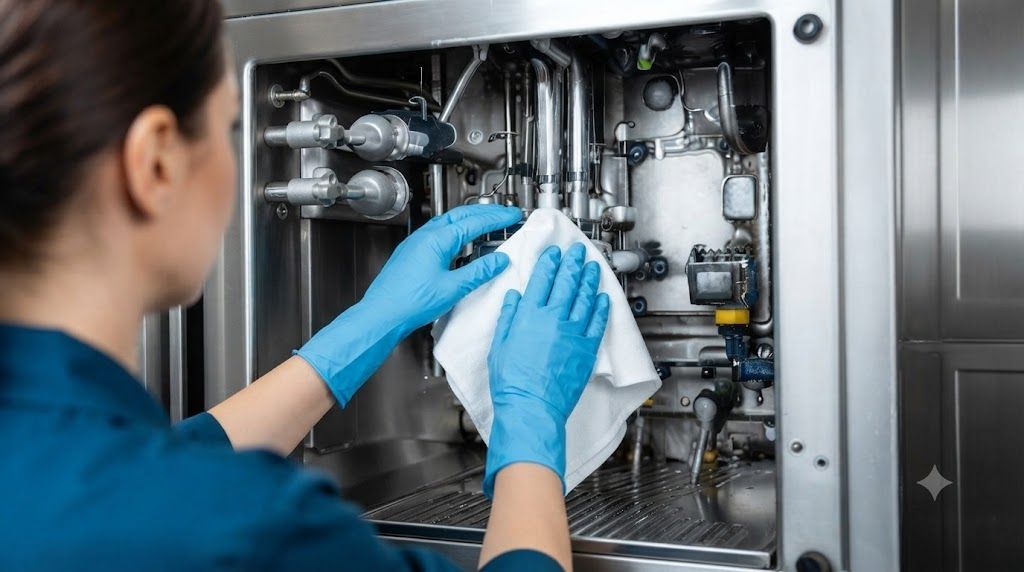
SANITIZING
Sanitizing and Mold Removal
Slime and mold colonize the bin, the curtain, and the tubing where nobody looks. Sanitizing after cleaning is what actually kills it, and it has to happen every single time.
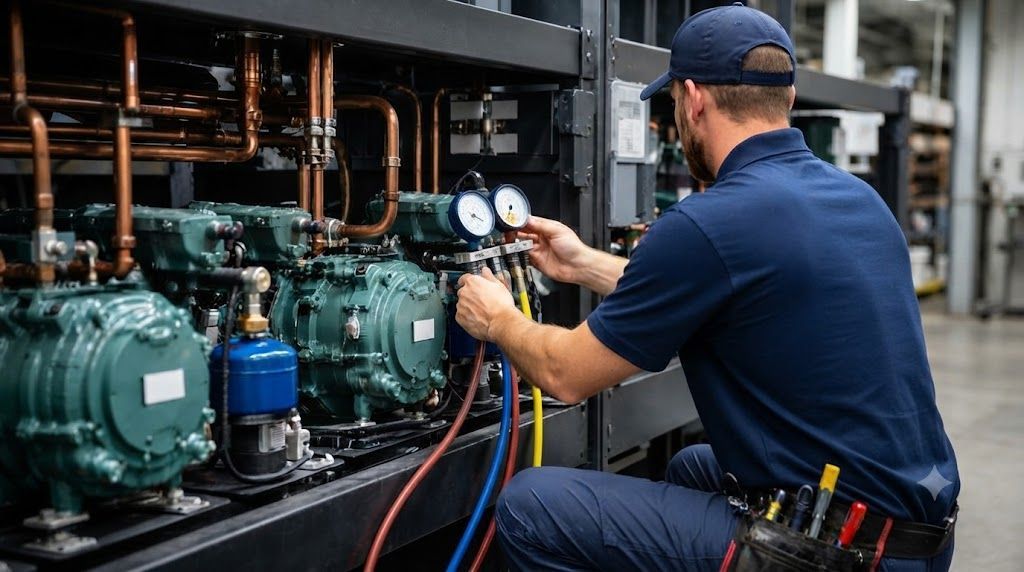
WATER SUPPLY
Filtration and Water System Repair
Filter cartridges, inlet valves, float switches, pumps, and water levels all affect production and ice quality. Correct filtration sized for local hardness is the cheapest protection the machine can get.
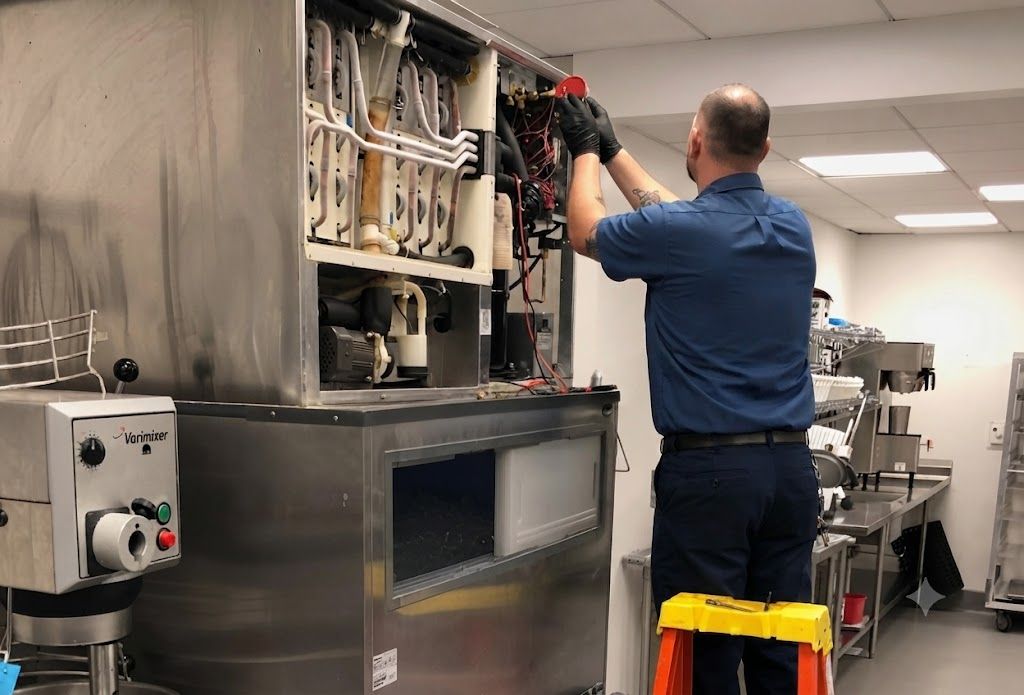
HARVEST CYCLE
Harvest and Cycle Fault Repair
Machines that freeze but will not release, or release early with thin cubes, have harvest cycle problems. Hot gas valves, harvest sensors, and cycle timing get tested through a live cycle.
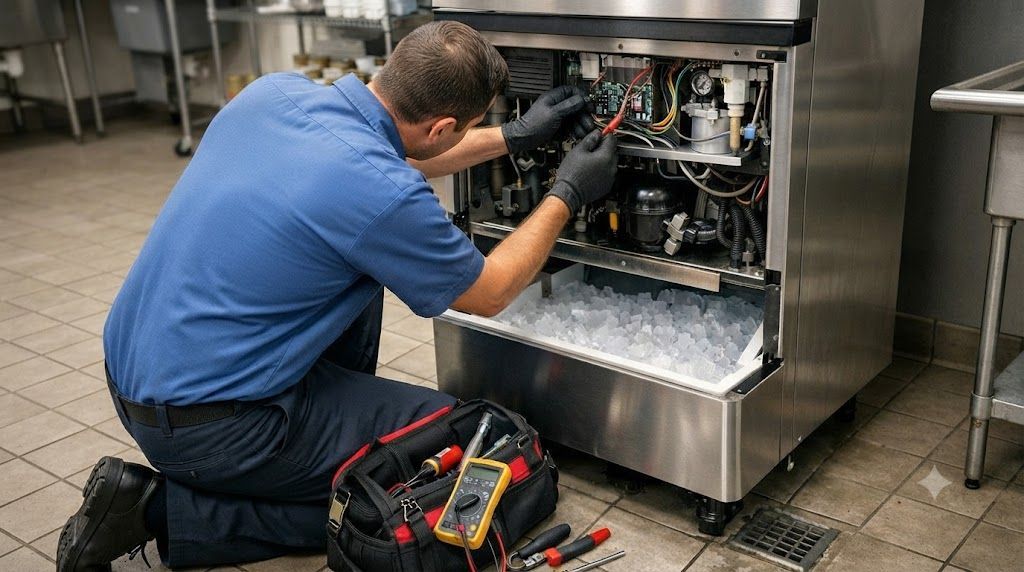
REFRIGERATION
Ice Machine Refrigeration Repair
Where the fault genuinely is refrigeration, compressors, condensers, fans, and charge get diagnosed the same way any other sealed system does. Air-cooled units also need their condenser environment assessed carefully.
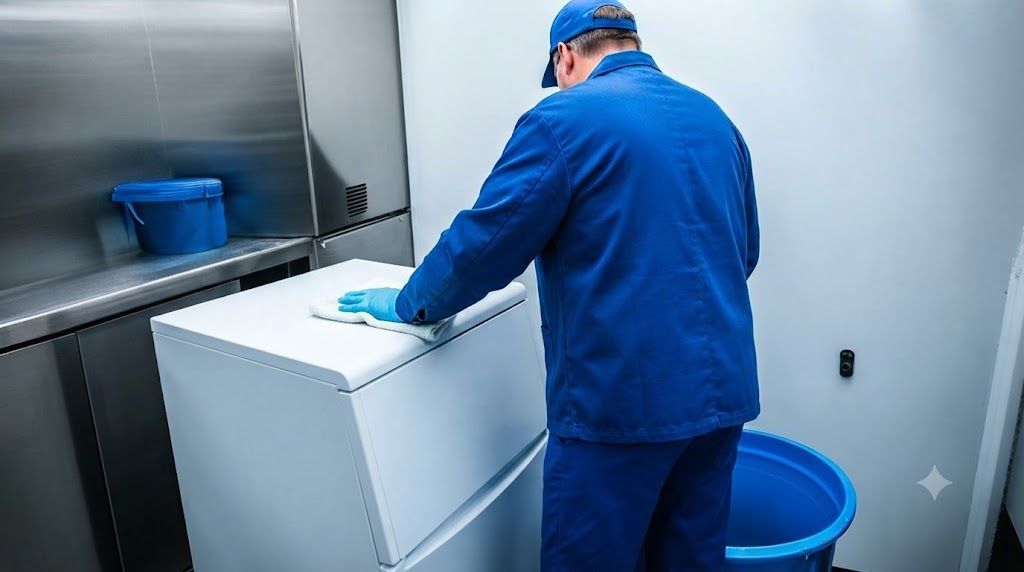
BINS AND LINES
Bin, Dispenser, and Line Service
Bin thermostats, level controls, drains, dispensers, and delivery tubing all get inspected and cleaned. A failed bin control produces either an overflowing bin or a machine that stops producing early.
faq
frequently asked
questions.
The questions operators ask about ice machines, most of them about cleaning frequency and falling production. Both usually have the same answer behind them in this part of Arizona.
How do I reset a commercial ice maker?
Most have a power switch or a reset on the control board, and cycling power at the disconnect works otherwise. If it needs resetting regularly, a real fault is tripping it.
What are the common problems with commercial ice machines?
Scale on the evaporator, exhausted water filters, mold in the bin, failed harvest components, dirty air-cooled condensers, and bin control faults. Water quality sits behind a large share of them.
How often should the inside of an ice machine be cleaned?
Manufacturers commonly specify 2 to 4 times a year, and hard water argues for the higher figure. Abbey Aire and Building Repair sets cleaning schedules to actual usage at properties in Tucson, AZ.
How often should ice machine filters be changed?
Typically every 6 months, though hard water and high volume can exhaust a cartridge much sooner. A filter past its capacity stops protecting the machine without giving any visible warning.
Can I run vinegar through my ice machine to clean it?
It will dissolve some scale, but it is not a sanitizer and it does not meet the requirement for approved cleaning and sanitizing chemicals. Use the products the manufacturer specifies.
How do I remove black mold from my ice machine?
Full disassembly of the water path, cleaning, then sanitizing with an approved solution, including the bin and curtain. Abbey Aire and Building Repair handles that as a complete service in Benson, AZ.
Why is my ice machine making cloudy or slow ice?
Cloudy ice usually means mineral content or trapped air, and slow production usually means scale on the evaporator or an exhausted filter. Both point at the water system first, not the refrigeration.
How often should a commercial ice machine be serviced?
Twice a year covers most operations, combining a full clean and sanitize with a mechanical inspection. High-volume bars and restaurants in hard-water areas often justify a quarterly schedule instead of that.
HOW WE WORK
FROM SLOW PRODUCTION TO A FULL BIN, HERE IS HOW.
STEP 01
Establish the Baseline
Current production rate, ice appearance, cycle time, and when the machine was last cleaned all get established. Those four facts usually narrow the problem down before the panels even come off the machine.
STEP 02
Check the Water Side
Filter age and capacity, inlet pressure, float level, water distribution, and visible scale all get inspected first. This is where the great majority of production complaints are actually resolved, on site and on the first visit.
STEP 03
Watch a Full Ice Cycle
The machine gets run through a complete freeze and harvest while cycle times, water levels, and harvest behavior are observed. Cycle timing that has drifted long points straight at scale buildup on the plate.
STEP 04
Clean and Sanitize
The water path gets disassembled, descaled, rinsed, and sanitized, including the bin, curtain, and tubing. Approved chemicals are used throughout, and the machine runs a discard batch afterward before any ice is used.
STEP 05
Address the Mechanical Faults
With the water side clean, any remaining fault gets diagnosed properly: harvest components, bin controls, fan motors, or the refrigeration circuit itself. Parts get tested rather than replaced speculatively on somebody's guess about it.
STEP 06
Verify Production and Schedule
Production rate and ice clarity get checked against the machine's rating before the visit closes. You also get a realistic cleaning interval based on your water and your actual volume going forward from here.
GET YOUR ESTIMATE
FULL BINS, CLEAR CUBES, AND NOTHING GROWING INSIDE.
Ice machines reward attention and punish neglect faster than anything else in the kitchen. Send the make and symptoms through our contact page and Abbey Aire and Building Repair will service it in Tucson, AZ.
WHAT YOUR ICE MACHINE SERVICE COVERS:
- Production rate measured against the rating
- Water filtration and float system inspected
- Full descale of the water path and evaporator
- Bin, curtain, and tubing cleaned and sanitized
- A live freeze and harvest cycle observed
- A 90-day workmanship warranty on the repair