

Heating Installation & Replacement
HEATING INSTALLATION & REPLACEMENT in Benson & Tucson, AZ
Federal minimum efficiency for a non-weatherized gas furnace has been 80 percent AFUE since 2015, and the ASHRAE median service life for one is 18 years. Abbey Aire and Building Repair installs and replaces heating systems across Benson & Tucson, AZ, St. David, Vail, and Marana, sized from a calculated heat loss rather than the nameplate on the old unit.
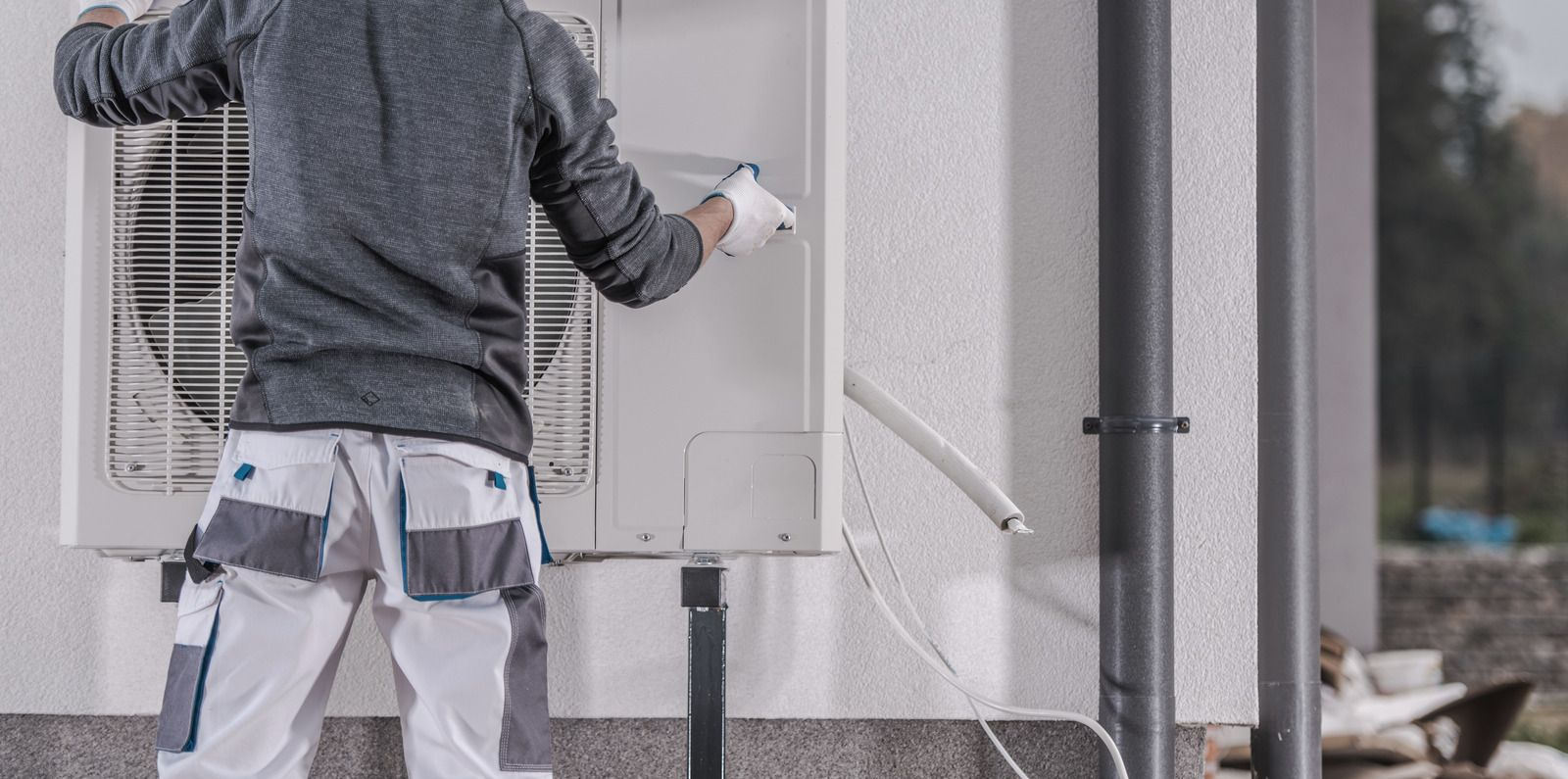
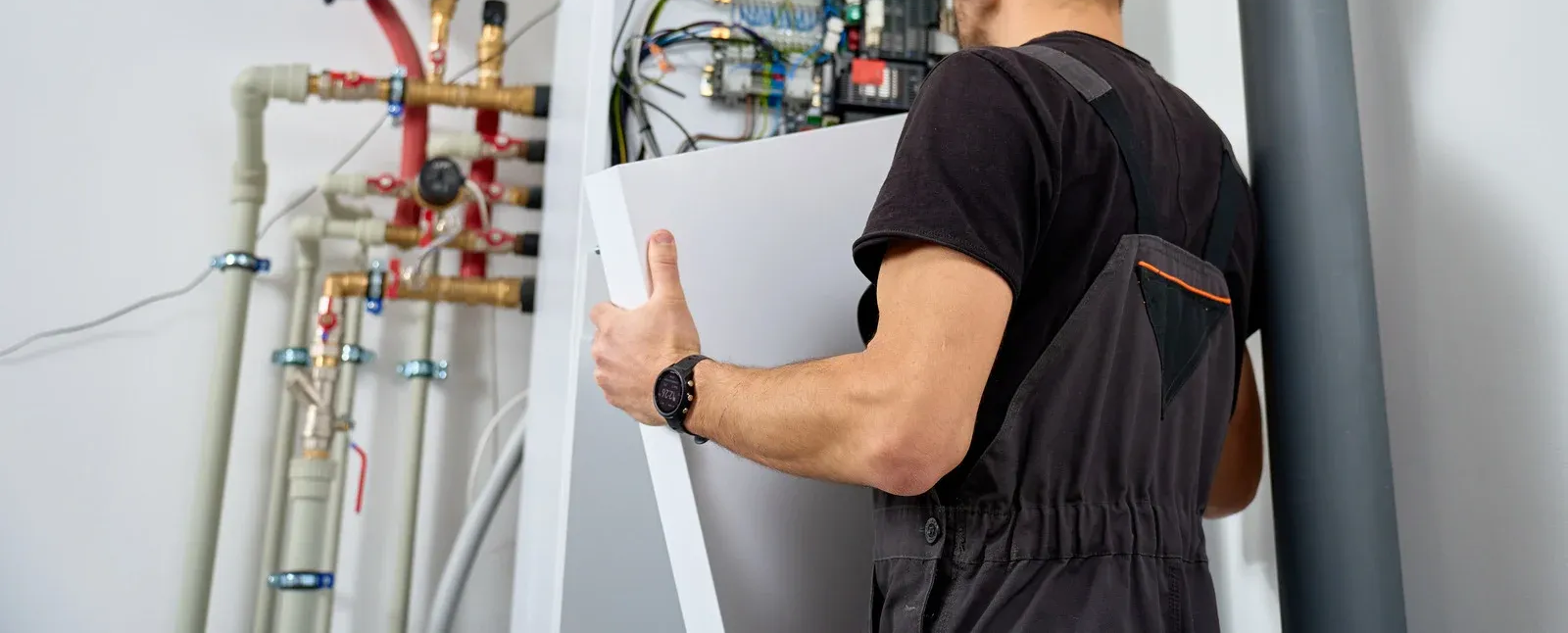
THE OLD NAMEPLATE IS NOT A SPECIFICATION.
Most replacement furnaces in this region are sized by copying whatever came out, which perpetuates whatever mistake was made 20 years ago. A heat loss calculation takes an afternoon and produces a number tied to your actual walls, windows, and infiltration. Oversized heating short cycles, wears its ignition components, and heats unevenly across the house.
Altitude enters the calculation too. Equipment above 2,000 feet needs its input derated and often an orifice kit, and that detail decides whether the burner runs clean for 18 years or 6.
- Heat loss calculation before equipment selection
- High-altitude derate and orifice sizing applied
- Venting and combustion air brought to code
- 1-year labor warranty on new installations
YOUR HOME STAYS SELLABLE
Active leaks and visible water damage kill inspection reports. A documented repair history reassures buyers, appraisers, and insurers that the roof over the property has been looked after.
HEATING INSTALLATION & REPLACEMENT
PICK THE HEAT SOURCE THAT FITS THE CLIMATE.
Tucson runs roughly 1,330 heating degree days against more than 3,400 cooling degree days, and Benson roughly doubles the heating figure. That ratio matters when choosing between a gas furnace, a heat pump, or a dual fuel arrangement. In much of this service area a properly sized heat pump covers winter without ever reaching its balance point, while the higher ground east of Benson argues for backup heat.
VENTING AND COMBUSTION AIR ARE NOT OPTIONAL DETAILS.
A furnace swap frequently exposes venting that was marginal for the old unit and wrong for the new one. Category classifications differ, flue diameters change, and a condensing appliance needs a completely different vent path. Where a permit is pulled for the work, carbon monoxide alarm requirements in the adopted residential code apply to the dwelling as well. We handle all of it as part of the job.
COMMISSIONING IS THE PART MOST CREWS SKIP.
Anyone can hang a furnace. Setting manifold pressure to the rating plate, measuring temperature rise against the published range, verifying draft, analyzing combustion, and confirming the derate for local elevation is what separates an installation from a delivery. Two generations of doing this work in Cochise County and Pima County have made that final hour non-negotiable for us on every install. Would you know if yours was skipped
WHY CHOOSE US FOR HEATING INSTALLATION & REPLACEMENT.
Sized to the Building
A heat loss calculation replaces the guesswork of matching the old nameplate. The result is even temperatures, longer cycles, and equipment that is not fighting itself every time the thermostat calls.
The Right Fuel Choice
Gas, heat pump, or dual fuel each make sense in different parts of this service area. You get the comparison for your address and your utility rates rather than a single default recommendation.
Altitude Accounted For
High-elevation properties get the correct derate and orifice sizing from the start. That keeps combustion clean, protects the heat exchanger, and prevents the sooting that shortens an appliance's life dramatically.
Venting Done Properly
Flue sizing, slope, termination clearances, and combustion air all get corrected to current requirements. Reusing marginal venting is how a new appliance inherits the previous one's safety problems.
Verified Before Handover
Manifold pressure, temperature rise, draft, and combustion readings are recorded at startup and given to you. A system without commissioning numbers has no proof it was set up to specification.
Coverage and Registration
Manufacturer warranties are registered on your behalf and a 1-year labor warranty applies to the installation. The paperwork lands in your hands rather than in a folder nobody can find later.
WHAT WE INSTALL
OUR HEATING INSTALLATION & REPLACEMENT WORK
A heating changeout touches six areas, and the ones nobody sees decide how the system performs. Each is priced in the proposal so there are no discoveries after the old unit is already out.
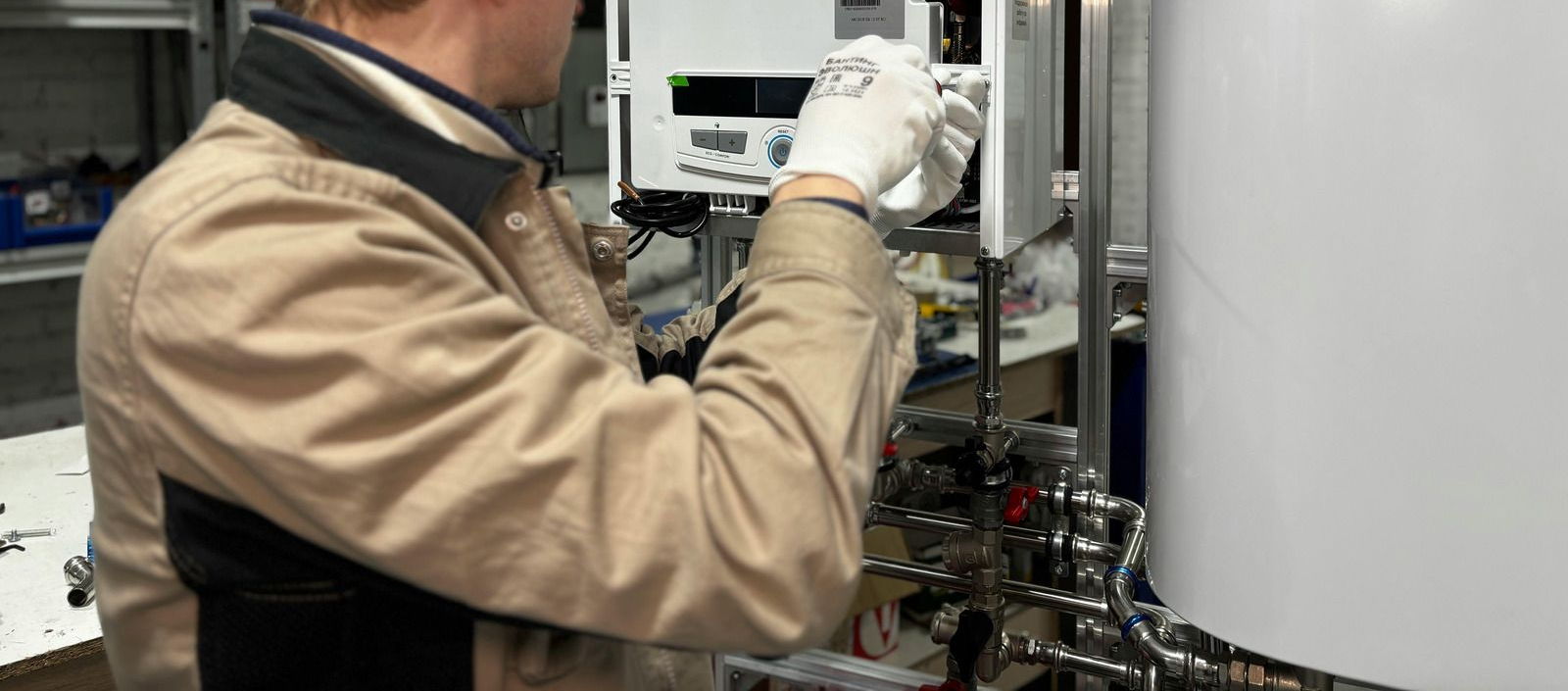
HEAT LOSS
Heating Load Calculation
Wall and ceiling assemblies, window area, infiltration, and design temperature combine into a calculated heat loss for the building. Equipment is then selected to that figure rather than to habit or availability.
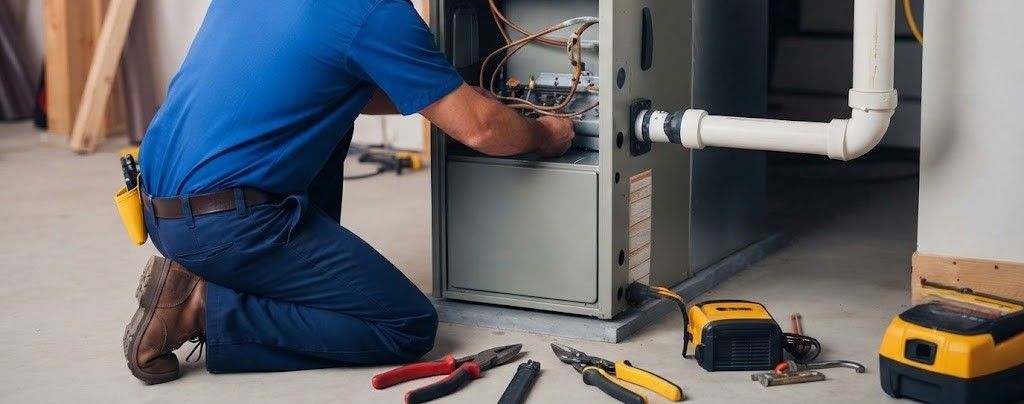
GAS SYSTEMS
Gas Furnace Installation
New furnaces are set, connected, vented, and adjusted for local elevation. Manifold pressure is dialed to the rating plate and temperature rise verified within the published range before the unit is signed off.
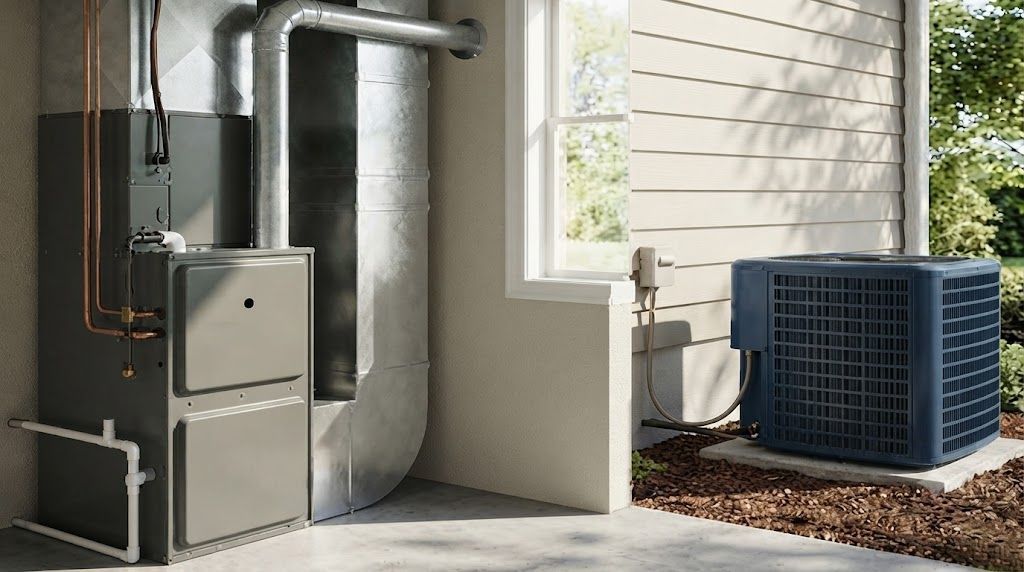
ELECTRIC HEAT
Heat Pump and Dual Fuel Systems
Where electric heating suits the property better, the system is sized for both seasons and staged so backup heat engages only when the outdoor temperature actually requires it, not on every call.
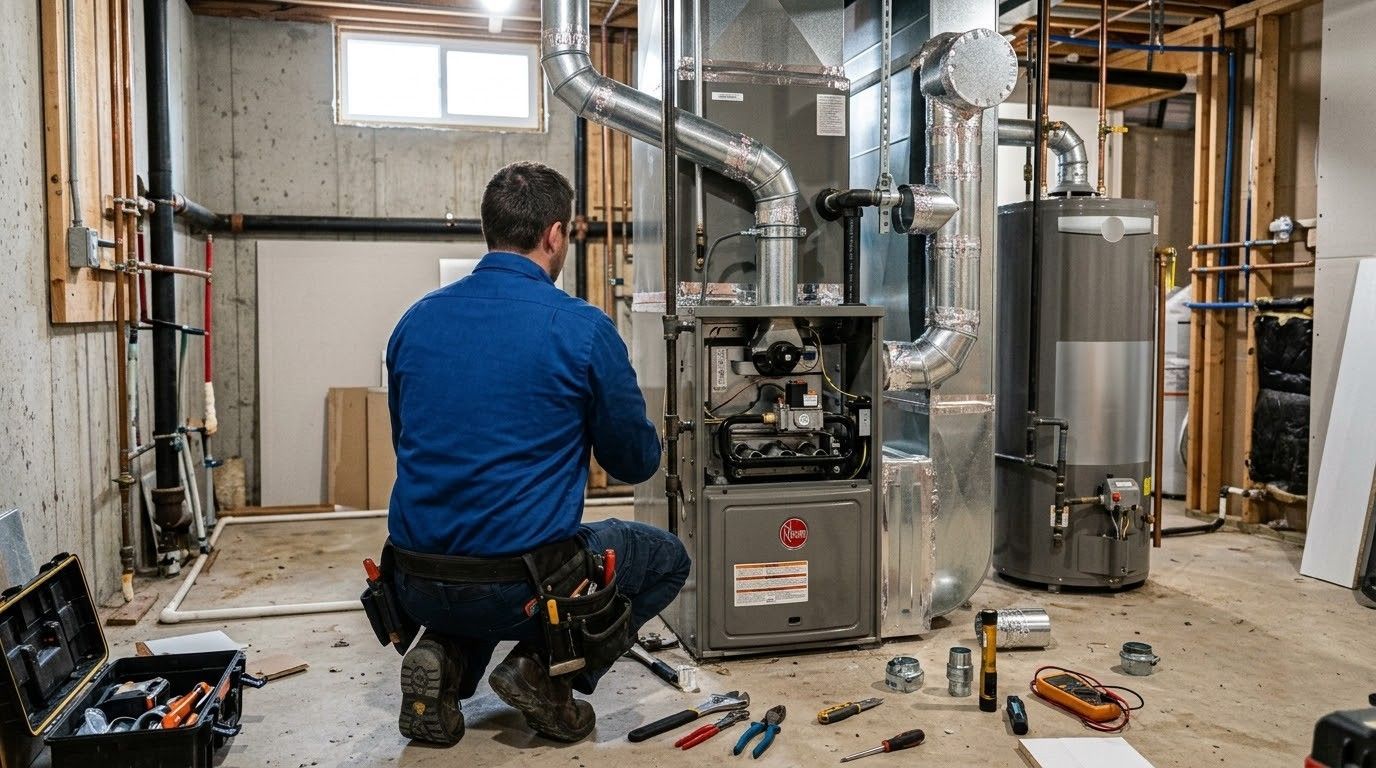
EXHAUST PATH
Venting and Combustion Air
Flue diameter, material, slope, and termination clearances are corrected to suit the new appliance category. Combustion air openings are sized for the space so the burner is not starved in a closed mechanical closet.
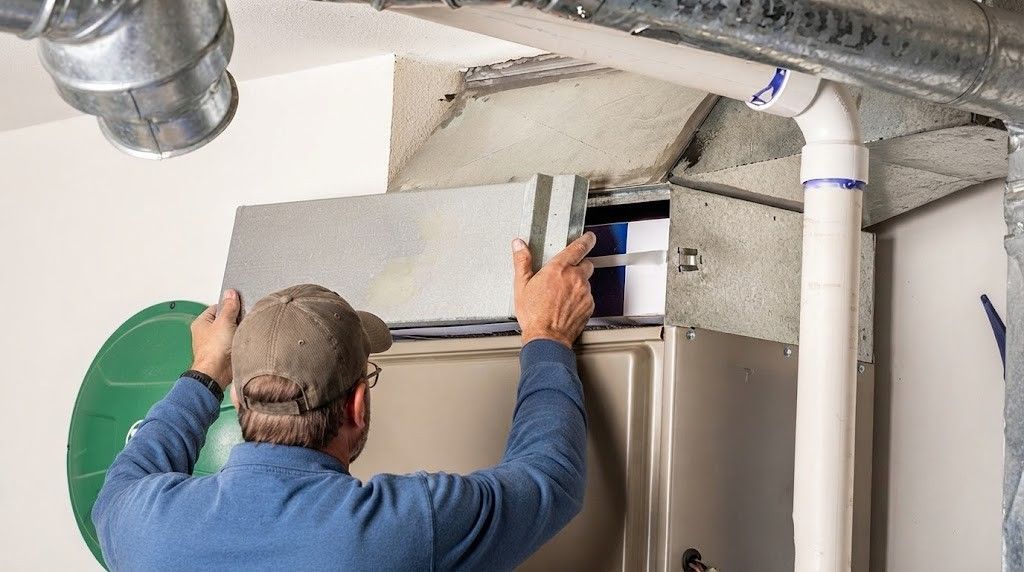
DISTRIBUTION
Plenum and Duct Connections
Supply and return plenums are fabricated to fit the new cabinet rather than shimmed to fit the old one. Connections get sealed and insulated so the heat reaches the rooms rather than the attic.
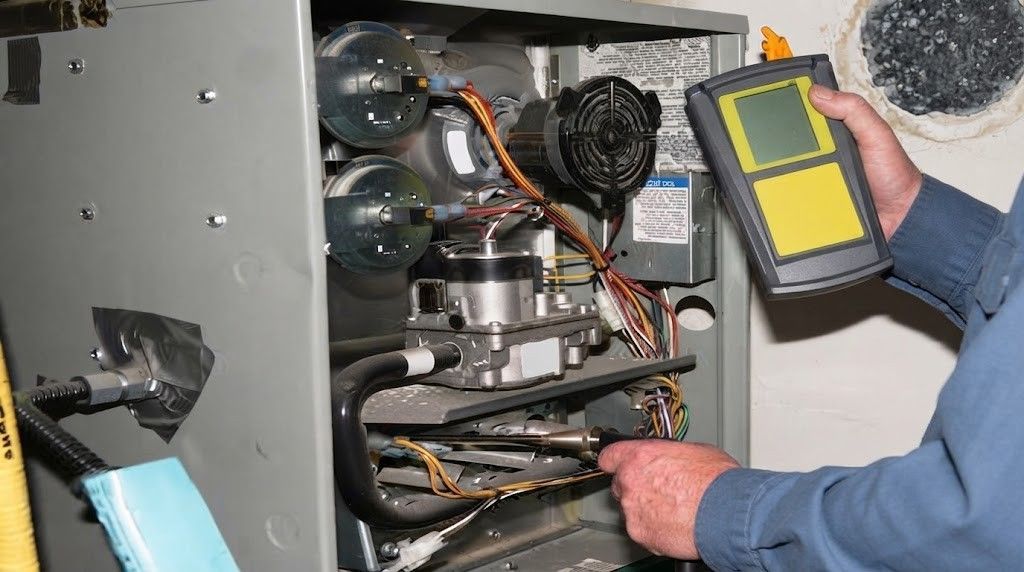
SAFETY SETUP
Startup, Safety, and Controls
Carbon monoxide is measured, safety controls are tested, thermostats are configured for the equipment staging, and every cycle is run before handover. Alarm placement in the dwelling is checked at the same time.
faq
frequently asked
questions.
What owners ask before replacing a heating system, answered without steering you toward a particular fuel. The right answer depends on your building, your utility rates, and your elevation.
What is the average lifespan of a furnace?
The ASHRAE median is 18 years. Furnaces in this region often exceed it because they log so few run hours, though neglect and incorrect altitude setup can cut that number roughly in half.
How do I know if my furnace needs replacing?
Repeated repairs, a cracked or corroded heat exchanger, rising gas use, uneven heating, and an age past the median all point that way. A compromised exchanger settles the question immediately.
How long does it take to remove and install a new furnace?
A straightforward swap normally takes most of a working day. Adding vent corrections, new plenums, gas line changes, or an electrical upgrade extends it, and those items appear in the proposal beforehand.
What do I need to know when buying a new furnace?
Sizing, efficiency rating, staging, venting requirements, and the altitude setup matter more than brand. Abbey Aire and Building Repair walks through each one before quoting installations across Benson, AZ and the surrounding area.
What is the best furnace size for my home?
Whatever the heat loss calculation says, which is frequently smaller than what is already installed. Homes that gained insulation or new windows since the last replacement often need noticeably less heating capacity.
What are common furnace installation mistakes?
Skipping the altitude derate, reusing undersized venting, ignoring temperature rise, leaving manifold pressure at the factory setting, and sealing nothing at the plenum. Each one quietly shortens the appliance's life.
What can you expect during the HVAC replacement process?
An assessment, a load calculation, a written proposal, then a scheduled install day with commissioning at the end. Abbey Aire and Building Repair follows the same sequence on every project in Benson & Tucson, AZ.
What key factors should you consider in HVAC replacement?
Calculated load, equipment matching, duct and vent condition, fuel choice, altitude adjustment, and warranty terms. Price matters, but it is the only one of those factors that shows up on the invoice.
HOW WE WORK
FROM HEAT LOSS TO FIRST CYCLE, HERE IS HOW.
STEP 01
Assess the Building
We look at the existing appliance, the venting, the gas line, the ducts, and the envelope. Elevation, mechanical closet size, and combustion air availability all get noted, because they shape what can be installed.
STEP 02
Calculate and Compare
Heat loss gets calculated, then gas, heat pump, and dual fuel options are compared for your building and rates. You see the running cost estimate for each rather than a single recommendation with no context.
STEP 03
Written Scope and Price
Equipment, venting work, plenum fabrication, gas and electrical scope, permit handling, and warranty terms all go in writing. Anything discovered later that was not in scope gets discussed before it is done, not after.
STEP 04
Removal and Preparation
The old appliance is disconnected, gas isolated, and the space cleared. Vent openings, plenum transitions, and electrical connections are prepared for the new cabinet rather than adapted to it afterward with sheet metal patches.
STEP 05
Install and Connect
The new unit is set level, gas and electrical are landed, venting is run to specification, and the plenums are sealed. Altitude derate and orifice changes happen here rather than as an afterthought.
STEP 06
Commission and Hand Over
Manifold pressure, temperature rise, draft, and combustion are all measured and adjusted. You receive those numbers, the warranty registration, the thermostat setup, and a maintenance schedule suited to both this climate and this elevation.
GET YOUR ESTIMATE
HEAT THAT SUITS THE HOUSE AND THE ELEVATION.
Replacing heat before it fails means choosing on your terms rather than the coldest morning's. Reach out through our contact page and Abbey Aire and Building Repair will calculate the load for your Benson, AZ property.
WHAT YOUR HEATING PROPOSAL COVERS:
- A calculated heat loss for the building
- Gas, heat pump, and dual fuel options compared
- Venting and combustion air corrections priced
- Altitude derate and orifice sizing included
- Commissioning readings recorded at startup
- A 1-year labor warranty and warranty registration