Reach-In Cooler & Freezer Repair
REACH-IN COOLER & FREEZER REPAIR IN Benson & Tucson, AZ
Pima County requires every refrigerated unit in a food establishment to be capable of holding 41 degrees or lower, and to carry an internal thermometer, before any perishable product may be stored in it. Abbey Aire and Building Repair services and repairs reach-in coolers, freezers, and under-counter prep units across Benson & Tucson, AZ, Vail, Marana, Oro Valley, and Sahuarita, AZ.
SELF-CONTAINED UNITS FAIL WITHOUT WARNING ANYBODY.
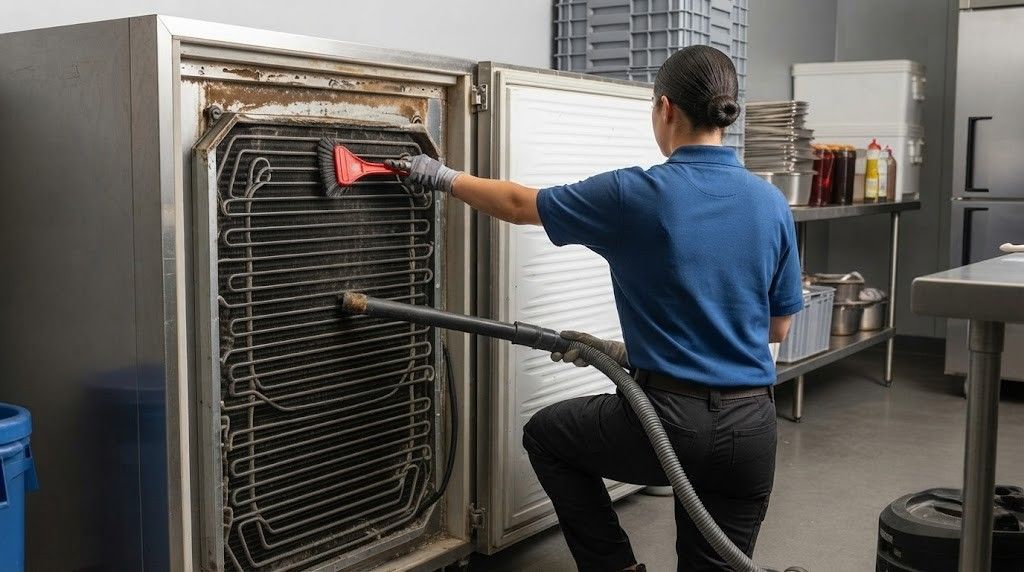
Nobody watches an under-counter cooler the way they watch a walk-in. The condenser sits inches from the floor collecting grease and dust, the fan struggles, and the cabinet climbs a degree at a time until somebody notices soft product. By then the compressor has been working overtime for weeks and its life has been shortened accordingly.
Regular condenser cleaning on these cabinets is the single highest-value maintenance item in any kitchen, and it takes minutes. Most of the reach-in failures we see trace directly back to skipping it.
- Condenser coils cleaned as part of every visit
- Cabinet temperature verified against the controller
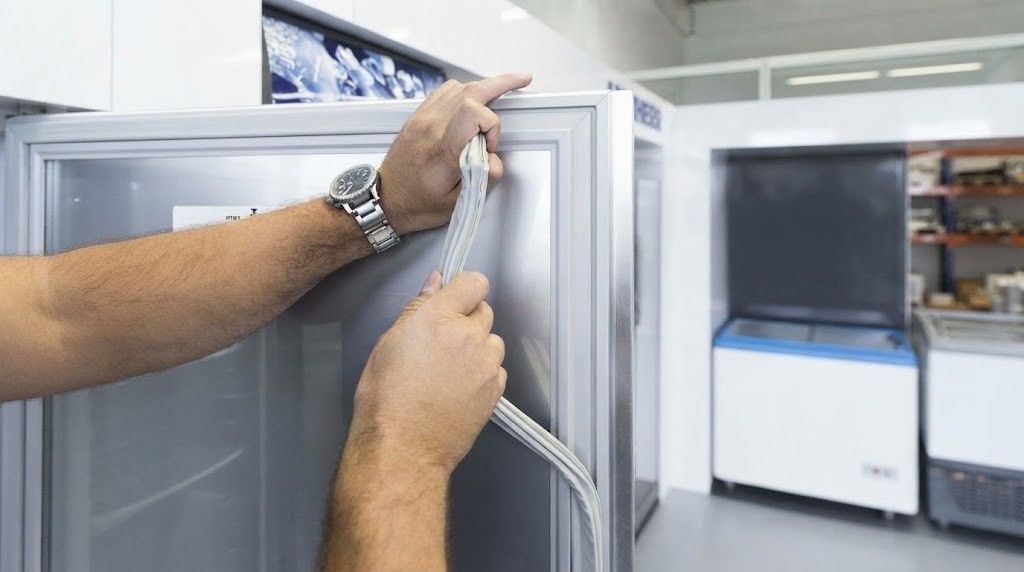
- Gaskets, hinges, and doors repaired in the same visit
- Repairs backed by a 90-day workmanship warranty
YOUR HOME STAYS SELLABLE
Active leaks and visible water damage kill inspection reports. A documented repair history reassures buyers, appraisers, and insurers that the roof over the property has been looked after.
REACH-IN COOLER & FREEZER REPAIR
THE THERMOMETER ON THE DOOR IS NOT THE WHOLE STORY.
A built-in display reads the return air, not the product. A cabinet showing 38 degrees can easily hold product at 44 in the warmest corner, and that is the number a health inspector's probe will find. Proper diagnosis measures actual product temperature in several positions inside the cabinet, which frequently reveals an airflow or door problem the display was never going to show you at all.
GREASE AND DESERT DUST MAKE A PARTICULARLY BAD PAIR.
Kitchen air carries aerosolized cooking oil, and this region adds fine dust to everything. The two combine into a coating on condenser fins that a quick brush will not remove. Manufacturers generally call for cleaning at least annually, and more often in dusty or greasy locations. In a Southern Arizona kitchen, both conditions apply at once, which argues for a quarterly interval.
SMALL CABINETS GET THE SAME METERS AS BIG ONES.
There is a temptation to treat an under-counter unit as an appliance rather than a refrigeration system, and to swap parts until something works. It carries the same refrigerant circuit, the same charging discipline, and the same diagnostic logic as anything larger, just in less space. Two generations of servicing food equipment across Southern Arizona taught us not to shortcut the small ones. When was yours last measured properly?
WHY CHOOSE US FOR REACH-IN COOLER & FREEZER REPAIR.
Condensers Actually Cleaned
Not brushed, cleaned. Grease and dust get removed properly so the coil can reject heat again, which frequently restores a cabinet everybody had written off as failing.
Real Product Temperatures
Measurement happens with a probe in the product zone rather than by reading the door display. That is the number that matters to an inspector and to your food safety records.
One Visit for Several Cabinets
Most kitchens have multiple reach-ins, prep tables, and under-counter units. Servicing them together in one visit costs less than calling separately each time another one starts drifting.
Repair Versus Replace, Honestly
Some self-contained units genuinely are not worth repairing once the compressor has failed. You get that assessment straight rather than a repair quote that approaches the price of a new cabinet.
Timed Around Service
Work fits between services or outside opening hours so the line is never short a cabinet during a rush. Kitchens set the schedule, not the other way around.
Gaskets Kept in Stock Sizes
Worn door gaskets get identified and matched during the visit rather than turning into a second appointment. It is a small thing that saves a return trip regularly.
WHAT WE REPAIR
OUR REACH-IN COOLER & FREEZER REPAIR WORK
Self-contained refrigeration concentrates its faults into six areas, most of them accessible without removing the cabinet from the line. Each gets addressed with product temperature as the measure of actual success.
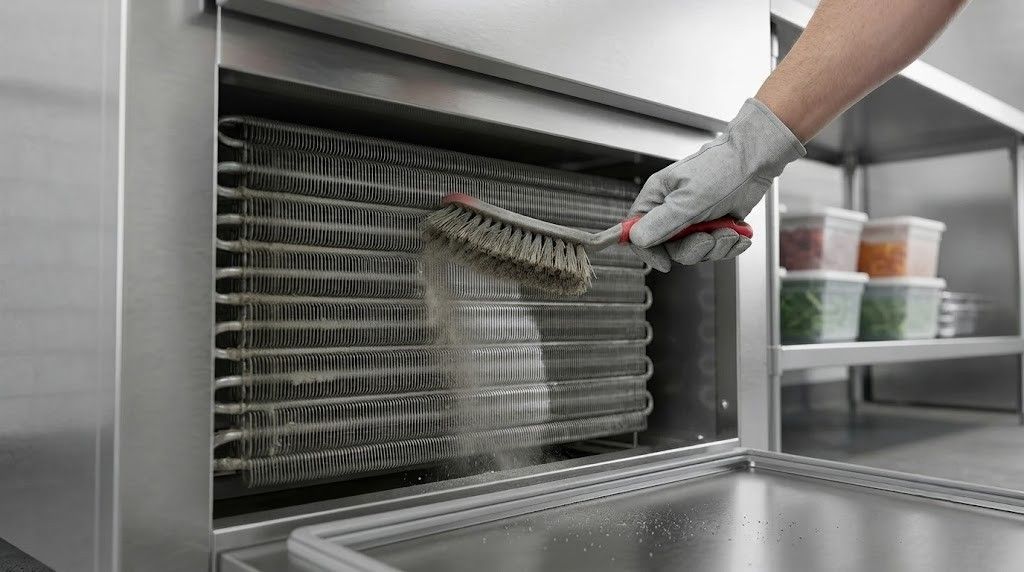
COIL CLEANING
Condenser Cleaning and Airflow Restoration
Grease and dust get chemically cleaned off the fins and the fan blades, and clearance around the intake gets restored. This alone resolves a large share of warm cabinet calls.
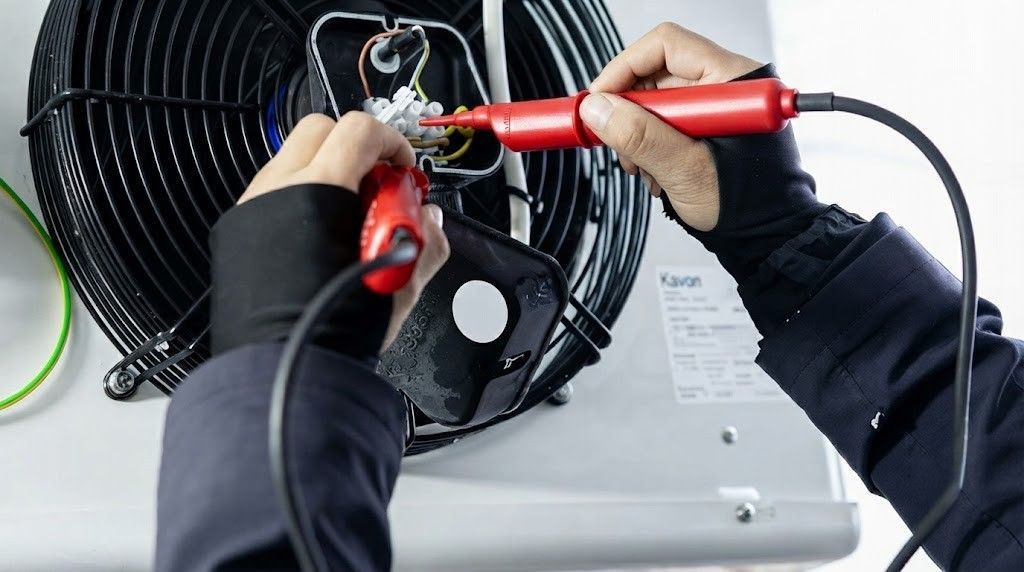
FAN MOTORS
Evaporator and Condenser Fan Replacement
Small shaded-pole and electronically commutated fan motors fail regularly in kitchen environments. Replacing them restores the air movement the cabinet needs to hold temperature evenly across every shelf inside the cabinet.
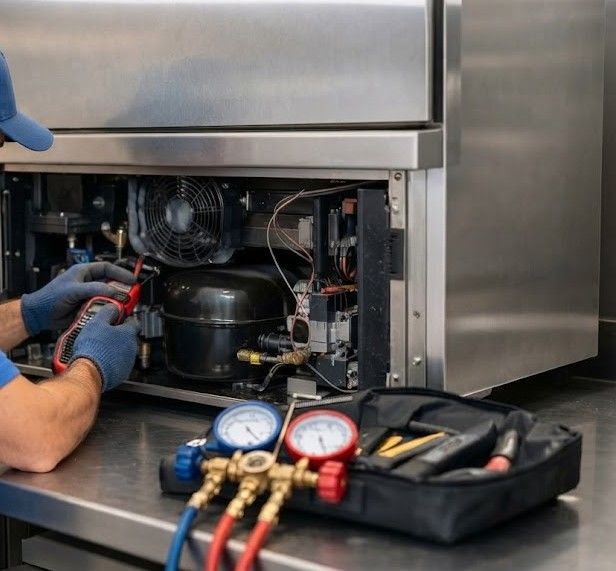
DEFROST
Defrost Heater and Timer Repair
Freezer cabinets that ice over usually have a failed defrost heater, a stuck timer, or a termination sensor out of range. Testing through a live cycle identifies which one it is.
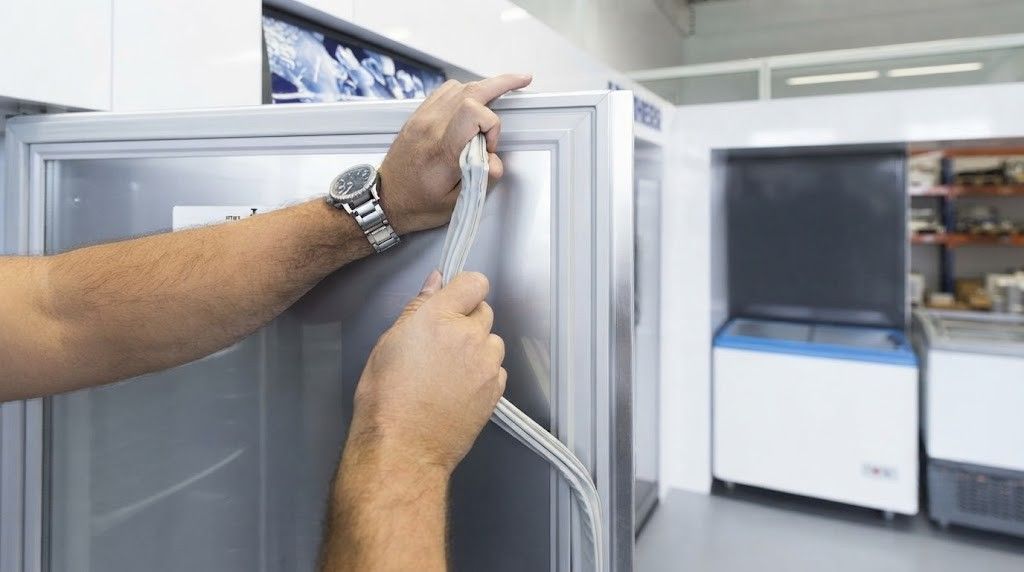
SEALS
Gasket and Door Hardware Replacement
Magnetic gaskets harden, tear, and lose their seal, and hinges sag under constant use. Both let humid kitchen air in continuously, which shows up as frost and rising cabinet temperature.
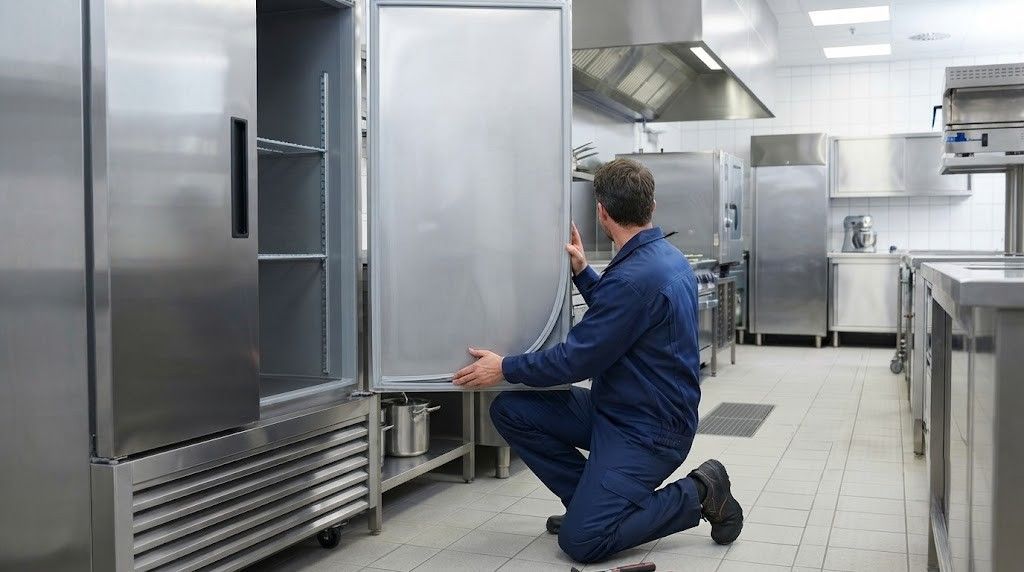
SEALED SYSTEM
Compressor and Sealed System Repair
Where the sealed system has failed, options get compared honestly against replacement cost. Some cabinets justify the repair and some do not, and the numbers make that clear quickly enough.
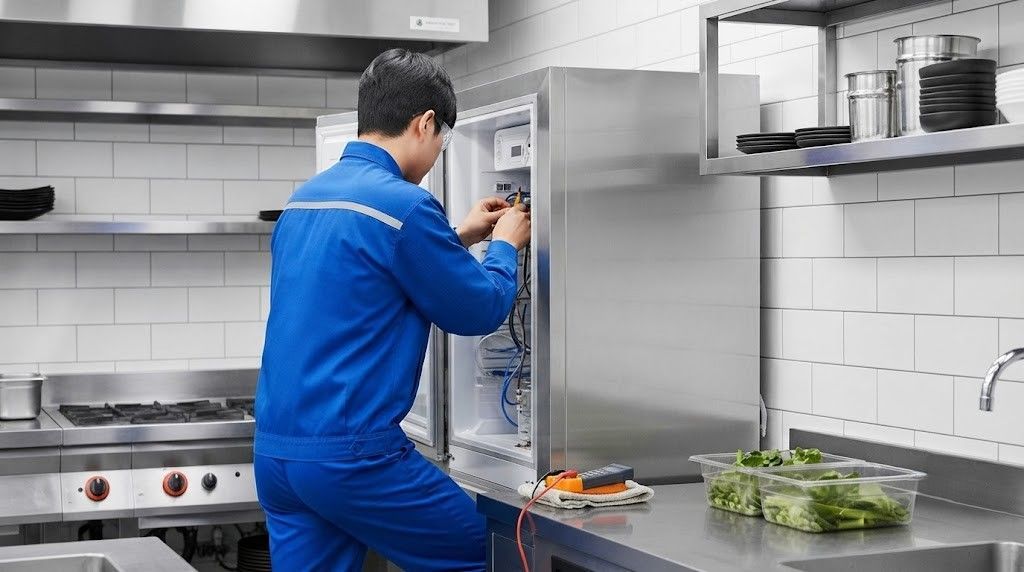
CONTROLS
Temperature Control and Thermostat Repair
Controllers drift, sensors fail, and displays report a temperature the cabinet is not actually holding. Calibrating against a reference probe restores the accuracy your food safety log depends on daily.
faq
frequently asked
questions.
Common questions about self-contained refrigeration in kitchens and stores. Several of these have a quick check attached that can be done before anybody calls for service.
How cold should a reach-in cooler be?
Cold enough that product holds at 41 degrees or below, which usually means a cabinet setting between 35 and 38. Measure product temperature rather than trusting the door display alone.
Why is my freezer running but not freezing?
Usually a defrost fault leaving the evaporator iced, a failed evaporator fan, or a low refrigerant charge. Abbey Aire and Building Repair checks the defrost cycle first on these calls in Tucson, AZ.
How do you fix a reach-in cooler that stopped cooling?
Confirm it has power, the condenser is clean and unobstructed, and the door seals. If it still will not pull down, the sealed system needs gauges and a proper diagnosis.
Is 37 degrees too cold for a refrigerator?
No. That sits comfortably inside the safe range and gives useful margin for door openings. Product freezing at the back usually means poor airflow rather than a setpoint that is too low.
How often should reach-in condenser coils be cleaned?
Manufacturers commonly say at least annually, more often in dusty or greasy conditions. A commercial kitchen in this region meets both descriptions, so quarterly is a realistic working interval here.
What is the most expensive thing to fix on a commercial refrigerator?
The sealed system, meaning compressor or evaporator replacement. Abbey Aire and Building Repair compares that cost against a new cabinet before recommending it to customers in Benson, AZ and nearby.
What is the life expectancy of a reach-in refrigerator?
Roughly 10 to 12 years in a busy kitchen, and noticeably longer where condensers are cleaned on schedule. Neglected condenser coils are the single biggest factor shortening that figure further.
Why does my reach-in freezer frost up?
A defrost fault, a torn door gasket letting humid air in, or a door not closing fully. Frost is always moisture that got in and never left during a defrost cycle.
HOW WE WORK
FROM SOFT PRODUCT TO A STEADY CABINET, HERE IS HOW.
STEP 01
Identify Every Affected Cabinet
Kitchens often have several units drifting at once for the same reason. Establishing which ones are affected before the visit means everything gets addressed in one appointment rather than three separate ones spread across a week.
STEP 02
Probe the Product Zone
Actual product temperature gets measured in several positions inside each cabinet and compared against the display reading. A discrepancy between those two numbers points straight at an airflow or control problem inside the box.
STEP 03
Clean and Inspect the Condenser
The condenser gets cleaned properly, the fan checked, and clearance around the intake restored. On a large share of calls the cabinet recovers from this step alone within a few hours of the visit.
STEP 04
Check Doors and Defrost
Gasket condition, hinge alignment, door closure, and a full defrost cycle all get verified. Freezer cabinets get the defrost heater and the termination sensor tested through a live cycle on site before we leave.
STEP 05
Measure the Sealed System
Only after the physical causes are ruled out do gauges go on. Pressures, superheat, and amperage identify whether the sealed system is genuinely the problem or simply the most obvious suspect in the room.
STEP 06
Verify and Log
Each repaired cabinet runs until it holds, with product temperatures logged at the end. Those readings go into your food safety records alongside the work performed and the warranty terms for each unit.
GET YOUR ESTIMATE
EVERY CABINET IN THE KITCHEN HOLDING PROPERLY AGAIN.
Reach-ins fail quietly and cost product before anybody notices. List the units and their readings through our contact page and Abbey Aire and Building Repair will get them all sorted out in Tucson, AZ.
WHAT YOUR REACH-IN SERVICE COVERS:
- Product temperatures probed in several positions
- Condenser coils chemically cleaned, not brushed
- Evaporator and condenser fans tested
- Gaskets, hinges, and doors inspected and repaired
- Defrost cycle verified on freezer cabinets
- A 90-day workmanship warranty on the repair