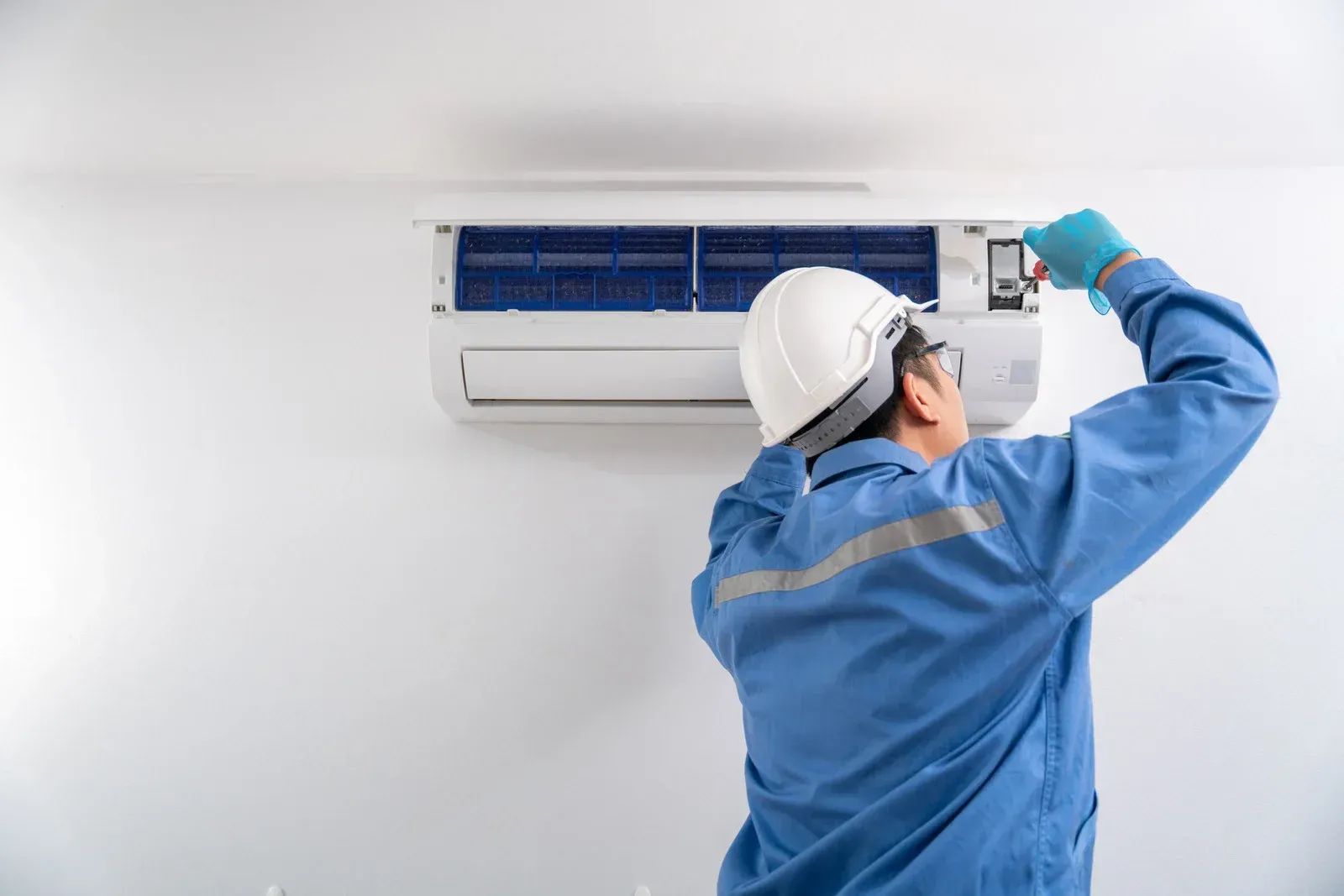
Getting Your AC Ready Before the Desert Summer Hits
October 12, 2026
QUICK ANSWER: Getting your AC ready for a desert summer comes down to a short list of jobs done before the first hundred degree week: replace the filter, clear the outdoor unit of debris and dust, clean the condenser coil, confirm the condensate drain is open, check that the thermostat and every register respond properly, and have a technician verify airflow, electrical components, and refrigerant charge. Southern Arizona puts a cooling system under heavy load for six months or more, so small weaknesses that go unnoticed in spring turn into breakdowns in July. Doing this work early, while temperatures are still mild, gives you time to fix what turns up instead of waiting in line for an emergency repair.
Every year there is a stretch of weeks in Southern Arizona when the house feels perfect without the air conditioner running at all. Windows are open, the evenings are cool, and the thermostat is the last thing on your mind. That window is the best opportunity you will get all year to look after your cooling system, and it is also the reason so many systems fail in the first real heat wave. Equipment that sat idle for months gets asked to run fourteen hours a day with no warm up, and any weakness that built up quietly over the winter shows itself at the worst possible moment.
The goal of preparing your AC is not to make it perfect. It is to find the handful of things that fail first under desert conditions and deal with them while you still have time and options. Some of these jobs are simple enough to do yourself in an afternoon. Others need gauges, meters, and trained eyes. Knowing which is which keeps you from either skipping what matters or fiddling with parts that are better left to a licensed technician.
Why a Desert Summer Is Harder on Equipment Than Most Places
A cooling system in a mild climate might run a few hundred hours in a season. Around Benson, Tucson, and Sahuarita, the same system can run for thousands of hours, often at or near its maximum output for entire afternoons. Outdoor air temperatures above one hundred degrees mean the condenser has a much harder time releasing heat, because the gap between the refrigerant temperature and the surrounding air gets small. Attic temperatures climb well beyond that, which punishes ductwork, wiring, and any equipment installed in an unconditioned space.
Dust adds another layer. Wind, monsoon storms, and construction in the region put fine particles into the air almost year round, and a cooling system is effectively a machine that moves enormous volumes of that air across coils and through filters. A system that would coast through a season somewhere else can be visibly struggling here after one dusty spring. That is why preparation in this climate focuses so heavily on airflow and heat rejection, the two things dust attacks most directly.
Start With the Filter and the Airflow Path
Replace The Filter
This is the simplest job on the list and one of the most valuable. A filter loaded with dust restricts the air your blower can pull across the indoor coil, which lowers cooling output and makes the entire system work harder. Check the size printed on the frame, choose a filter that fits snugly with no gaps around the edges, and note the date on it. In dusty conditions, checking monthly through the summer is a better habit than following the calendar interval printed on the package.
Check Every Register And Return
Walk through the house and make sure supply registers are open and unblocked, and that nothing sits in front of a return grille. Furniture, rugs, and storage boxes pushed against a return can quietly cut the airflow your system depends on. Closing off vents in unused rooms might seem like a way to save energy, but it raises pressure inside the duct system and can increase leakage at the joints, which works against the very thing you are trying to accomplish.
Give the Outdoor Unit Room to Breathe
The outdoor unit is where your system releases all the heat it pulled out of the house, and it needs clear space and clean surfaces to do that well. Before the season starts, shut the system off at the thermostat and the outdoor disconnect, then take a careful look around the unit.
Clear away leaves, seed pods, weeds, and anything leaning against the cabinet. Manufacturers generally recommend keeping a couple of feet of open space on all sides and several feet above the unit so hot air can rise away instead of recirculating back through the coil. In the desert, landscaping tends to creep, and a shrub that was a comfortable distance away two summers ago may now be pressing against the cabinet.
Look at the condenser coil itself, the fins visible through the metal grille around the unit. If they are matted with dust, cottonwood fluff, or a gray film, the coil is not rejecting heat as it should. A gentle rinse from the inside out with a garden hose, never a pressure washer, will remove loose debris. Heavier buildup, oily residue, or bent fins need professional cleaning and combing, because aggressive spraying can flatten the fins and make the problem worse.
Verify the Condensate Drain Is Clear
During a long cooling season your system removes a surprising amount of moisture from the air, even in a dry climate, especially during monsoon months when humidity rises. That water leaves through a condensate drain line, and the line can clog with algae, sediment, and dust. A blocked drain can overflow the pan, trigger a safety switch that shuts the system down, or leave water damage around the air handler.
Locate the drain line where it exits your home or ends near the air handler and make sure it is dripping or flowing freely during a test run. If you notice slime, standing water in the pan, or a musty smell around the indoor unit, the line needs to be flushed and cleared. Ignoring this one is a common reason a system that was working fine on Friday is dead on Saturday.
The angle problem nobody warns you about
Test the Thermostat and Run a Short Cooling Cycle
Once the filter is replaced and the outdoor unit is clear, restore power and run a trial cooling cycle while the weather is still mild. Set the thermostat several degrees below the room temperature and listen for the sequence: the indoor blower starts, the outdoor fan spins up, and cool air begins coming from the registers within a few minutes.
Pay attention to anything that sounds or feels wrong. Grinding, rattling, squealing, or a hum that never turns into a running compressor are signs of a worn motor, a failing capacitor, or a loose component. Weak airflow at the registers, air that never gets noticeably cool, or ice forming on the refrigerant line at the outdoor unit all deserve a professional look. Finding these issues in April or October means a scheduled appointment instead of an emergency call on a day when everyone else's system is failing too.
Also check that the thermostat itself is working as it should. If it runs on batteries, replace them. If it is programmable or smart, confirm the schedule and cooling setpoints are what you want, because many units keep last winter's settings or lose their programming after a power blip. A thermostat sitting in direct sun or near a heat source will read warm and keep the system running longer than necessary, so note its location too.
TIP: Run your trial cooling cycle in the morning, not the middle of the afternoon. A system that struggles to cool the house at nine o'clock when it is only eighty degrees outside is telling you something important, and you will hear it far more clearly than you would amid the strain of peak heat.
What a Technician Checks That You Cannot
Homeowner steps cover the surface of the system. The parts that actually fail in July sit behind panels, inside electrical compartments, and within the sealed refrigerant circuit, and they require instruments to evaluate. A proper pre season tune up from an experienced technician typically looks at the following.
Electrical Components
Capacitors that help compressor and fan motors start weaken with age and heat. A technician measures capacity, checks contactors for burn marks, and tightens connections that could overheat.
Refrigerant Charge
A system needs a specific refrigerant charge to cool properly. Low charge reduces performance and strains the compressor. Because refrigerant does not disappear normally, leaks require proper diagnosis.
Airflow And Temperature Split
Measuring temperature difference across the indoor coil and airflow through the system shows whether cooling performance meets design expectations or restrictions are limiting proper air movement.
Blower And Motor Condition
Dirt buildup on the blower wheel restricts airflow, while worn motor bearings increase strain. Cleaning, lubrication when appropriate, and amperage testing can identify problems before failure.
Indoor Coil And Drain Pan
Dust that passes through the filter can coat the evaporator coil, reducing heat absorption and potentially causing freezing. Inspecting and cleaning the coil and pan maintains performance.
Ductwork Condition
Accessible ductwork should be checked for disconnected joints, crushed sections, and missing insulation. Attic leaks are especially costly during desert summers because cooled air escapes before reaching rooms.
A good technician explains each finding in plain terms and gives you options before any work starts. If you have not been given a clear picture of what was measured and why it matters, ask for it.
Think About the Whole House, Not Just the Machine
Your air conditioner can only do so much if the house is working against it. Before summer arrives, take a few extra steps that reduce the load the system has to carry. Check that window and door seals are intact, because a gap that lets in hot air makes the system run longer all day. Consider shade for west facing windows, whether through awnings, screens, or reflective film, since afternoon sun through glass is one of the largest heat sources in a home. Make sure attic access hatches are sealed and insulated.
If certain rooms were hard to cool last summer, that is useful information to share with your technician. Uneven temperatures often point to duct sizing, balance, or leakage issues that a tune up can identify, and fixing them before the heat peaks makes the entire house more comfortable.
Think, too, about whether your system is simply reaching the end of its useful life. Equipment that is more than a decade or so old, needs repeated repairs, or struggled through last summer may be telling you it will not survive another one. Raising that question in spring gives you the time to plan, compare options, and schedule installation without the pressure of a house that is already too hot to live in.
WARNING: Do not open the cabinet of your outdoor unit or touch electrical components yourself. Capacitors can hold a dangerous charge even after power is shut off, and refrigerant lines contain pressurized fluid that requires licensed handling. Stick to cleaning the exterior and the filter, and leave everything inside the panels to a technician.
A Simple Timeline That Works in Southern Arizona
Timing makes preparation far more effective. Cooling demand in this region builds early, so waiting until the first week of triple digit heat means competing with every other homeowner who just remembered the same thing. A rough schedule keeps you ahead of it.
In late winter or early spring, replace the filter, clear the area around the outdoor unit, and book your professional tune up while appointment calendars are open. In the weeks before the first sustained heat, run your trial cycle, flush the drain line if needed, and check thermostat settings. Through the season, check the filter monthly and rinse off the outdoor coil lightly if wind and dust have coated it. After monsoon storms, look again at the outdoor unit for debris and at the drain line for any slowdown.
That rhythm costs you only a few small habits and one professional visit, and it protects the system through the longest, hardest stretch of its working year.
Frequently Asked Questions
When is the best time to get my AC ready for summer in Southern Arizona?
Late winter through early spring is ideal. Temperatures are mild enough to test the system comfortably, and technicians have open appointments. Waiting for the first heat wave means longer waits and less time for repairs.
Can I do my own AC maintenance, or do I need a professional?
You can handle the filter, debris around the outdoor unit, a light coil rinse, the drain line, and the thermostat. Electrical testing, refrigerant checks, deeper coil cleaning, and motor evaluation need a licensed technician.
How often should I change my air filter during a desert summer?
Check it monthly and replace it whenever it looks gray and loaded. Dust, wind, and heavy use shorten filter life here, so the interval printed on the package is often longer than your home needs.
Why does my AC freeze up or leak water in the summer?
Freezing usually points to restricted airflow, a dirty coil, or low refrigerant. Water leaking near the indoor unit commonly means a clogged condensate drain. A spring check can catch both before they stop the system.
Is it worth having my system checked if it ran fine last summer?
Yes. Weak capacitors, slow refrigerant leaks, and dust buildup develop gradually and often show no symptoms until peak load. A system that worked last year can fail early because components wore further over cooler months.
Should I run my AC before the weather gets hot?
A short trial run in mild weather confirms that everything starts, airflow is strong, and the air turns cool. If something is wrong, you learn about it while there is time to schedule a repair.
Prepare Your Cooling System Before the Heat Arrives
Preparing your air conditioner for a desert summer is about catching small problems while the weather is still forgiving. A fresh filter, a clear outdoor unit, an open drain line, and a quick trial cycle take little time, yet they remove many of the common reasons systems quit during the first stretch of triple digit heat. Pairing those jobs with a professional inspection of the electrical parts, refrigerant charge, and airflow gives your equipment the best chance of running all summer.
With 35+ years of experience serving Benson, and Tucson, AZ, Abbey Aire and Building Repair
has seen how much a little early attention changes a cooling season. Homes that get their systems checked in spring tend to enjoy steadier comfort, fewer surprise breakdowns, and lower strain on the equipment when the heat peaks. Treat this work as part of owning a home in the desert, and your air conditioner will reward you with dependable cooling when afternoon temperatures climb.